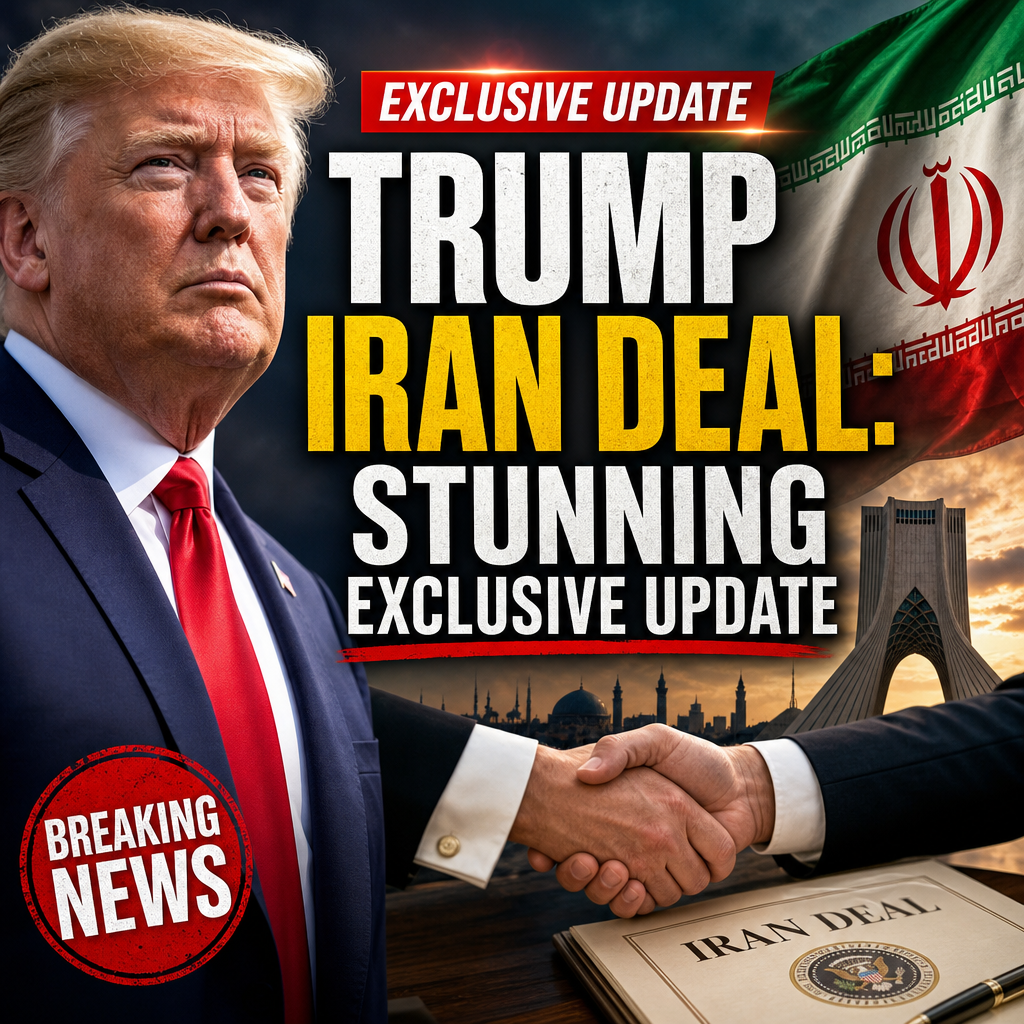
Trump Iran Deal: Stunning Exclusive Update


Trump Iran Deal developments are once again putting diplomacy, deterrence, and election-year politics under the same spotlight, and the latest wave of reporting suggests the story is more complicated than a simple breakthrough or breakdown.
Across coverage from Al Jazeera, RT, and Sky News, one theme stands out: there is intense interest in whether Washington and Tehran are moving closer to a deal, but there is still no clear, universally accepted picture of what that deal would look like, who would trust it, or how durable it could be. That uncertainty matters. In a conflict zone shaped by sanctions, proxy tensions, and nuclear fears, even a hint of progress can trigger sharply different interpretations depending on the outlet, the audience, and the political lens.



What the Trump Iran Deal update appears to mean
At the center of the current discussion is the idea that Trump has signaled some kind of opening on Iran. That alone is enough to generate headlines, but the deeper question is whether the signal reflects genuine diplomacy, strategic messaging, or an attempt to shape public perception.
Al Jazeera’s coverage tends to frame the issue through the broader regional crisis: negotiations are never just about Washington and Tehran, but also about Israel, Gulf states, European powers, and the risk of escalation across the Middle East. From that angle, any “deal” is less a single event than a fragile process. A statement from Trump may hint at movement, but it does not erase years of mistrust surrounding the 2015 nuclear agreement, the U.S. withdrawal from it, and the sanctions-heavy pressure campaign that followed.




RT’s reporting, by contrast, often highlights the geopolitical contest and the view that U.S. policy has been inconsistent or self-defeating. That perspective typically emphasizes the argument that Iran has little reason to trust American commitments after the first Trump administration exited the nuclear accord. It also raises the possibility that any new deal would be judged not by diplomatic language but by whether Washington is prepared to offer real sanctions relief.
Sky News’ coverage generally focuses on the immediate political and strategic implications: Is this a serious diplomatic track, or a message designed to signal strength while keeping pressure on Tehran? That framing is useful because it reflects the central ambiguity. A public claim about a deal can be interpreted as a genuine thaw, but it can also be a bargaining tactic aimed at forcing movement without giving up leverage.
Why the coverage differs so much
The most revealing part of the story is not the headline claim itself, but the way the sources emphasize different dimensions of it.
– Al Jazeera tends to highlight regional instability and the human consequences of renewed tension.
– RT often stresses U.S. inconsistency and the idea that sanctions-first policy has failed to produce lasting results.
– Sky News usually focuses on the political and security stakes for Western governments and allies.
These are not just stylistic differences. They shape what readers think is important. If the key issue is regional security, then the deal is about preventing war. If the key issue is American credibility, then the deal is about trust and whether the U.S. can negotiate in good faith. If the key issue is strategic leverage, then the deal is a test of pressure versus compromise.
That is why a fair reading of the current update should resist jumping to conclusions. The phrase “Iran deal” can mean anything from a narrow, temporary understanding to a full nuclear framework with verification measures and sanctions relief. Until there is clearer documentation, official confirmation, or independently reported details, it is wiser to treat claims of progress as preliminary.
The biggest obstacle remains trust
Trump Iran Deal and the credibility problem
If there is one obstacle that appears in all credible coverage, it is trust. Tehran remembers that the U.S. once left an agreement that many other signatories wanted to preserve. Washington, meanwhile, remains skeptical of Iran’s nuclear intentions and regional military influence. That mutual suspicion is not a side issue; it is the core problem.
Any new arrangement would likely have to address several hard questions at once:
– How much uranium enrichment would Iran be allowed?
– What inspections or monitoring would be required?
– Would sanctions be lifted immediately or in phases?
– What happens if either side accuses the other of noncompliance?
– Can a future U.S. administration reverse the deal again?
These are not technical footnotes. They are the reasons talks often stall even when both sides say they prefer diplomacy over confrontation.
There is also the regional factor. Israel and several Gulf states would likely judge any agreement by whether it genuinely limits Iran’s strategic reach. European governments may welcome a diplomatic path, but they also remember how fragile past agreements were. In other words, even if Washington and Tehran appear to be moving closer, a deal is still only one piece of a wider security puzzle.
A balanced read: cautious optimism, not certainty
The most responsible conclusion is that the latest Trump Iran Deal update should be treated as a sign of possible movement, not proof of a breakthrough. The reporting landscape suggests three overlapping realities.
First, there is clearly political value in signaling that a deal is possible. Second, there is real diplomatic logic in trying to prevent another spiral toward confrontation. Third, the structural barriers are still enormous, and past failures make easy optimism hard to justify.
That means the best interpretation is a cautious one: progress may be happening, but it is likely tentative, conditional, and vulnerable to reversal. For now, the story is less about a finished agreement than about whether the parties involved can even agree on the terms of negotiation.
Bottom line
For readers trying to cut through the noise, the key takeaway is simple: the Trump Iran Deal story is important because it sits at the intersection of nuclear security, regional stability, and political messaging. But despite the dramatic language that often surrounds it, the evidence available through current reporting points to uncertainty rather than certainty.
If a real deal is emerging, it will need to survive more than a headline. It will have to withstand skepticism from allies, pressure from domestic critics, and the long shadow of a previous agreement that failed to endure. Until then, the smartest response is not celebration or dismissal, but careful watchfulness.