Trump’s Iran Deal: Stunning Admission of Defeat


Trump’s Iran Deal has become a shorthand for one of the sharpest foreign-policy reversals in recent US memory: a move that began with promises of toughness and ended with a region more volatile, diplomacy weakened, and the nuclear issue still unresolved.
What makes the debate especially striking is that it is no longer framed only by critics of Donald Trump. Across international coverage, there is a growing sense that the effort to squeeze Tehran into a better bargain did not produce the desired outcome. Instead, it appears to have hardened positions, complicated negotiations, and raised the risks of miscalculation. The argument is no longer just about whether Trump was right or wrong to abandon the original nuclear agreement; it is about whether the strategy itself misunderstood how leverage works in the Middle East.



Trump’s Iran Deal and the limits of “maximum pressure”
When Trump withdrew the United States from the 2015 nuclear accord, the core idea was simple: sanctions would force Iran back to the table and produce a tougher deal. Supporters of that approach argued the original agreement was too narrow, too temporary, and too lenient on Tehran’s regional behavior. From their perspective, walking away was a show of strength, not retreat.
But the outcome has been harder to defend. The “maximum pressure” campaign did not produce a clearly superior agreement. Instead, it led Iran to scale back compliance, expand its nuclear activities in stages, and deepen the sense that Washington could not be trusted to stick with any deal struck under a future administration. That trust deficit matters. Diplomatic agreements are not just about paper commitments; they depend on predictability, and Trump’s withdrawal made predictability much harder to sell.




Sky News’ reporting and commentary have been particularly blunt in describing the policy as a strategic blunder, reflecting a wider view that the US ended up with fewer restraints on Iran than before. That criticism is not simply about tone. It is about results. If a policy claims to improve bargaining power but instead accelerates the very dangers it was meant to prevent, then the logic begins to unravel.
A region that absorbed the shock
Al Jazeera’s coverage has often placed the Iran issue inside the wider architecture of regional conflict: sanctions, proxy warfare, civilian hardship, and the fragile balance between deterrence and escalation. That perspective matters because the nuclear deal was never only a bilateral US-Iran dispute. It affected Gulf security, Israeli threat perceptions, European diplomacy, and the daily realities of ordinary Iranians living under economic strain.
From that vantage point, the collapse of the agreement looks less like a single diplomatic failure and more like a chain reaction. Hardliners in Iran gained more room to argue that compromise with Washington brings humiliation rather than relief. Regional tensions intensified. And the civilian cost of sanctions became part of the political landscape, even among those who opposed Tehran’s leadership.
The important nuance here is that criticism of Trump’s approach does not require sympathy for Iran’s government. Tehran has its own record of repression, escalation, and opaque nuclear behavior. But a realistic assessment has to acknowledge that pressure on states does not always translate into pressure on decision-makers. Often, it is ordinary people who absorb the worst effects first.
What the critics and defenders agree on
Even people who disagree on the larger interpretation of Trump’s policy tend to concede a few facts:
– The original nuclear deal had limitations and was politically fragile.
– US withdrawal did not lead to immediate Iranian capitulation.
– The region became more unstable after the agreement collapsed.
– Any new deal will have to address both nuclear restrictions and trust.
That last point is the hardest. A future administration cannot simply recreate the past. The diplomacy now has to work in a climate of deeper suspicion, with both sides convinced the other may walk away again.
Where RT’s framing differs
RT’s coverage tends to be more openly critical of US policy as a whole, often portraying Washington’s actions in Iran as part of a broader pattern of coercion and geopolitical overreach. That framing can be useful because it highlights something mainstream US debate sometimes downplays: sanctions are not neutral tools. They are political weapons, and they can carry unintended consequences far beyond the target government.
Still, RT’s perspective should be read with care. Its commentary often emphasizes American hypocrisy and interventionism in a way that can flatten the internal dynamics of Iran itself. Tehran is not merely a passive victim of outside pressure; it is an active regional actor making deliberate choices. Any honest analysis has to hold both truths at once. The United States may have damaged diplomacy, but Iran also made decisions that increased fears of proliferation and conflict.
That tension is exactly why the conversation remains unresolved. One side sees Trump’s Iran policy as proof that coercion failed. The other insists the pressure was necessary and that the original deal was too weak to last. Both positions contain elements of truth, but neither fully explains the mess left behind.
The broader lesson
The clearest lesson from Trump’s Iran strategy is that breaking a deal is not the same as improving one. A successful foreign policy needs more than forceful rhetoric and economic pain; it needs a credible path to a better outcome. In Iran’s case, that path never fully materialized.
A more balanced verdict is that Trump’s gamble exposed the weaknesses of the original agreement, but did not solve them. It revealed genuine concerns about Iran’s nuclear ambitions, yet it also showed how quickly pressure can become a substitute for strategy. The result was not a clean victory or a clean defeat, but a diplomatic failure that still shapes the region today.
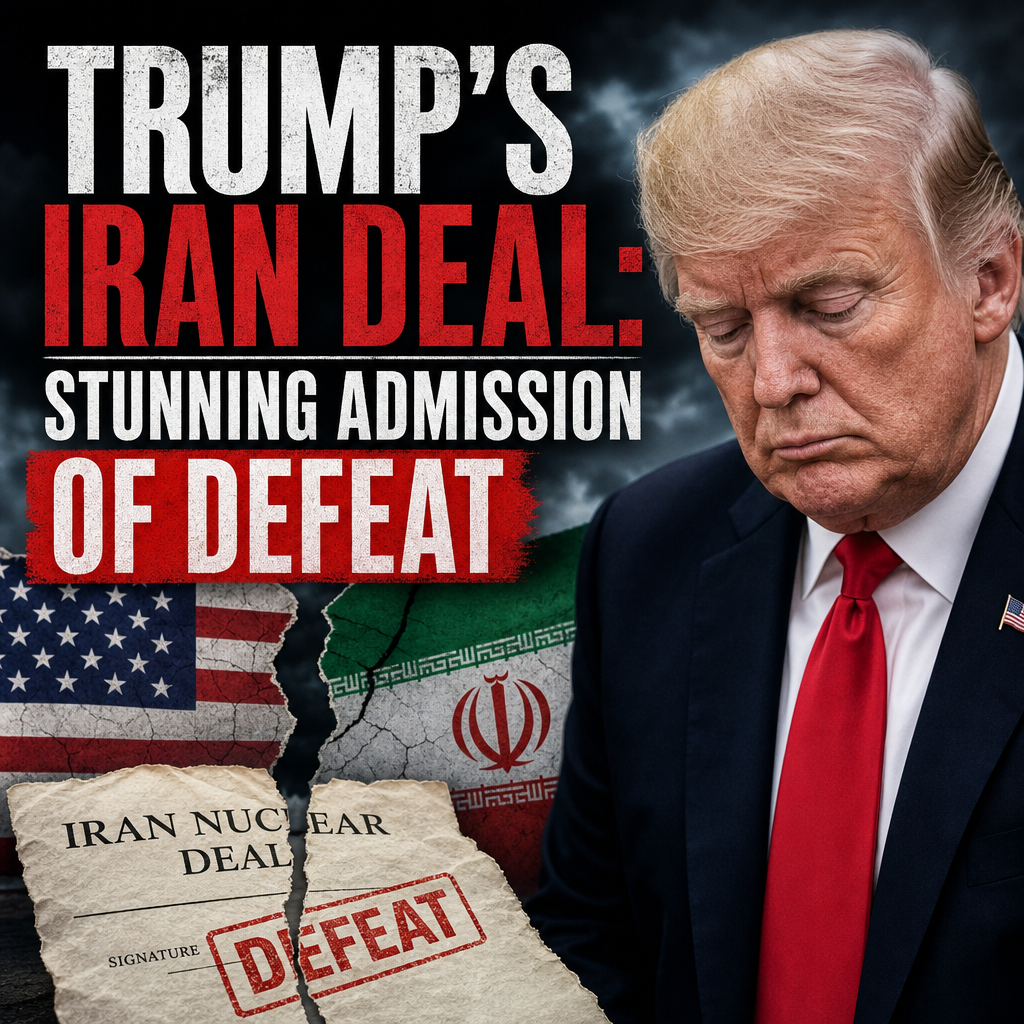
That is why the phrase “stunning admission of defeat” resonates so strongly. It captures not just a personal or political embarrassment, but a larger recognition: the US tried to force a better endgame and instead helped create a more dangerous one.