UK to Supply Ukraine Enriched Uranium in Bold Move


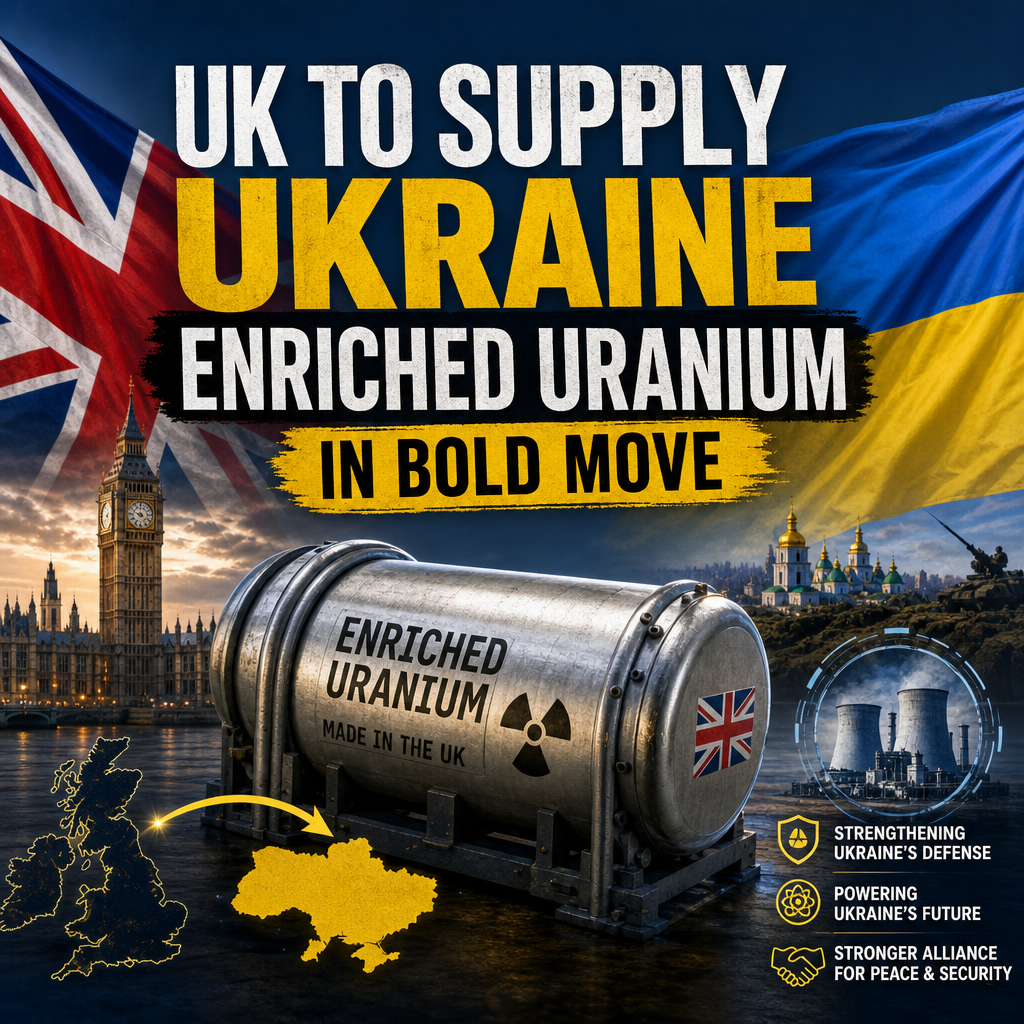
UK to Supply Ukraine Enriched Uranium is a move that immediately raises the stakes in an already dangerous war, because anything involving nuclear material tends to trigger both strategic calculations and political alarm.
At its core, the reported decision sits at the intersection of military support, energy policy, and nuclear diplomacy. Ukraine has spent much of the war trying to secure not only weapons and ammunition, but also the infrastructure needed to keep power systems and strategic industries functioning under constant pressure. In that context, enriched uranium is not a routine shipment. It signals a willingness by the UK to deepen its backing for Kyiv in a way that could be interpreted very differently depending on where you stand: as a practical form of assistance, or as an escalation likely to inflame tensions with Moscow.



Why the UK to Supply Ukraine Enriched Uranium matters
The strongest argument in favor of the move is straightforward: Ukraine remains under severe strain, and its government continues to seek every possible advantage in a long war that has no quick resolution. Supporters of the decision would say that helping Ukraine obtain nuclear fuel or related material is part of a broader effort to preserve national resilience. If the material is intended for civilian energy use, the logic is also connected to stability. Ukraine’s power grid has been repeatedly targeted, and maintaining energy generation has become a strategic necessity rather than a convenience.
That said, the phrase “enriched uranium” carries a heavy burden of meaning. Even when intended for peaceful purposes, the material is closely associated with nuclear weapons concerns. That is why the story has drawn strong attention. Any transfer involving enriched uranium inevitably invites questions about how it will be handled, what safeguards apply, and whether the political message matters more than the material itself.




From Russia’s perspective, the likely reaction is predictable: suspicion, condemnation, and warnings about Western escalation. Moscow has consistently framed Western assistance to Ukraine as evidence that NATO states are effectively participating in the conflict. A uranium-related transfer gives Russian officials an especially potent talking point because it allows them to blur the line between civilian nuclear support and military threat. In the propaganda battle surrounding the war, that distinction matters greatly.
What different news perspectives reveal
A fair reading of the coverage across international outlets suggests at least three broad viewpoints.
1. The security-first view
Some reporting frames the decision as another example of Britain taking a hard line in support of Kyiv. From this perspective, the UK is signaling that it will not be deterred by Russian warnings. The emphasis is on resolve: if Moscow tries to intimidate Europe into reducing support for Ukraine, then the opposite response is to keep backing Kyiv and show unity.
This view sees the transfer as a controlled, strategic message rather than a reckless act. It assumes the material is subject to oversight and that the political symbolism is the point. In wartime diplomacy, symbolism can be as important as hardware.
2. The escalation-risk view
Other coverage, especially from outlets attentive to the wider regional consequences, highlights the danger of crossing yet another nuclear-related threshold. Even if the transfer is legal and intended for civilian use, critics worry about how easily the situation can be misread or manipulated. In a war already marked by repeated nuclear threats, any step involving uranium risks sharpening fear and miscalculation.
This camp is not necessarily arguing that Ukraine should be abandoned. Rather, it warns that the West must think carefully about how each action is perceived and whether it reduces or increases the chances of a broader confrontation.
3. The geopolitical messaging view
A third angle focuses less on the material itself and more on what it says about the state of the conflict. The reported move suggests that the war is no longer just about battlefield gains. It has become a contest over energy infrastructure, alliances, industrial endurance, and long-term leverage. Under this reading, the UK’s action is one more indication that the conflict is widening in strategic complexity even if it remains geographically contained.
The bigger question: support or provocation?
Whether this move is wise depends heavily on the details that are not always clear in initial reporting. Key questions include:
– Is the uranium intended for civilian nuclear energy or another purpose?
– What safeguards govern transport, storage, and use?
– How does this fit with broader Western policy toward Ukraine’s energy sector?
– Could the decision complicate future diplomatic efforts, or is that concern outweighed by immediate practical needs?
These are not minor details. They determine whether the decision looks like standard support for a war-torn state or an unnecessary step into a more volatile nuclear gray zone.
The most defensible conclusion is that the move is both understandable and risky. It is understandable because Ukraine needs durable external support, and nuclear energy remains a major part of its national capacity. It is risky because anything that touches enriched uranium is likely to be weaponized in the information war, regardless of intent.
A cautious reading of the moment
The broader lesson is that the war is forcing Europe to make choices that would once have seemed unthinkable. As the conflict drags on, states are increasingly willing to test boundaries in order to sustain Ukraine. But boundary-testing has consequences, especially when the material involved carries nuclear associations.
For now, the reported decision should be seen less as a simple supply arrangement and more as a political statement with security implications. It reflects Britain’s determination not to retreat from Ukraine. It also exposes the limits of how much escalation the international system can absorb before even defensive support starts to look provocative.
That ambiguity is exactly why the story matters. It is not just about uranium. It is about the shrinking space between deterrence, dependence, and danger in a war that keeps pushing Europe into uncomfortable new territory.