Moscow Slams Stunning NATO POW Camp Test for Russians


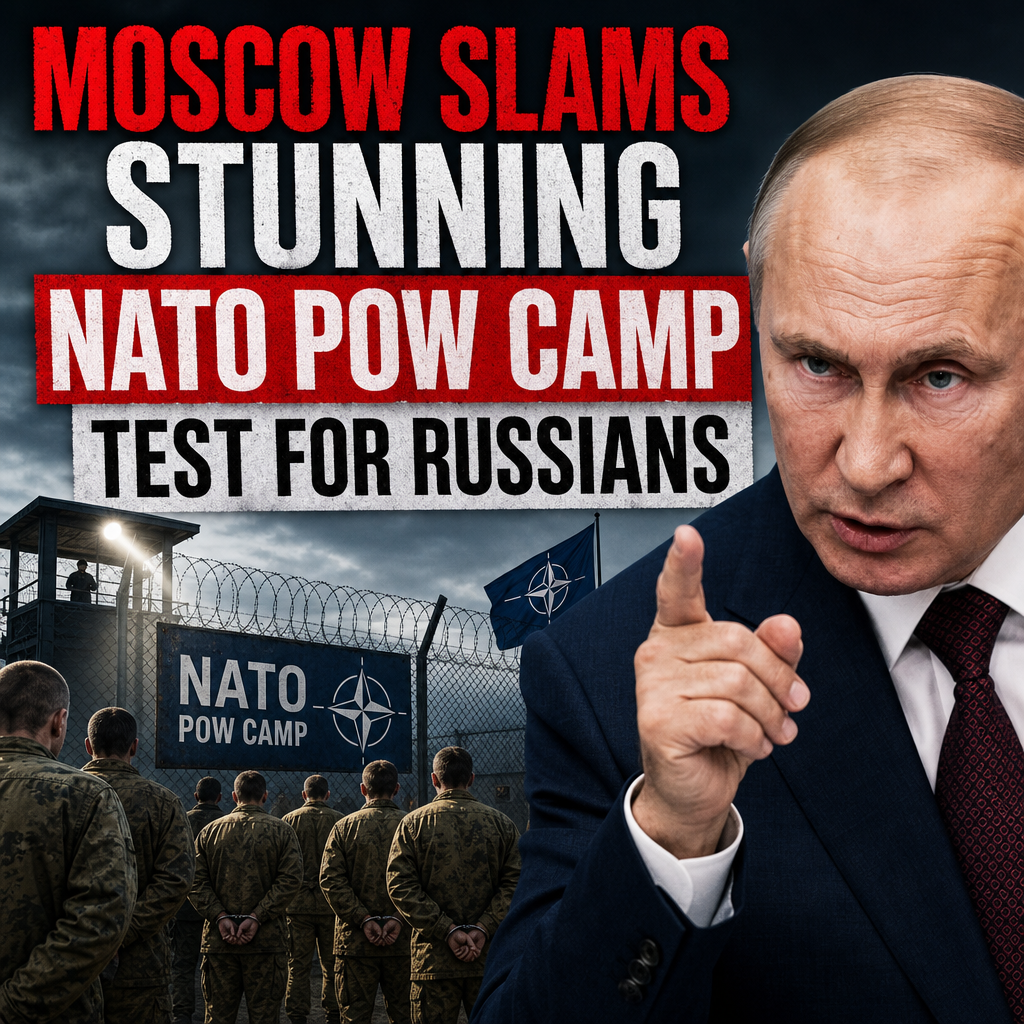
NATO POW camp test has become the latest flashpoint in an already deeply charged information war, after reports that Dutch military exercises included a simulated prisoner-of-war camp designed to prepare soldiers for a possible conflict involving Russian captives. Moscow quickly condemned the drill as provocative, while Western coverage framed it as part of routine military readiness in an increasingly unstable European security environment.
Why the exercise set off alarms
According to the reporting around the Dutch test, the scenario was not a real detention facility but a training setup meant to rehearse how troops might handle captured personnel under the laws and logistics of armed conflict. That distinction matters, but it has done little to soften the political reaction.



Russian officials and state media presented the drill as evidence that NATO countries are normalizing hostility toward Russia and preparing for confrontation. From that angle, even a simulated camp signals a mindset that treats Russian soldiers as expected battlefield captives rather than as participants in a conflict that still has room for diplomacy.
Western outlets, by contrast, placed the exercise in the context of standard military planning. NATO members routinely train for a wide range of wartime conditions, including detention procedures, prisoner transfers, medical handling, and compliance with the Geneva Conventions. In that framing, the exercise is less a threat than an acknowledgment that if war expands, armies need to know how to manage prisoners humanely and lawfully.




The disagreement is not really about the camp itself. It is about what the exercise represents.
Moscow’s argument: symbolism matters
From Moscow’s perspective, the symbolism is impossible to ignore. Russian officials have spent much of the Ukraine war arguing that NATO is not a neutral observer but a direct participant in the conflict through weapons deliveries, intelligence support, and training assistance to Kyiv. A mock camp for Russian prisoners fits neatly into that narrative.
This response also reflects a broader communications strategy. Russian media often emphasizes Western military activity as proof that NATO is preparing for escalation, encirclement, or even a future direct war. That line resonates strongly with domestic audiences and helps reinforce the Kremlin’s claim that Russia is facing a long-term strategic challenge from the West.
At the same time, critics of Moscow would argue that the outrage is selective. Russia itself has been accused repeatedly by international organizations and human rights groups of mistreating Ukrainian prisoners of war, a far more serious issue than a training exercise. In that light, the anger over a Dutch drill can look less like concern for prisoner welfare and more like a political counterattack.
NATO POW camp test: training or provocation?
For NATO members, the challenge is that military preparedness can easily be interpreted as escalation. That is especially true when the exercise relates to prisoners of war, one of the most sensitive and legally fraught aspects of armed conflict.
What supporters of the exercise say
Those who defend the drill would likely point to several practical reasons for it:
– Soldiers need to know how to secure, process, and transport captives safely.
– Training can reduce the risk of abuse, chaos, or violations of international law in wartime.
– Simulated detention scenarios help forces prepare for large-scale emergencies, not just conventional combat.
– Exercises like this are standard in modern armies and do not necessarily imply offensive intent.
That view aligns with the broader NATO message that deterrence depends on readiness. If European armies want to avoid war, they argue, they must be able to respond credibly if conflict comes.
Why critics remain unconvinced
Still, critics argue that the political climate gives the exercise a sharper edge. Even if the drill is technically routine, they say, timing and presentation matter. In the middle of an active war involving Russia, a mock camp for Russian captives is bound to be read as a message.
That message can be interpreted in two very different ways. Supporters say it demonstrates professionalism and preparation. Critics say it shows NATO is increasingly comfortable imagining Russian soldiers behind wire.
The truth probably sits between those positions. Military exercises do not happen in a political vacuum, and the more tense the relationship between Russia and the West becomes, the harder it is to separate practical training from strategic signaling.
The larger backdrop: a war that keeps widening in meaning
Al Jazeera’s coverage of the broader Russia-Ukraine conflict has often highlighted how every new development is filtered through both military reality and political narrative. That lens is useful here. The Dutch exercise is not happening in isolation; it lands inside a war already shaped by prisoner exchanges, allegations of abuse, battlefield attrition, and constant messaging battles.
Sky News reporting on international security issues similarly tends to emphasize the risk that local incidents become symbolic. A single drill, especially one involving Russian captives, can quickly turn into a proxy argument about NATO intentions, European preparedness, and the future of relations with Moscow.
What makes this episode notable is not that armies train for prisoner handling. They always have. It is that the exercise exposes how little trust remains between Russia and Western governments. In a calmer environment, the drill might have passed with barely a mention. In today’s climate, it becomes instant evidence for competing narratives.
A fair reading of the reaction
A balanced assessment suggests two things can be true at once.
First, NATO members have a legitimate military and legal reason to train for prisoner-of-war scenarios. If conflict expands, humane treatment and proper procedures are essential, and rehearsal is part of responsible defense planning.
Second, Russia’s anger is politically useful to the Kremlin and strategically unsurprising. The drill offers an easy example to fold into a broader claim that NATO is preparing for long-term confrontation with Russia.
The episode does not prove that NATO is seeking war. But it does show how easily even ordinary military preparation can become a diplomatic provocation when relations are already close to collapse.
The deeper lesson is unsettling: in a Europe already reshaped by war, the line between readiness and escalation is getting harder to see, and every side is eager to define that line in its own favor.