US Feared Stunning Plot to Kill Iranian Negotiators


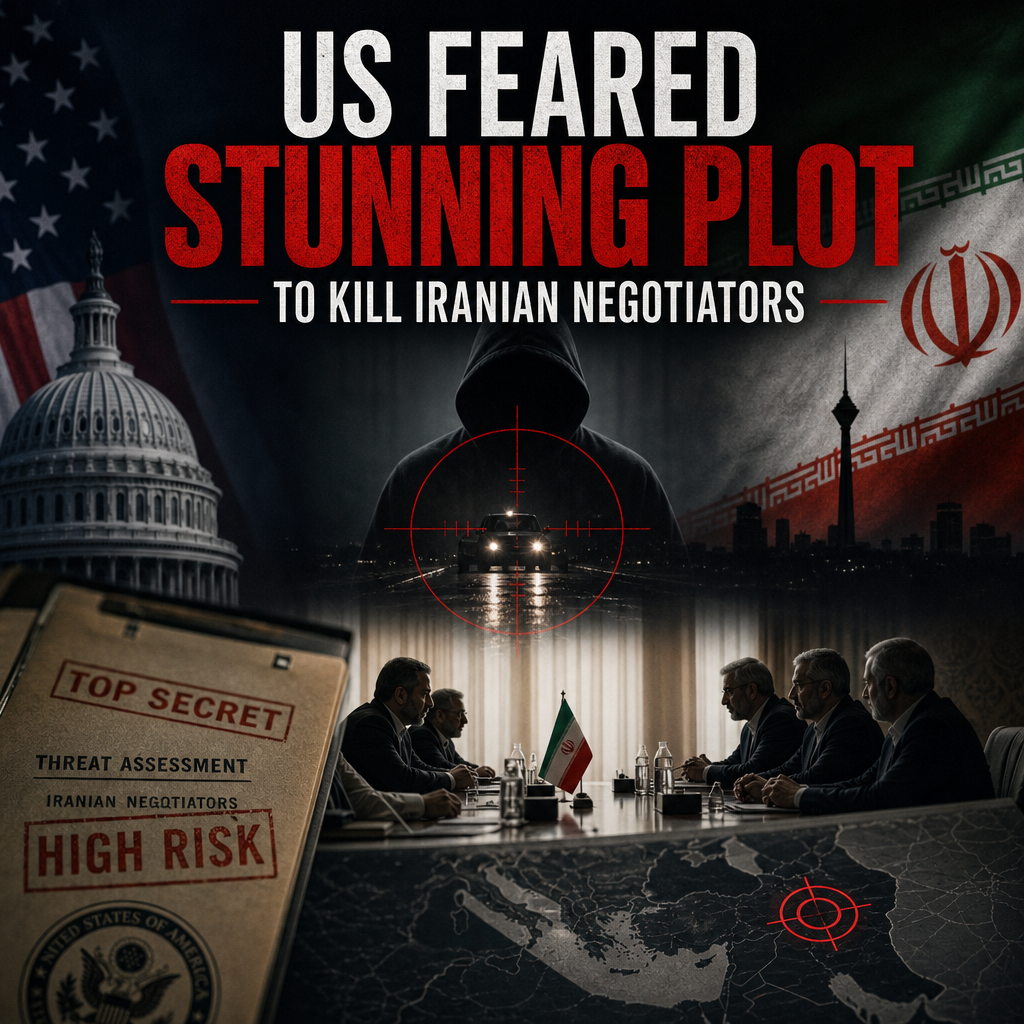
US feared stunning plot to kill Iranian negotiators, according to allegations that have ricocheted across coverage of the Middle East crisis and deepened suspicion about how far the conflict between Iran, Israel, and the United States could spill into diplomacy itself.
The claim, attributed to senior Iranian figures and amplified by state-aligned and regional outlets, does not amount to verified proof of a planned assassination. But it has landed at a moment when trust is already thin, indirect diplomacy is fragile, and every military escalation seems to raise the risk that political talks could become as dangerous as battlefield operations.



What makes the story so striking is not just the allegation itself, but the implication behind it: that the push for negotiations may have been accompanied by fears that the negotiations could be sabotaged by force. That idea is explosive because it shifts the conversation from whether talks can succeed to whether the people sent to conduct them can even be kept safe.
US feared stunning plot to kill Iranian negotiators and the climate of suspicion
The allegation surfaced in a highly charged environment in which Iranian officials have repeatedly warned that their country cannot trust Western and Israeli intentions. Reports tied to the story suggested that some Iranian leaders believe the United States was aware of, or at least concerned about, the possibility that Israel could target Iranian negotiators as part of a broader strategy to derail diplomacy and pressure Tehran.




From the Iranian perspective, the claim fits a long-standing narrative: that Washington and Tel Aviv may publicly support negotiation while privately benefiting from chaos or hardline pressure. The framing is politically useful inside Iran, where leaders often present external threats as proof that dialogue with the West is risky or naïve.
But that is only one side of the picture. International reporting, including coverage from outlets such as Sky News and Al Jazeera, tends to place such claims inside a wider pattern of regional escalation rather than accepting them at face value. In that broader context, the central question becomes less about a single alleged plot and more about whether the region is entering a phase where covert action, deterrence, and diplomacy are all colliding at once.
A few points stand out:
– Iran has strong incentives to highlight threats to its negotiators, especially if it wants to rally domestic support or justify a tougher stance.
– Israel has a history of treating Iranian nuclear and military capabilities as an existential threat, which makes suspicions about clandestine action harder to dismiss entirely.
– The United States, meanwhile, often finds itself trying to manage escalation while also denying involvement in actions it may not control.
– None of the public reporting reviewed here provides independently verified evidence that a formal US-backed assassination plan existed.
That last point matters. In a region where misinformation, propaganda, and selective leaks are common, it is easy for an allegation to travel farther than the evidence behind it. Responsible coverage has to leave room for both the seriousness of the claim and the possibility that it reflects political signaling as much as intelligence.
How different outlets frame the story
RT’s reporting has tended to emphasize the accusation itself and the idea that Washington may have feared a shocking Israeli move against Iranian negotiators. That framing naturally pushes readers toward the most dramatic interpretation: a diplomacy process under direct physical threat.
Al Jazeera, by contrast, often situates Iranian statements within a broader diplomatic and humanitarian crisis, especially when Gaza, Lebanon, Syria, or the Red Sea are part of the same security picture. Its coverage usually highlights the regional chain reaction: one strike, one retaliation, one miscalculation, and suddenly the margins for diplomacy shrink.
Sky News generally reflects a more cautious Western newsroom posture. In that frame, the key issue is not whether allegations are emotionally or politically significant, but whether they can be substantiated. That skepticism is important because the region is full of narratives that are partly true, partly strategic, and partly designed to shape negotiations before they happen.
Seen together, the contrast is instructive. One set of reports leans into the warning sign; another highlights the geopolitical context; a third emphasizes evidentiary caution. The result is not a clear consensus, but a more realistic picture of how contested the story is.
Why the allegation matters even if it remains unproven
Even if the specific claim about a plot to kill Iranian negotiators is never corroborated, it still tells us something important about the state of regional politics. When governments begin to believe that negotiators themselves are at risk, diplomacy changes. It becomes harder to find safe channels, harder to trust intermediaries, and harder to persuade domestic audiences that compromise is possible.
That is especially true in the current Middle East environment, where:
– military strikes and retaliations can unfold quickly;
– back-channel diplomacy often depends on third-party mediators;
– public rhetoric is frequently designed to shape deterrence rather than describe reality;
– and each side assumes the other is hiding something.
In that kind of atmosphere, even an unverified allegation can affect decision-making. Officials may become more guarded. Talks may be delayed. Security around envoys may tighten. And public opinion may harden against compromise.
There is also a wider strategic lesson here. If the United States is perceived as unable to protect or fully control the environment around negotiations, then its credibility as a mediator suffers. If Iran believes diplomacy is being overshadowed by covert threats, it will argue for stronger defenses and less trust in engagement. If Israel believes that pressure works better than talks, it may see little reason to ease up.
A sober conclusion
The most responsible conclusion is also the least dramatic: the allegation should be treated seriously, but not as proven fact. It belongs in the category of claims that reveal the depth of mistrust in the region, even if the exact details remain uncertain.
What is clear is that the political space for negotiation is narrowing. Whether or not there was a real fear of a plot to kill Iranian negotiators, the fact that such a claim can gain traction tells us how fragile diplomacy has become. In the Middle East, the danger is often not just the conflict everyone can see, but the one that lurks in the shadows around the bargaining table.