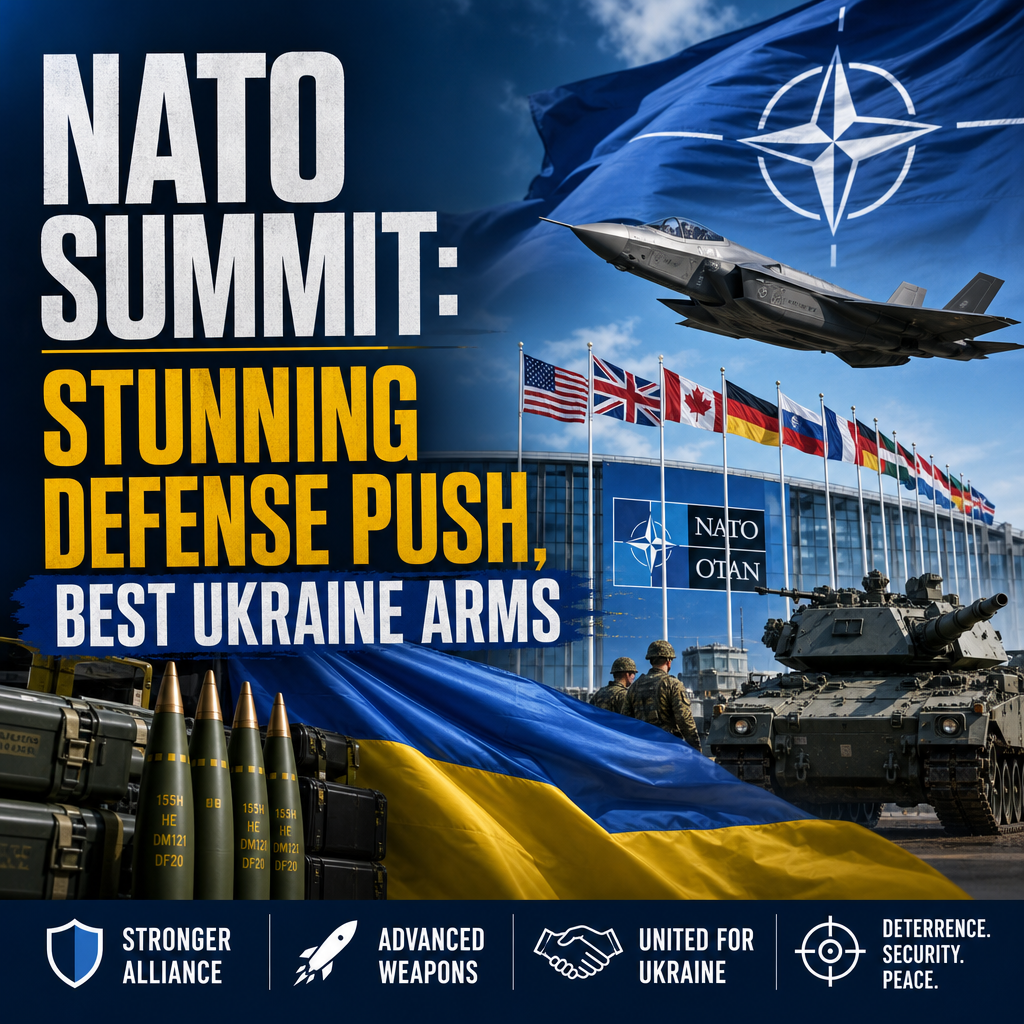
NATO Summit: Stunning Defense Push, Best Ukraine Arms


NATO Summit discussions have once again exposed the alliance’s central tension: how to strengthen deterrence fast enough to satisfy members worried about Russia, while avoiding an open-ended military escalation that could deepen the war in Ukraine.
At the summit, leaders signaled one of the most forceful defense pushes NATO has made in years, with new commitments to raise military readiness, expand industrial capacity, and speed weapons deliveries to Ukraine. The message was clear: the alliance wants to project unity, credibility, and long-term staying power. But beneath the upbeat language, the debate remains complicated. Different outlets emphasized different fault lines — from the need for heavier spending, to the risk of overpromising, to the political strain inside NATO as elections, budget pressures, and war fatigue reshape the conversation.



NATO Summit Defense Push: Unity, Urgency, and Pressure
One of the strongest themes coming out of the summit was the push for more defense spending across Europe and North America. Supporters of the new commitments argue that the war in Ukraine has made years of underinvestment impossible to ignore. NATO has repeatedly warned members that deterrence only works if armies are trained, supplied, and ready for high-intensity conflict. In that sense, the summit looked less like a routine diplomatic meeting and more like a checkpoint for a bloc trying to reset its posture after years of strategic drift.
Sky News coverage and reporting from other mainstream outlets have tended to frame the summit around that practical challenge: NATO leaders want to reassure eastern members that Russia will be met with a strong, coordinated response, while also showing voters at home that aid to Ukraine is tied to broader European security. That framing matters because public support is no longer automatic. In many countries, leaders are having to explain why defense budgets should grow even as inflation, healthcare, and domestic politics compete for attention.




Al Jazeera’s coverage has often highlighted the political and humanitarian layer beneath the military language. From that perspective, the summit is not just about weapons and troop numbers; it is also about the long-term consequences of a conflict that has displaced millions and strained global diplomacy. The alliance’s leaders speak of deterrence, but critics warn that an emphasis on force can make negotiation harder, especially if all sides believe more military aid will somehow deliver a decisive battlefield outcome.
That tension is visible in the way the summit has been described across sources:
– Pro-defense viewpoint: NATO must invest now or face a weaker, less credible alliance later.
– Skeptical viewpoint: More spending may prolong the war without guaranteeing better security.
– Political viewpoint: Leaders need to keep domestic voters onside while sustaining Ukraine support.
– Strategic viewpoint: The alliance’s future depends on industrial capacity, not just headlines.
Ukraine Arms and the Question of Escalation
The “best Ukraine arms” part of the summit’s agenda points to a broader reality: Western support for Kyiv has shifted from emergency aid to long-term military planning. Rather than one-off shipments, the conversation increasingly centers on air defense, artillery, ammunition, drones, and the ability to replenish stocks over time. That shift reflects the recognition that Ukraine’s war effort is being shaped not just by what weapons arrive, but by how quickly they arrive and how long they can be sustained.
Here, the sources diverge in tone even when they acknowledge the same facts. Pro-NATO reporting stresses that giving Ukraine stronger weapons is the fastest way to help it defend territory and strengthen its bargaining position. The argument is straightforward: if Russia sees allied hesitation, it may conclude that time is on its side. By contrast, more critical or cautious commentary tends to ask whether an ever-larger flow of arms risks hardening the conflict, making a future settlement even more elusive.
RT’s framing — especially in stories touching on Turkey, Trump, and alliance politics — often emphasizes internal friction and skepticism about NATO’s strategic direction. That perspective highlights how far the alliance still is from speaking with one voice on the long war. Differences over burden-sharing, election-year rhetoric, and relations with non-Western powers complicate the idea of “stunning” unity. Even when leaders announce major commitments, the political meaning behind those commitments can vary sharply depending on who is telling the story.
What seems broadly true is that the summit is less about a single breakthrough than about reinforcing an already established line: NATO will continue backing Ukraine, but it wants that backing to look more organized, more industrial, and more durable than before. That is a significant evolution. Still, it does not answer the hardest question — whether sustained military support can produce a stable end state, or simply a longer and more expensive confrontation.
The bigger picture: what the summit really signals
The summit’s defense push suggests three things are happening at once.
1. NATO is preparing for a longer security contest.
The alliance appears to be acting on the assumption that Europe’s security environment will remain dangerous even if the war in Ukraine changes shape.
2. Ukraine support is becoming institutionalized.
Aid is no longer framed as temporary crisis response, but as a core test of alliance credibility.
3. Political unity remains conditional.
Leaders agree on the need for deterrence, but not always on the best mix of spending, diplomacy, and restraint.
That last point may be the most important. The summit may project confidence, but it also reveals how fragile the consensus can be. Some governments want firmer commitments and faster weapons transfers. Others want guardrails, fiscal caution, or more room for diplomacy. And in the background, voters are asking whether defense gains at the summit will translate into real security — or just another round of pledges.
A strong message, but not a simple one
The most balanced reading of the summit is that NATO is genuinely trying to adapt to a harsher world, and that its leaders believe stronger defense spending and better arms support for Ukraine are necessary. That case is persuasive, especially given the scale of the security challenge in Europe.
But the summit also shows that military resolve alone does not settle the strategic debate. The alliance still has to prove it can sustain public support, manage internal disagreement, and avoid confusing momentum with a workable endgame. In other words, the defense push is real — and so are the unanswered questions.
If the summit succeeds, it may be because NATO has finally begun treating industrial capacity, readiness, and burden-sharing as central to security rather than afterthoughts. If it falls short, it will likely be because unity proved easier to declare than to maintain under the pressure of a long war.