
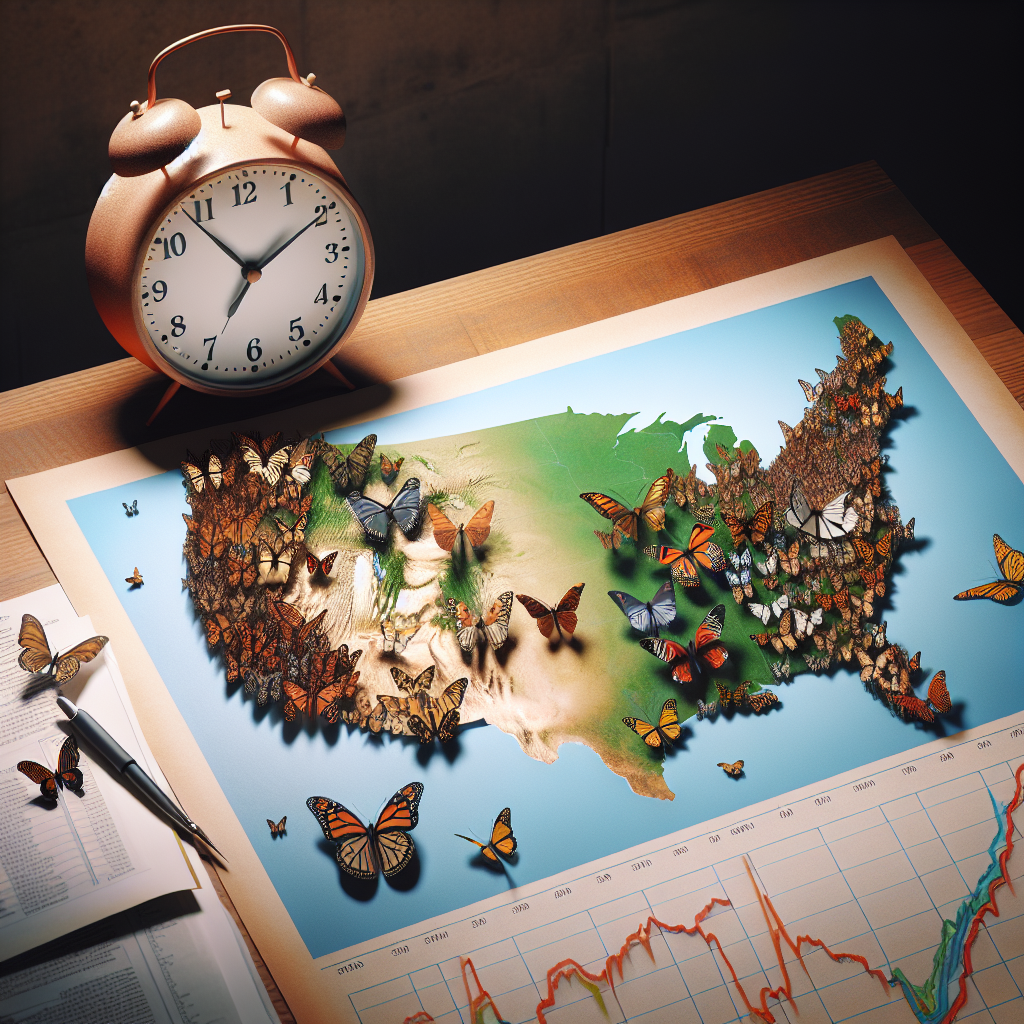
Alarming Decline in US Butterfly Populations: A Wake-Up Call


Alarming Decline in US Butterfly Populations: A Wake-Up Call
Introduction
Recent studies have highlighted a concerning trend in the United States: a significant decline in butterfly populations. This phenomenon serves as a critical indicator of broader environmental issues, urging immediate attention and action.
Key Findings
- Population Decline: Many butterfly species, including the iconic Monarch, have seen drastic reductions in numbers.
- Habitat Loss: Urbanization and agricultural expansion are primary contributors to the loss of natural habitats.
- Pesticide Use: The widespread use of pesticides is adversely affecting butterfly populations.
- Climate Change: Altered weather patterns and temperature shifts are disrupting butterfly life cycles.
Environmental Implications
The decline in butterfly populations is not just an isolated issue but a reflection of broader ecological challenges. Butterflies play a crucial role in pollination and serve as indicators of environmental health. Their decline signals potential threats to biodiversity and ecosystem stability.



Call to Action
Experts emphasize the need for immediate conservation efforts to protect butterfly habitats and promote sustainable practices. Public awareness and policy changes are essential to reversing this alarming trend.

Conclusion
The decline in US butterfly populations is a pressing environmental concern that demands urgent attention. By addressing habitat loss, reducing pesticide use, and mitigating climate change impacts, we can work towards preserving these vital pollinators and ensuring ecological balance.