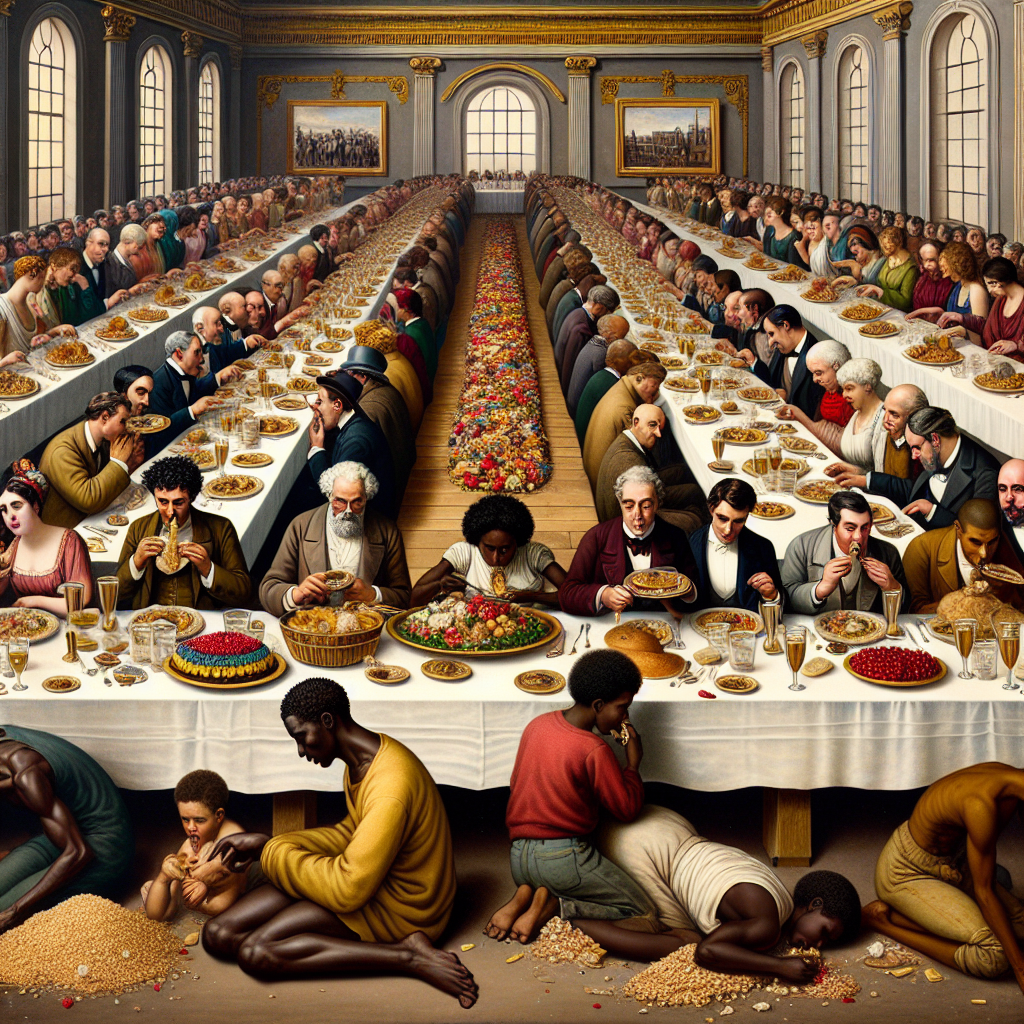
“Feasting on Inequality: The Widening Class Divide”


Feasting on Inequality: The Widening Class Divide
Introduction
The growing chasm between the wealthy and the less fortunate is becoming increasingly evident, as economic disparities continue to shape societies worldwide. This divide is not only financial but also impacts access to resources, opportunities, and quality of life.
Key Drivers of Inequality
- Economic Policies: Tax structures and fiscal policies often favor the affluent, exacerbating wealth concentration.
- Access to Education: Quality education remains a privilege, limiting upward mobility for lower-income families.
- Technological Advancements: Automation and AI disproportionately benefit those with capital, leaving low-skilled workers behind.
Social Implications
The widening class divide has profound social consequences, including increased social unrest, diminished trust in institutions, and a growing sense of disenfranchisement among the lower classes.
Ads

Ads

Ads

Potential Solutions
- Progressive Taxation: Implementing fairer tax systems to redistribute wealth more equitably.
- Education Reform: Ensuring equal access to quality education for all socioeconomic groups.
- Inclusive Economic Policies: Creating policies that promote job creation and fair wages.
Conclusion
The widening class divide poses significant challenges to societal cohesion and economic stability. Addressing this issue requires comprehensive policy changes and a commitment to creating a more equitable society for all.
Ads

Ads

Ads

Ads

Ads

Ads

Ads

Ads

Ads

Ads

Ads

Ads

Ads

Ads

Ads

Ads

Ads

Ads

Ads

Ads

Ads

Ads

Ads

Ads

Ads

Ads