
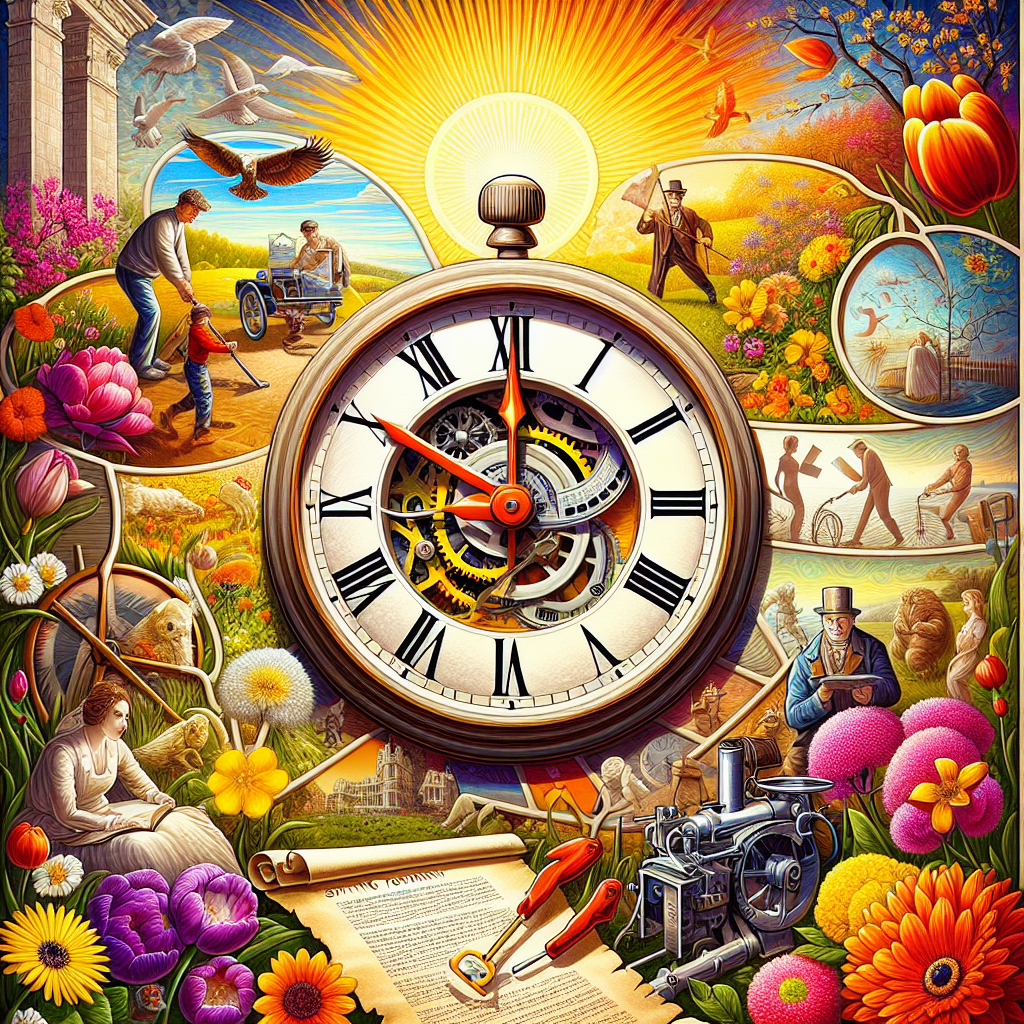
Spring Forward: The History and Significance of Daylight Saving Time


Spring Forward: The History and Significance of Daylight Saving Time
Introduction to Daylight Saving Time
Daylight Saving Time (DST) is a practice that involves setting the clock forward by one hour during the warmer months to extend evening daylight. This concept, often summarized as “spring forward, fall back,” has a rich history and continues to spark debate regarding its relevance and impact.
The Origins of Daylight Saving Time
The idea of DST can be traced back to the late 19th and early 20th centuries, with notable figures like Benjamin Franklin and George Hudson proposing similar concepts. However, it was during World War I that DST was first implemented on a large scale to conserve energy.



- Benjamin Franklin: Suggested the idea in 1784 to save on candle usage.
- George Hudson: Proposed a two-hour shift in 1895 to make better use of daylight.
- World War I: First widespread adoption to reduce energy consumption.
The Evolution and Adoption of DST
Since its initial implementation, DST has undergone numerous changes and adaptations. Countries around the world have adopted, adjusted, or abandoned the practice based on their unique needs and circumstances.

- World War II: Reintroduced to save energy during wartime.
- Post-war Period: Varied adoption across different regions.
- Modern Adjustments: Some countries have extended or abolished DST based on contemporary needs.
Significance and Impact of DST
Daylight Saving Time has both supporters and detractors, with arguments focusing on its economic, health, and social impacts.





- Economic Benefits: Potential energy savings and increased retail activity.
- Health Concerns: Disruption of sleep patterns and potential health risks.
- Social Implications: Extended daylight for leisure activities but potential confusion and inconvenience.
Conclusion
Daylight Saving Time remains a contentious topic, balancing historical significance with modern-day practicality. While it offers certain benefits, the ongoing debate highlights the need for a nuanced approach to its implementation. As societies continue to evolve, so too will the conversation around the relevance and effectiveness of DST.