Trump Implements Steel and Aluminum Tariffs Effective March 12


Trump Implements Steel and Aluminum Tariffs Effective March 12
Overview of the Tariffs
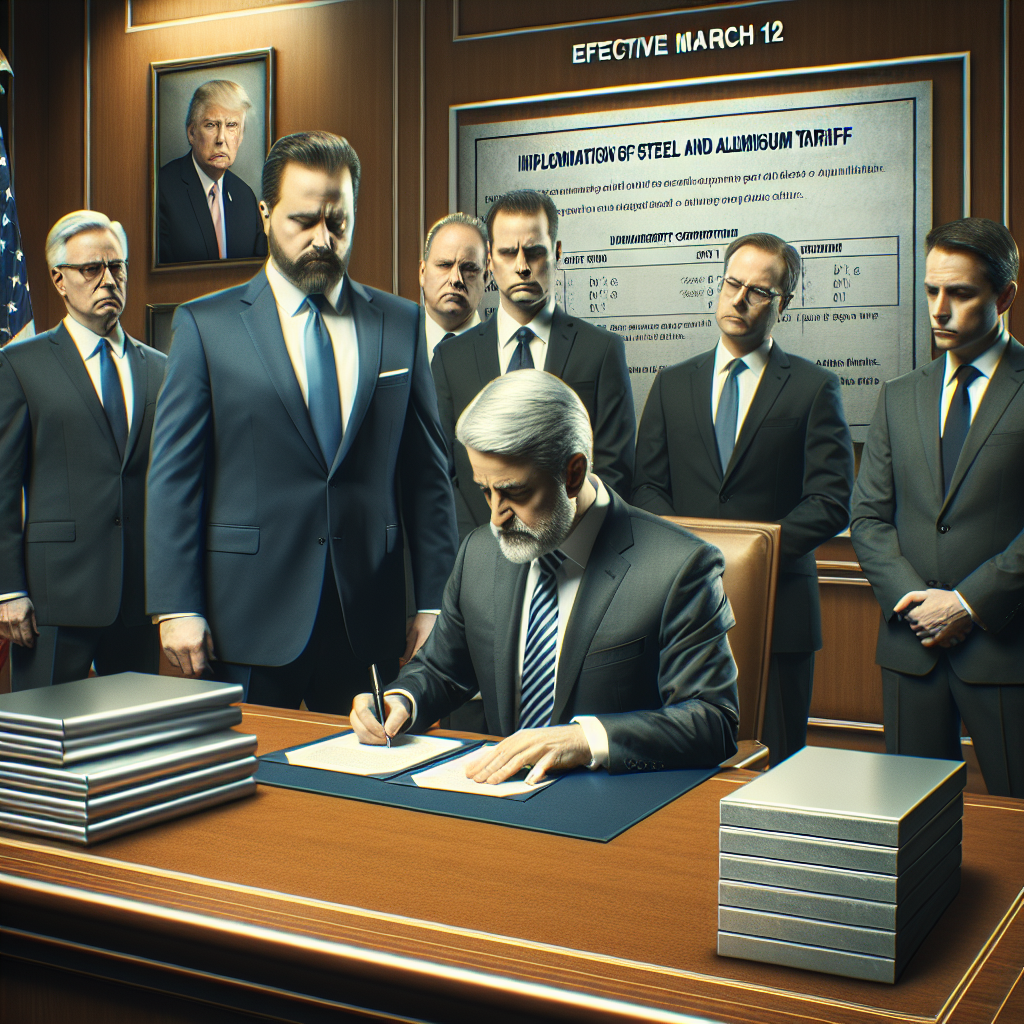
President Donald Trump has announced the implementation of new tariffs on steel and aluminum imports, set to take effect on March 12. This move aims to bolster domestic industries by imposing a 25% tariff on steel and a 10% tariff on aluminum.
Key Objectives
- Protect U.S. steel and aluminum manufacturers from foreign competition.
- Revitalize the American manufacturing sector.
- Address national security concerns related to the reliance on imported metals.
Global Reactions
The announcement has sparked varied reactions globally. Key trading partners have expressed concerns over potential trade wars and economic repercussions. Some countries are considering retaliatory measures, while others are seeking exemptions.



Economic Implications
- Potential increase in domestic production and job creation in the steel and aluminum sectors.
- Possible rise in costs for industries reliant on these metals, such as automotive and construction.
- Uncertainty in international trade relations and market stability.
Conclusion
The implementation of steel and aluminum tariffs by President Trump marks a significant shift in U.S. trade policy, aiming to protect domestic industries while potentially straining international relations. The long-term effects on the economy and global trade dynamics remain to be seen.