
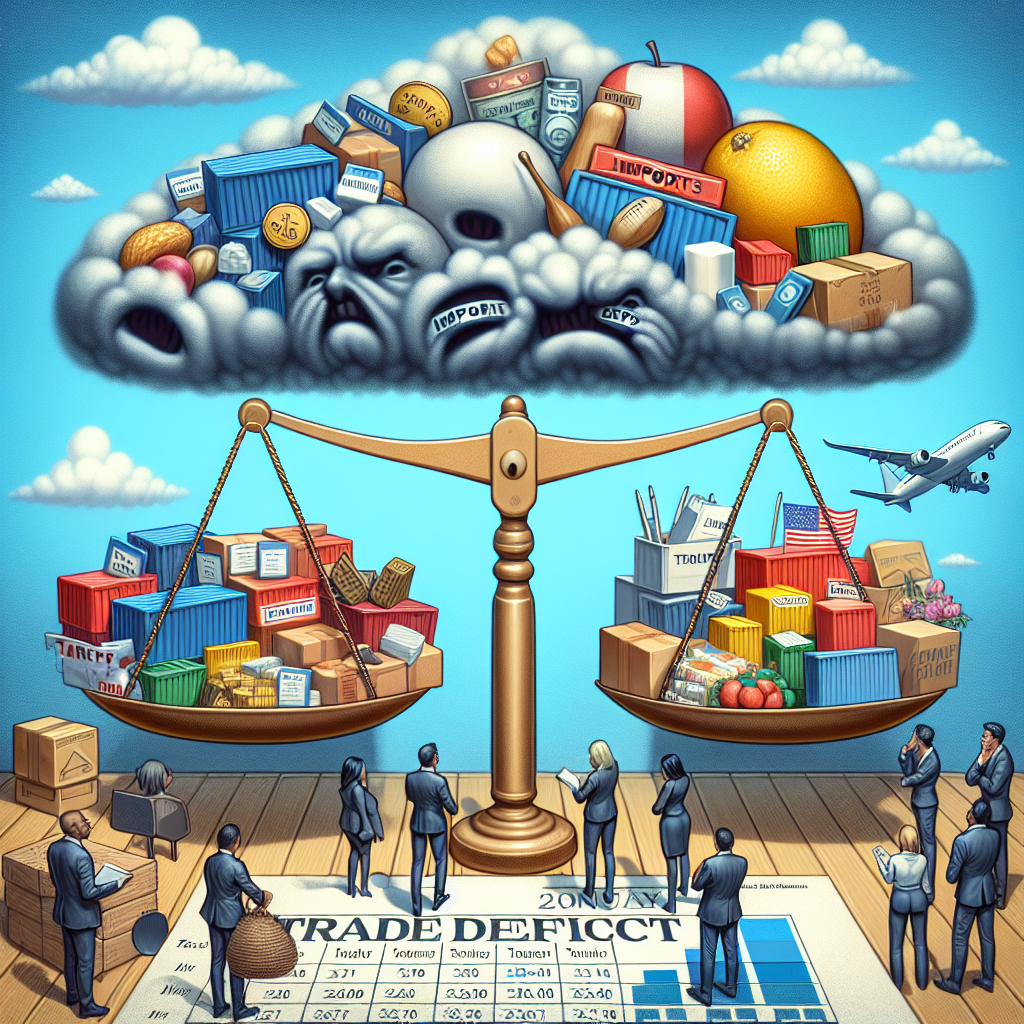
US Trade Deficit Reaches All-Time High in January Amid Tariff Concerns


US Trade Deficit Reaches All-Time High in January
Overview of the Situation
The United States trade deficit has surged to unprecedented levels in January, raising concerns among economists and policymakers. This development comes amid ongoing discussions about tariffs and their impact on international trade dynamics.
Key Factors Contributing to the Deficit
- Increased Imports: A significant rise in imports, particularly in consumer goods and industrial supplies, has contributed to the widening deficit.
- Stagnant Exports: While imports have surged, exports have not kept pace, leading to an imbalance in trade.
- Tariff Concerns: Ongoing tariff disputes and trade tensions have created uncertainty, affecting trade flows and business decisions.
Economic Implications
The record-high trade deficit has several potential implications for the US economy:
Ads

Ads

Ads

- Impact on GDP: A larger trade deficit can negatively affect the Gross Domestic Product (GDP), as it reflects more money leaving the country than coming in.
- Currency Fluctuations: The deficit may influence the value of the US dollar, impacting international purchasing power and investment.
- Policy Adjustments: The situation may prompt policymakers to reconsider current trade policies and tariff strategies to address the imbalance.
Conclusion
The all-time high US trade deficit in January highlights significant challenges in the nation’s trade dynamics, driven by increased imports and stagnant exports amid tariff concerns. This development underscores the need for strategic policy adjustments to address the trade imbalance and its broader economic implications.
Ads

Ads

Ads

Ads

Ads

Ads

Ads

Ads

Ads

Ads

Ads

Ads

Ads

Ads

Ads

Ads

Ads

Ads

Ads

Ads

Ads

Ads

Ads

Ads

Ads

Ads