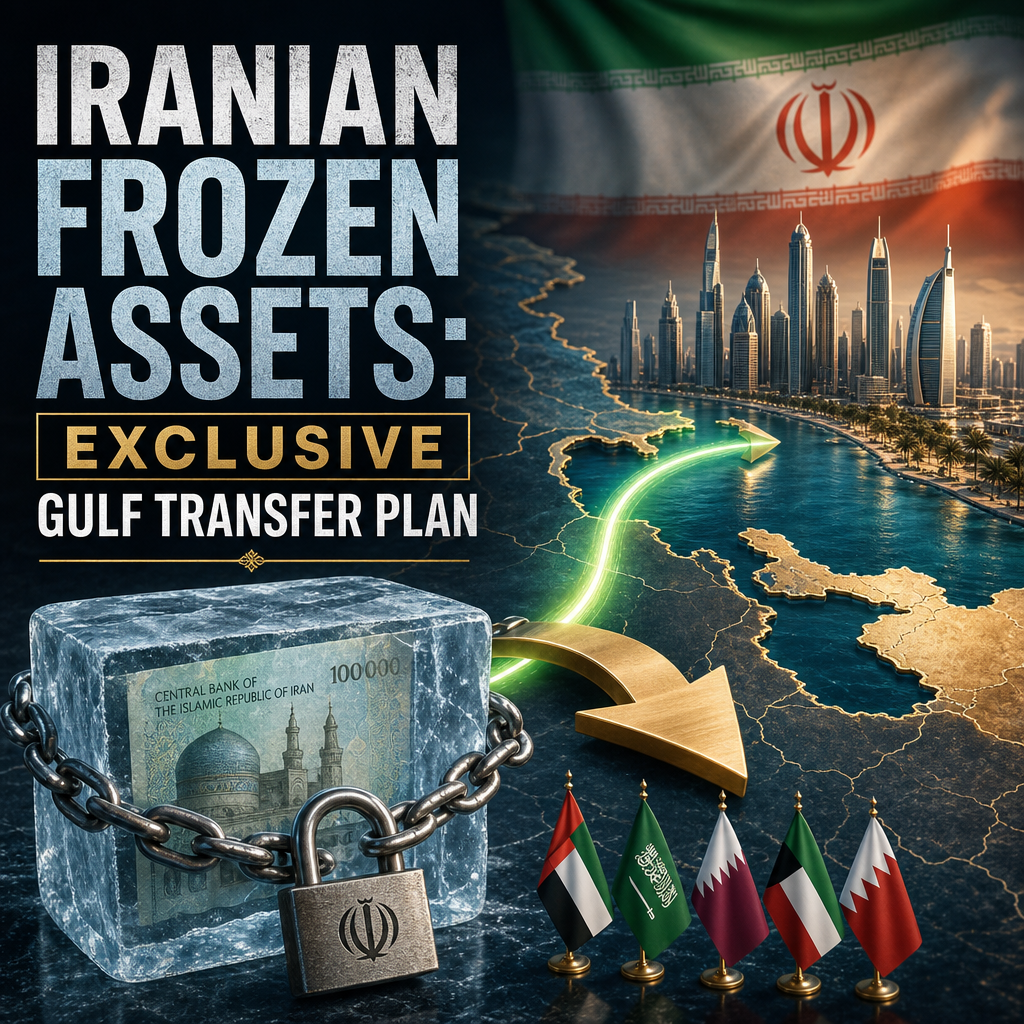
Iranian Frozen Assets: Exclusive Gulf Transfer Plan


Iranian Frozen Assets are back at the center of Middle East diplomacy, with reports pointing to a quiet Gulf-backed transfer mechanism that could help move Iranian money held abroad while keeping the process politically contained. The idea matters because it sits at the intersection of sanctions enforcement, regional security, and the practical need for cash in a country under intense economic pressure.
The basic premise is straightforward enough: Iran has billions of dollars in funds blocked in foreign accounts because of sanctions or unresolved payment disputes, and any effort to release or reroute that money immediately raises questions about legality, oversight, and political intent. But the story is more complicated than a simple “unfreeze and transfer” narrative. Depending on who is speaking, these assets are either a rightful part of Iran’s sovereign wealth, a bargaining chip in nuclear diplomacy, or a potential source of leverage that could be misused if oversight is weak.



Why the Iranian Frozen Assets issue matters now
The timing is significant. Iran’s economy has been squeezed by years of sanctions, limited access to global banking, and high inflation that has weakened household purchasing power. For Tehran, access to frozen funds is not just symbolic; it is a way to stabilize imports, pay for essential goods, and reduce some of the strain created by restricted oil revenues.
That is why reports about an “exclusive Gulf transfer plan” have drawn attention. Gulf states have increasingly played a mediator’s role in regional disputes, especially as several of them balance ties with Washington, commercial interests with Tehran, and a desire to avoid wider conflict. If a Gulf financial channel is being used to move Iranian assets, it suggests a pragmatic middle path: a method that might allow money to be accessed without openly clashing with sanctions rules or derailing diplomatic efforts.




At the same time, the arrangement is unlikely to be seen as neutral by everyone. Critics argue that moving frozen assets through regional intermediaries can create the appearance of compliance while leaving the deeper sanctions architecture intact. Supporters, however, say this kind of arrangement is exactly what diplomacy looks like in practice: imperfect, technical, and designed to prevent escalation.
Different readings of the deal
The sources on this issue reflect a familiar split in perspective.
Tehran’s view: access and legitimacy
From Iran’s standpoint, frozen assets are often framed as money that belongs to the Iranian people and should never have been immobilized in the first place. Officials and state-aligned commentators typically present any release as a long-overdue correction to what they see as unjust economic pressure.
That argument resonates domestically because the country’s population has felt the consequences of sanctions in daily life: rising prices, currency volatility, and limits on trade. If a Gulf transfer plan helps free up cash for humanitarian purchases or non-military imports, it can be presented as a practical win, even if the amounts are smaller than Iran would prefer.
Gulf states’ view: stability first
For Gulf governments, the attraction lies less in helping Iran than in reducing risk. The region has seen repeated flare-ups involving shipping lanes, proxy tensions, and fears of direct confrontation. A controlled financial arrangement may be viewed as a tool for confidence-building, especially if it helps keep channels open and discourages escalation.
But that does not mean Gulf states are handing Tehran a blank check. Any such plan would likely involve strict conditions, monitoring, and an expectation that the funds be used in limited ways. Gulf capitals are also mindful of their relations with the US and Europe, so they are unlikely to support a scheme that looks like a straightforward sanctions bypass.
Western and Israeli concerns: transparency and precedent
The main criticism from Washington-aligned or Israeli security circles is that these financial arrangements can blur the line between humanitarian relief and strategic resourcing. Even if the money is intended for civilian use, opponents worry that funds are fungible: money freed up for food or medicine can indirectly support other state priorities.
There is also a broader precedent concern. If one regionally brokered transfer becomes a template, it could weaken sanctions as a pressure tool elsewhere. That does not necessarily mean every transfer is illegitimate, but it explains why observers demand clear accounting, independent monitoring, and clarity about where the money is going.
What can actually be concluded?
The most responsible conclusion is that the reported plan, if accurate, reflects a compromise rather than a breakthrough. It appears to combine diplomacy, financial engineering, and geopolitical caution in a way that may satisfy no one fully, but could still be useful.
A fair reading of the situation suggests three likely truths:
– Iran wants access to its assets for economic relief and political signaling.
– Gulf intermediaries may see value in reducing tensions through controlled financial channels.
– Outside critics will continue to question whether such transfers are transparent enough to avoid sanctions circumvention.
The uncertainty is real. Public reporting on these arrangements is often partial because the most important details are usually kept confidential: the amounts involved, the exact destination of the money, the conditions attached, and whether the transfer is temporary or effectively a partial thaw.
Still, even without every detail, the broader meaning is clear. Iranian Frozen Assets are no longer just a sanctions issue; they are now part of a wider regional negotiation over trust, leverage, and the future balance of power in the Gulf. If this transfer plan advances, it may not signal a dramatic thaw in relations. More likely, it will show that in today’s Middle East, financial diplomacy is becoming one of the few tools capable of moving the needle without moving armies.