Trump Threatens Stunning Iran Bombing Over Ship Attacks


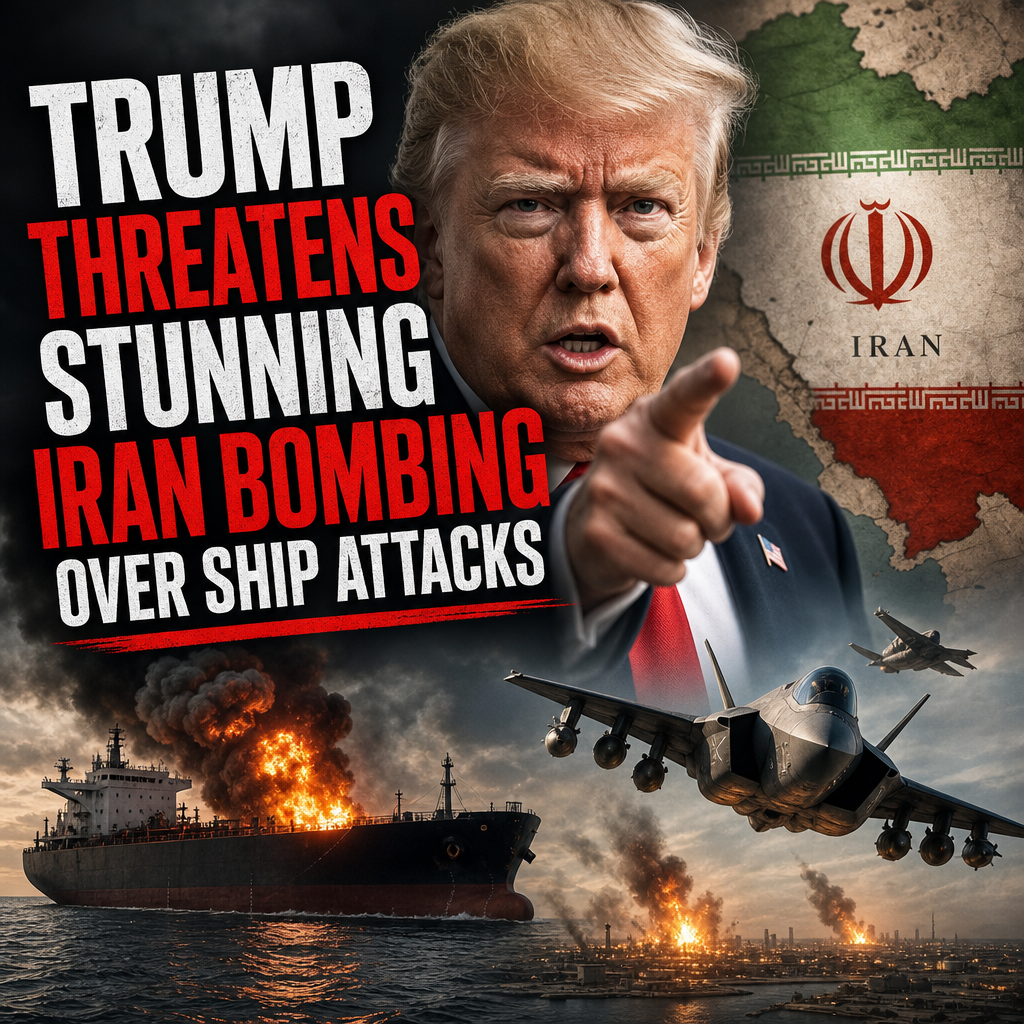
Trump threatens Iran bombing has pushed the U.S.–Iran standoff back into the spotlight, raising fears that a dispute already marked by proxy conflict and maritime disruption could widen into a direct military crisis. The latest warning, reported by several international outlets, comes amid accusations that ships have been targeted in ways Washington links to Tehran or its regional allies. But the story is more complicated than a single threat: it reflects a blend of deterrence, political signaling, and deep uncertainty about how far either side is actually prepared to go.
What sparked the latest escalation?
At the center of the dispute are reported attacks on commercial shipping, which have repeatedly rattled one of the world’s most sensitive trade corridors. The U.S. has long argued that Iran or Iran-backed groups use the sea lanes around the Gulf to pressure Western interests and disrupt shipping. Iran, for its part, typically denies direct responsibility and frames such incidents as consequences of broader regional tensions, especially U.S. military presence and support for Israel and Gulf allies.



According to reporting from Al Jazeera, the warning involved the possibility of striking Iranian infrastructure such as bridges and power plants if the alleged attacks on ships continued. That kind of rhetoric matters because it goes beyond a routine diplomatic warning. It suggests a willingness to consider attacks on dual-use or civilian-linked infrastructure, which would carry serious legal, humanitarian, and geopolitical consequences.
Sky News’ framing of similar developments has generally emphasized the risk of escalation and the market consequences of instability in the region. That perspective matters because shipping threats do not remain local for long: they can influence energy prices, insurance costs, and global supply chains almost immediately. Even when no shots are fired, the mere suggestion of military retaliation can have economic effects.




RT’s coverage of U.S.-Iran tensions has often highlighted the role of American pressure and regional conflict dynamics, portraying Washington as an actor that frequently escalates tensions while accusing others of provocation. That lens is useful in one respect: it reminds readers that these crises rarely begin with a single act. They are usually the result of cumulative hostility, sanctions, proxy fighting, and competing security claims.
Trump Threatens Iran Bombing: deterrence or dangerous brinkmanship?
The phrase Trump threatens Iran bombing may sound like classic hardline politics, but it also raises a practical question: is this genuine strategy or theatrical deterrence? In international crises, leaders sometimes use extreme language to force an adversary to back down without actually intending to launch strikes. The danger is that the line between bluff and commitment can become blurred, especially when both sides are already operating under pressure.
There are at least three ways to read the warning:
– As deterrence: a message meant to discourage attacks on shipping by signaling that the response would be severe.
– As domestic politics: a show of toughness that plays well with audiences who favor strong responses to perceived threats.
– As escalation risk: a step that could provoke retaliation, miscalculation, or a cycle of action and counteraction.
The first interpretation is the most generous, and it is not implausible. U.S. leaders have often used forceful public language to deter adversaries without crossing into war. But deterrence works best when the threat is credible and limited. Attacking bridges or power plants would not be a narrow, surgical response; it would likely be seen as a major strike on national infrastructure. That raises the stakes substantially.
The second interpretation is also hard to ignore. In an election-saturated environment, foreign policy can become part of the domestic performance of strength. Bold language may reassure supporters, but it can also reduce room for diplomacy. Once a leader publicly commits to a severe response, backing away becomes politically costly.
The third interpretation may be the most important. Crisis history is full of examples where leaders believed threats would calm a situation, only for the other side to read them as preparation for war. In the Persian Gulf, where military assets, tankers, and surveillance systems operate in close proximity, misunderstandings can escalate quickly.
How other outlets frame the risk
A notable feature of the coverage is the difference in emphasis rather than outright contradiction.
– Al Jazeera tends to center the regional and civilian consequences, especially the possibility that military retaliation could widen the conflict and affect ordinary people and trade routes.
– Sky News usually underlines the strategic and economic fallout, including concern over shipping lanes and the broader international response.
– RT often places the blame on U.S. pressure and interventionism, suggesting that Washington’s threats may be part of a recurring pattern of confrontation.
Taken together, these angles point to a common fact: whatever one thinks of the politics, the region remains highly combustible. The exact role of Iran in the ship attacks may not be fully public, and competing claims can be difficult to verify in real time. That uncertainty should matter. Responsible analysis has to admit when evidence is incomplete rather than treating speculation as settled fact.
What happens if threats turn into action?
If Washington were to carry out strikes on Iranian infrastructure, the response could come in several forms: missile attacks on regional bases, renewed maritime harassment, cyber operations, or mobilization of allied militias across the Middle East. Iran has repeatedly shown that it can respond indirectly as well as directly, which is one reason military planners worry about retaliation that spreads beyond the initial target.
The other big risk is that a strike meant to restore deterrence could instead validate Iran’s argument that the U.S. is the aggressor. That would make de-escalation harder, not easier. It could also deepen pressure on allies and commercial actors who rely on stable sea routes.
A sober reading of the moment
The most balanced conclusion is that this is not just a war scare, but it is also not empty rhetoric. Threats like these are part of a real strategic contest in which shipping lanes, regional influence, and political credibility all intersect. The public warning may be designed to prevent attacks, but it also increases the chance of misunderstanding and overreaction.
For now, the key issue is whether the language on both sides cools or hardens. If the rhetoric continues to intensify, the danger is less about one dramatic bombing and more about a chain reaction: a ship incident, a retaliatory strike, and then a broader regional conflict nobody can easily contain.