Iran Retaliates: Stunning Missile Strikes on US Targets


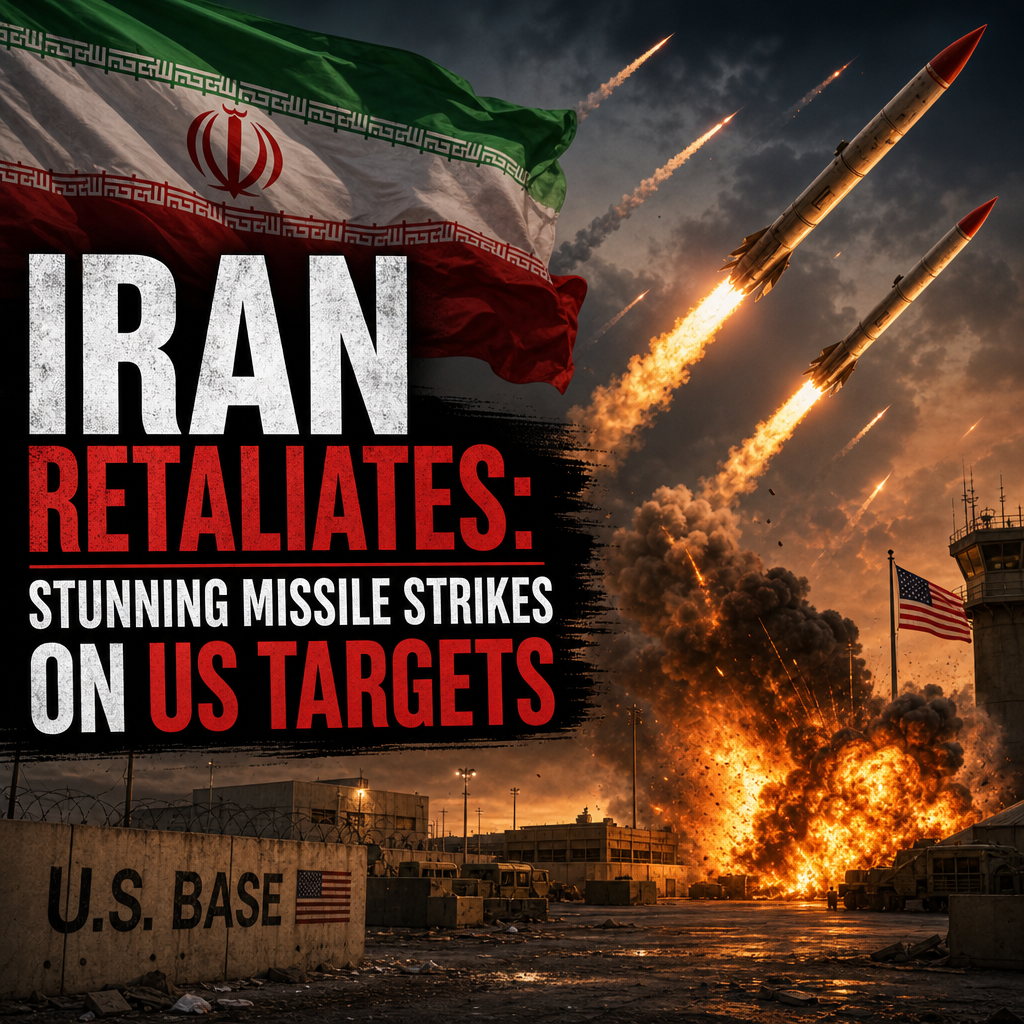
Iran retaliates in a move that has sharply raised tensions across the Middle East, but the meaning of the strikes depends heavily on which news lens you trust most. What is clear from international coverage is that the escalation did not happen in a vacuum: it followed a cycle of US and allied pressure, Iranian warnings, and fears that the region could tip into a broader confrontation. What remains less certain is whether the missile attacks were meant as a limited show of force, a signal of deterrence, or the opening phase of something more dangerous.
What the strikes appear to signal
Across the reports, one point stands out: this was not presented as a random act, but as retaliation. That framing matters because it suggests Tehran wanted to respond to perceived US aggression while still controlling the scale of its response. In that sense, the missile strikes were as much political messaging as military action.



RT’s coverage tends to emphasize the retaliation narrative most strongly, presenting the strikes as a direct answer to US moves and highlighting American vulnerability. Al Jazeera, by contrast, usually places such events in a wider regional context, paying close attention to civilian risk, diplomatic fallout, and the possibility of escalation. Sky News typically focuses on the immediate security implications for Western interests, the reaction in Washington and allied capitals, and the practical question of whether additional US assets in the region are now at risk.
Taken together, these perspectives suggest three overlapping truths:




– Iran likely aimed to demonstrate capability and resolve.
– The US and its allies now face a more complex deterrence problem.
– Civilian and regional stability risks remain high, even if both sides publicly insist they want to avoid full-scale war.
The most important takeaway is that missile strikes like these are rarely just about the immediate target. They are a message to adversaries, allies, and domestic audiences all at once.
Iran retaliates, but with what endgame?
The key question is not whether Iran can retaliate — it clearly can — but what outcome it wants. Tehran may calculate that a calibrated strike helps restore deterrence without crossing the line into a war it cannot control. That is a narrow path to walk. Too little force, and the response looks weak; too much, and it risks provoking a much harsher US counterstrike.
That tension is why outside observers are divided. Some analysts see retaliation as a rational attempt to reassert red lines after sustained pressure. Others argue that once missiles start flying, intentions matter less than consequences. Even a carefully measured strike can be misread, especially in an environment already shaped by mistrust, military alertness, and political pressure on all sides.
There is also a domestic dimension. Iranian leadership has an audience at home, where showing strength against the US can carry political value. At the same time, US leaders face pressure not to appear passive after an attack on American targets. In that sense, both sides are constrained by optics as much as strategy.
The regional stakes are larger than the headlines
It is easy to frame the event as a one-off exchange, but that would miss the broader picture. The Middle East is already layered with active conflicts, proxy networks, and highly exposed military infrastructure. Even a limited strike can have ripple effects:
– airlines may reroute or suspend flights
– oil markets can react to perceived instability
– regional governments may quietly raise alert levels
– armed groups aligned with either side could decide to act on their own
This is where the reporting differences become especially useful. Al Jazeera’s coverage often reminds readers that the human cost of escalation is not limited to battlefield casualties; it also includes displacement, economic stress, and political instability. Sky News often highlights the risk to Western personnel and strategic assets. RT, meanwhile, is more likely to stress the legitimacy of Iran’s response and the role of US policy in creating the crisis.
None of these views alone tells the whole story. But together they reveal why the situation remains volatile: each side interprets the same event through a different strategic and moral framework.
A measured response may still leave room for escalation
The most responsible conclusion is also the least dramatic: the missile strikes represent a serious escalation, but not necessarily an uncontrollable one. Much depends on what comes next. If Washington responds with restraint, and if Tehran sees that its message has landed, the cycle could pause. If either side chooses to escalate further, however, the region could quickly move into a more dangerous phase.
That uncertainty is what makes the moment so fragile. Public statements from officials will likely stress confidence and control, yet history shows that crises in this region can accelerate faster than leaders expect. Miscalculation, rather than intention, is often what turns a warning shot into a wider conflict.
For now, the strikes should be understood less as proof that war is inevitable and more as evidence that the deterrence balance is under severe strain. Iran has shown that it is willing to retaliate. The US must now decide whether to absorb that message, answer it, or try to reset the confrontation through diplomacy.
The danger is that every option carries costs. That is why the most realistic reading of the situation is neither triumphal nor alarmist: it is a reminder that in a region already saturated with conflict, even “limited” retaliation can carry outsized consequences.