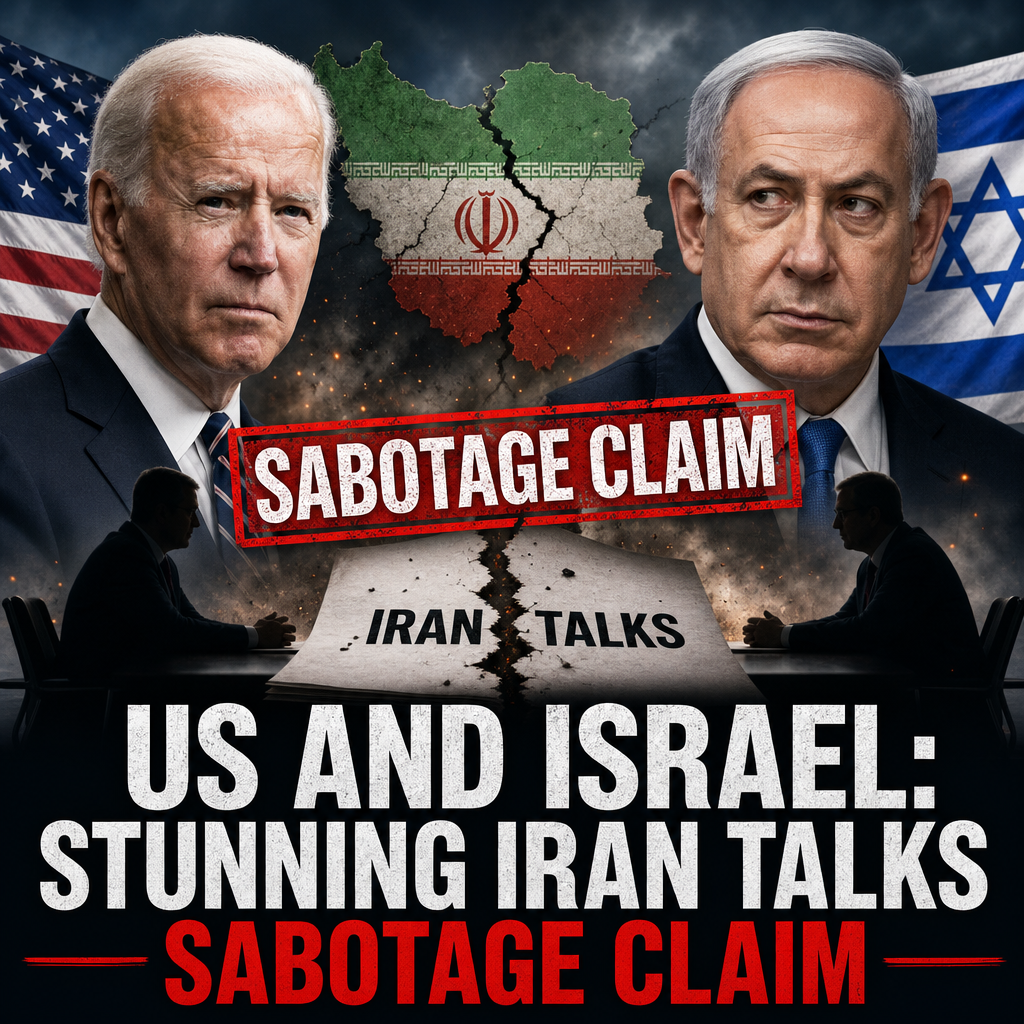
US and Israel: Stunning Iran Talks Sabotage Claim


US and Israel are once again at the center of a familiar, high-stakes diplomatic dispute after claims surfaced that the two countries helped sabotage Iran talks, reviving questions about whether backchannel diplomacy in the Middle East can survive deep mistrust, covert pressure, and competing security goals.
The allegation itself matters, but so does the climate in which it emerged. Any conversation involving Iran’s nuclear program, sanctions relief, and regional security is already fragile. Add in the long history of confrontation between Tehran, Washington, and Jerusalem, and even the hint of interference can quickly become a political weapon. That is why the story should be read not as a simple accusation, but as part of a much larger struggle over influence, legitimacy, and leverage.



What the sabotage claim means in context
The core claim is straightforward: Iranian officials and sympathetic commentators suggest that talks were undermined by external meddling, with US and Israeli interests presented as working in tandem to keep diplomacy from advancing. In practical terms, that allegation implies more than just disagreement over policy. It suggests deliberate interference aimed at preserving pressure on Iran rather than allowing a negotiated breakthrough.
That framing is useful to Tehran for obvious reasons. If negotiations fail, blaming outside sabotage allows Iranian leaders to shift attention away from domestic criticism, sanctions fatigue, or gaps between what Iran is willing to offer and what Western negotiators will accept. It also reinforces a longstanding narrative in Iranian politics: that the country’s adversaries prefer containment over compromise.




From the US and Israeli perspective, however, the same story looks very different. Washington has repeatedly argued that Iran must take meaningful steps on enrichment, monitoring, and regional behavior before sanctions relief can be justified. Israel, meanwhile, has long viewed a nuclear-capable Iran as an existential threat and has little incentive to support a deal it believes could leave Tehran with too much room to maneuver.
Why the accusation resonates
The sabotage claim resonates because it fits into a pattern many observers already recognize:
– Iran distrusts Western promises after years of sanctions and abandoned or weakened agreements.
– Israel sees diplomacy through the lens of security, not reconciliation.
– The United States often tries to balance diplomacy with deterrence, which can make its message appear inconsistent.
– Regional crises, from Gaza to Red Sea tensions to broader proxy conflicts, make trust even harder to build.
In that sense, the accusation is not shocking. It is almost expected. What is more important is whether there is evidence of active sabotage or merely a breakdown caused by incompatible objectives.
US and Israel: competing narratives and a familiar stalemate
Coverage across major international outlets tends to show that there is no single accepted version of events. RT’s framing leans strongly toward the sabotage narrative, highlighting the idea that outside actors are working to prevent progress. Al Jazeera’s broader Middle East reporting often emphasizes the regional power dynamics and the human cost of diplomatic collapse, while Sky News generally reflects the Western mainstream view that negotiations fail when Iran’s positions remain too far from what the US and its partners can accept.
Taken together, these perspectives suggest something important: the dispute is not only about whether talks were derailed, but about who gets to define failure.
If the story is told from Tehran, the failure is externalized. If told from Washington or Jerusalem, the blame is shifted to Iran’s refusal to comply fully with demands. If told from a more neutral regional lens, the conclusion is usually harsher: all sides contribute to the deadlock, and civilians across the region pay the price when diplomacy collapses.
That is the uncomfortable reality here. There may be no single smoking gun. What looks like sabotage to one side may look like strategic deterrence to another. What one government calls pressure, another calls coercion. What one media outlet presents as obstruction, another presents as security policy.
The bigger stakes behind the Iran talks
The reason this story matters goes beyond diplomacy theater. Any collapse in Iran talks can have consequences well beyond the negotiating room. It can harden positions on enrichment, increase the risk of miscalculation, and strengthen hardliners on all sides who argue that talking is pointless.
The stakes include:
– Nuclear risk: stalled talks can reduce transparency and increase uncertainty.
– Regional escalation: tensions can spill into proxy arenas and maritime routes.
– Domestic politics: leaders may exploit the standoff to rally support at home.
– Market instability: energy prices can react quickly to fears of wider conflict.
That is why responsible reporting on sabotage claims needs restraint. It is possible to acknowledge the seriousness of the allegation without presenting it as proven fact. It is also possible to understand why Iran would feel boxed in, why the US and Israel would fear a weak deal, and why neither side trusts the other enough to move easily.
A cautious reading of the evidence
At present, the most defensible conclusion is that the talks were likely strained by a combination of factors rather than one single covert act. External pressure may have played a role. Domestic politics almost certainly did. Strategic mistrust absolutely did.
The claim that US and Israel “sabotaged” the discussions may be politically potent, but potency is not proof. Still, dismissing it outright would miss the larger point: diplomacy around Iran is so fragile that even the perception of interference can help kill momentum. In that sense, the line between sabotage and breakdown is often thinner than any side wants to admit.
A conclusion that leaves room for doubt
The most balanced view is that the alleged sabotage reflects a real geopolitical pattern, even if the specific claim remains contested. US and Israeli policy toward Iran has consistently prioritized containment and security, while Iran has consistently portrayed itself as a target of unjust pressure and hidden coordination. Those narratives are not equal in evidence, but they are equally powerful in shaping behavior.
For now, the lesson is less about one dramatic accusation and more about the limits of diplomacy in a region where almost every move is interpreted through suspicion. Unless the parties can narrow that trust gap, talks will remain vulnerable not only to public failure, but to the quieter forces that make failure feel inevitable.