
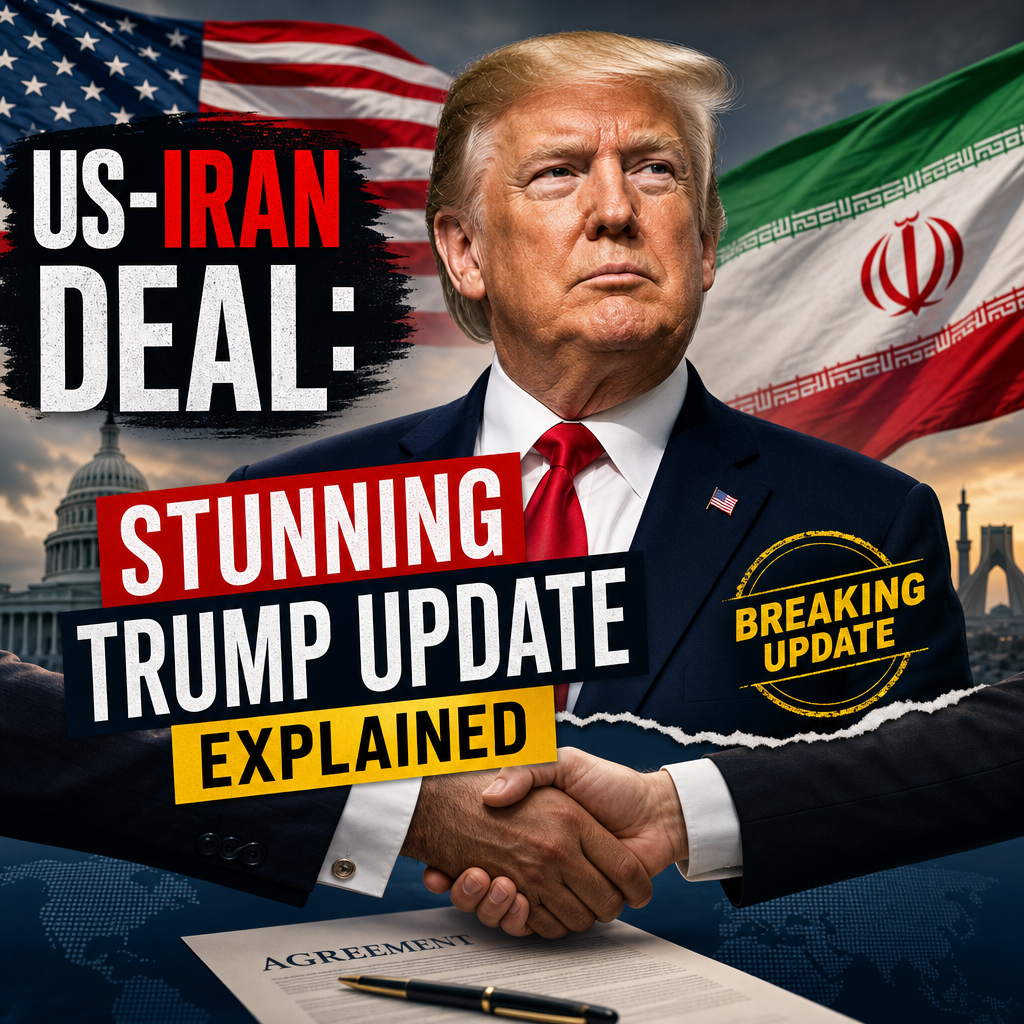
US-Iran Deal: Stunning Trump Update Explained


US-Iran deal talk has resurfaced with a surprising Trump-era twist, and the new chatter has reignited a familiar question: is this a genuine diplomatic opening, or just another round of pressure politics dressed up as progress?
The latest reports circulating across international coverage suggest that Washington and Tehran may be moving, at least cautiously, toward some kind of understanding. But the details remain murky, and that matters. In a relationship defined by decades of mistrust, even the wording used by officials can carry as much weight as the policy itself. What looks like a breakthrough from one angle can appear, from another, to be a tactical pause before the next confrontation.



What the US-Iran deal reports are really saying
Across the coverage, one theme is consistent: there is interest in de-escalation, but very little confidence that a durable agreement is close.
Al Jazeera’s wider reporting on the region tends to frame Iran-related diplomacy in the context of broader Middle East tensions, especially the pressure created by Gaza, Lebanon, Red Sea disruptions, and the risk of a wider regional conflict. From that perspective, any reported US-Iran engagement is not happening in a vacuum. It is part of a larger effort by multiple players to reduce the chance of a direct military spiral.




RT’s coverage, by contrast, has emphasized the idea of a “deal” as evidence that hardline confrontation may be giving way to pragmatic bargaining. That framing often highlights the possibility that Trump-style dealmaking, whether through sanctions leverage or public pressure, could force movement where softer diplomacy has stalled. The appeal of that argument is obvious: if maximum pressure can produce concessions, then a negotiated outcome becomes more believable.
Sky News has generally approached the story with more caution, reflecting the skepticism that often surrounds Iran negotiations in Western policy circles. That skepticism is not baseless. Past US-Iran agreements have repeatedly been undermined by domestic politics, changing administrations, and disputes over verification. In other words, even when both sides signal openness, the gap between announcement and implementation can be huge.
What emerges from these different angles is not a simple yes-or-no on whether a deal exists. It is a picture of tentative signaling, strategic messaging, and competing interpretations.
Why Trump’s name changes the meaning
Any “Trump update” on Iran immediately raises the stakes because Trump is not just another political figure in this debate; he is deeply associated with the collapse of the 2015 nuclear deal after the United States exited it in 2018. That decision reshaped the entire diplomatic landscape.
Supporters of a Trump-led approach argue that the earlier agreement was too weak, too narrow, and too easy for Iran to exploit. They say a tougher stance is exactly what forced Tehran back to the table.
Critics say the opposite: that abandoning the original agreement damaged US credibility and made future diplomacy harder. From this view, Iran has every reason to doubt that any new promise from Washington will survive the next election cycle.
That split is central to understanding why the latest reports have produced such mixed reactions. For some observers, a Trump-linked move implies leverage and seriousness. For others, it suggests instability and the possibility of another abrupt policy reversal.
The stakes behind any agreement
Even if the current discussions are only preliminary, the stakes are substantial. A real US-Iran understanding would affect several urgent issues at once:
– Iran’s nuclear enrichment program and international inspection access
– Sanctions relief and the flow of frozen or restricted assets
– Regional security, including attacks on shipping and proxy conflicts
– The political balance inside both Washington and Tehran
The nuclear issue remains the core of the dispute. Western governments want measurable limits and robust verification. Iran insists on recognition of its rights and relief from sanctions that have battered its economy. That fundamental mismatch has made every negotiation feel like a contest over who blinks first.
There is also a domestic political layer. In the US, any deal involving Iran is likely to face attacks from lawmakers who see Tehran as fundamentally untrustworthy. In Iran, hardliners can portray compromise as surrender, especially if the promised economic benefits do not arrive quickly enough. So even if negotiators reach a formal understanding, they still have to sell it at home.
Why the reporting feels contradictory
Part of the confusion comes from how international outlets frame the same developments. One network may emphasize “deal reached,” while another stresses “talks continue” or “no final agreement yet.” That difference is not just stylistic. It reflects the reality that diplomacy often advances through incomplete, deliberately vague steps.
A few possibilities can explain the current wave of reporting:
1. A limited understanding may have been reached on a narrow issue, such as prisoner exchanges or de-escalation channels.
2. Backchannel discussions may be creating momentum without a formal public announcement.
3. Political signaling may be doing most of the work, with each side trying to shape perceptions before any real concessions are made.
4. The story may still be premature, with media outlets drawing broader conclusions from partial information.
That uncertainty is important, because it prevents readers from treating a headline as a finished diplomatic event. In US-Iran relations, the difference between rumor, framework, and signed deal has often been the difference between hope and disappointment.
A cautious conclusion
The most reasonable interpretation of the latest US-Iran deal claims is that something is moving, but not enough to call it settled. The range of reporting suggests genuine diplomatic interest, yet also deep structural obstacles. The contrast between sources is telling: some see a breakthrough in the making, others see a familiar cycle of pressure and ambiguity.
The truth may sit in the middle. Trump-related diplomacy has a way of generating dramatic headlines, but the US-Iran file is one of the hardest in global politics. Any agreement would need more than a bold announcement. It would need verification, durability, and enough political support to survive beyond the news cycle.
For now, the smartest reading is neither celebration nor dismissal. There may be a deal-taking-shape, but history says caution is still the most honest response.

























