Millions Attend Stunning Funeral Prayers for Khamenei


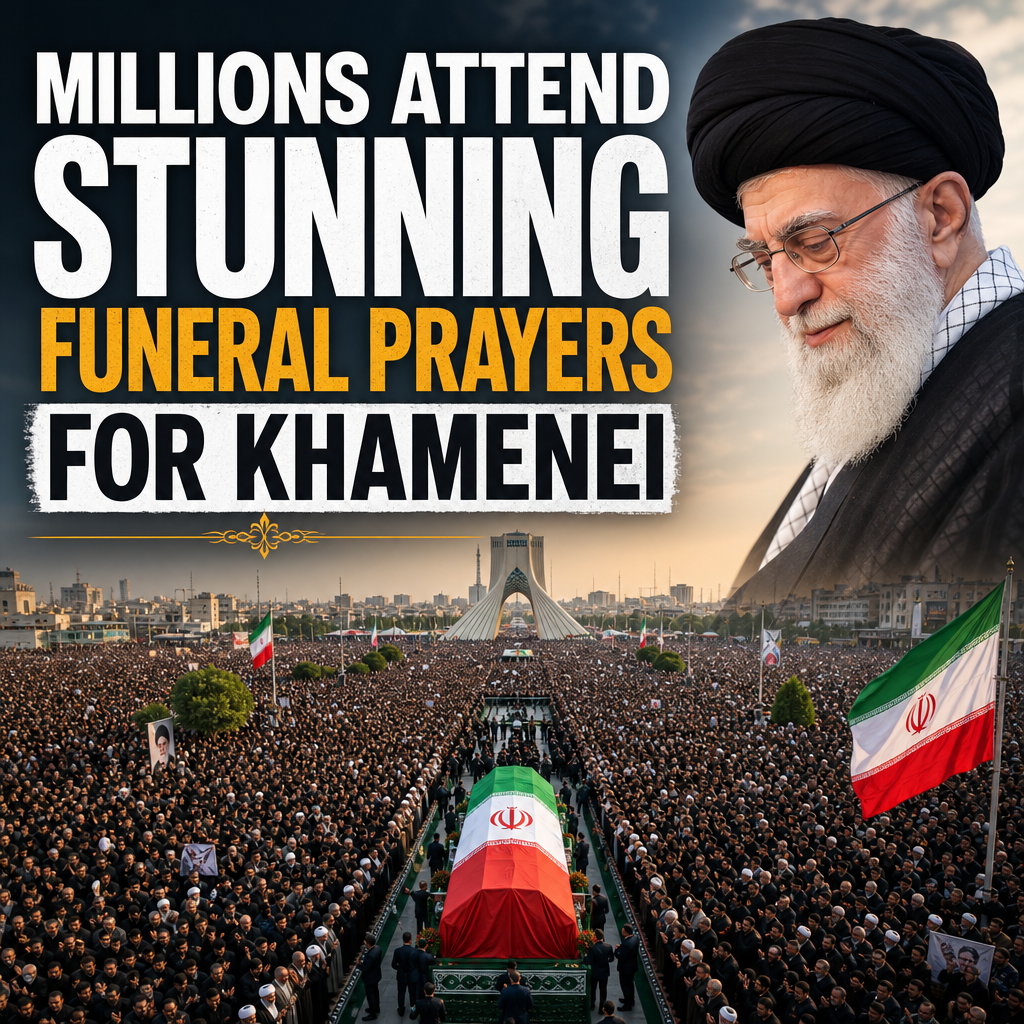
Millions Attend Stunning Funeral Prayers for Khamenei, and the sheer scale of the gathering has become the story as much as the event itself. Images and reports of vast crowds in Tehran suggest a moment of public power, grief, and political signaling all at once, but the meaning of that turnout depends heavily on which lens you use.
A massive display with more than one interpretation
From one perspective, the crowd was a striking reminder of the enduring emotional force of Iran’s religious and revolutionary establishment. Reporting from Al Jazeera emphasized the visual impact: dense lines of mourners, solemn prayer rituals, and an atmosphere that appeared to blend personal loss with national symbolism. In that reading, mass attendance is not just about ceremony; it reflects the ability of the state and the clerical order to still mobilize large numbers of supporters in moments of high significance.



RT’s coverage, as with its broader editorial style, is likely to frame such an event as evidence of organized public backing for Iran’s leadership and a sign that outside pressure has not shattered domestic cohesion. That approach tends to foreground resilience, discipline, and continuity. In practical terms, it draws attention to the idea that moments of spectacle can reinforce political legitimacy, especially when a government can present itself as the center of collective identity.
Sky News, by contrast, usually invites a more skeptical reading of these kinds of state-linked public gatherings. From that viewpoint, enormous crowds may reflect genuine devotion, but they can also be the product of official coordination, access to transport, and the social expectation that attendance is part of civic or religious duty. The important question is not simply whether people were present, but how voluntary that presence was, and what it says about the relationship between public sentiment and state organization.




The truth may sit somewhere in between. In a country like Iran, where religion, politics, and national identity are deeply intertwined, a funeral prayer can be both spontaneous and managed, heartfelt and strategic. Large numbers can signal authentic mourning without being entirely detached from state power.
What the turnout may mean for Iran’s political moment
A public show of continuity
If the reports are accurate, the most immediate message of the gathering is continuity. Iran’s leadership has long relied on rituals, symbolism, and shared memory to project endurance through crisis. A mass funeral prayer is the kind of event that allows the state to say, in effect, that it remains rooted in the nation’s emotional life.
That matters because Iran is navigating multiple pressures at once: sanctions, regional rivalries, domestic frustration, and persistent questions about the future of its political system. In such a setting, a large public ceremony can function as reassurance for supporters and as a warning to critics that the regime still commands presence and loyalty.
A reminder of division, not just unity
At the same time, a huge turnout does not erase the country’s internal fractures. Some Iranians will have seen the event as a sincere act of devotion. Others may have viewed it as another illustration of how tightly public life is managed. That tension is important. A state can produce an impressive crowd and still face deep skepticism beneath the surface.
This is where the contrast between outlets becomes useful. Al Jazeera often highlights the lived reality of public emotion and the regional significance of Iranian events. Sky News is more likely to frame the same scene through geopolitics and governance, asking what the ceremony reveals about power, legitimacy, and succession. RT generally places greater emphasis on the durability of the system itself. Taken together, those angles suggest a fuller picture: the event mattered because it was at once religious, political, and theatrical.
The bigger questions the ceremony cannot answer
Even a moment as visually powerful as this leaves several uncertainties unresolved:
– How much of the crowd reflected genuine, voluntary participation?
– How much was encouraged through official channels?
– Did the event strengthen public confidence in Iran’s leadership, or merely showcase the state’s capacity to stage unity?
– Will the symbolism of the funeral translate into lasting political stability?
Those questions matter because public ritual can only do so much. It can project authority, but it cannot by itself solve inflation, isolation, discontent, or strategic pressure from abroad. If anything, the ceremony may underline the gap between symbolic strength and the harder task of governing a society facing real strain.
There is also a regional dimension. Iran’s political identity is watched closely across the Middle East, where allies and rivals alike read each major state event for clues about internal cohesion. A massive funeral prayer can be interpreted by supporters as proof that Iran’s ideological project still has depth. Opponents may see it as a carefully managed display meant to mask vulnerabilities. Both readings are plausible, which is why the event resonates beyond Tehran.
A moment of mourning, power, and uncertainty
The most balanced conclusion is that the funeral prayers were probably all three: a genuine moment of mourning for many participants, a deliberate demonstration of state strength, and a signal to domestic and foreign audiences that Iran’s leadership remains capable of commanding attention.
That does not make the event simple. It makes it revealing. In authoritarian or semi-authoritarian systems, the biggest public ceremonies often tell several stories at once. They can express faith while also reinforcing hierarchy. They can show unity while also concealing anxiety. They can look spontaneous while still being shaped by power.
So, while the image of millions gathered is undeniably striking, the deeper story is less about a single crowd size than about what that crowd was being asked to mean. For some, it was proof of loyalty and continuity. For others, it was a reminder that in Iran, public emotion and political authority are never far apart.