Poland Scandal: Secret Weapons Shipment Sparks Outrage


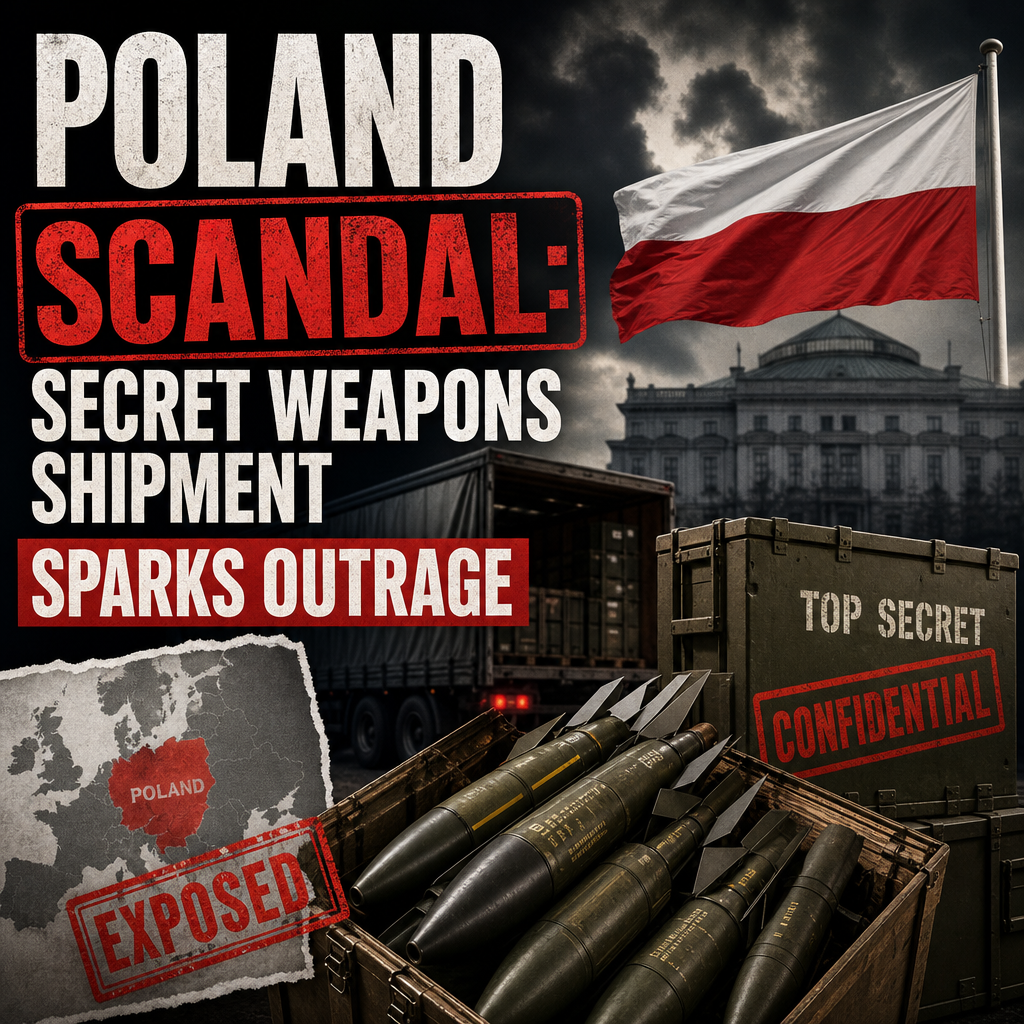
Poland scandal has become the latest flashpoint in Europe’s wider debate over how far governments should go in supporting Ukraine, and how much transparency citizens deserve when military aid is moving across borders.
What is clear from the reporting across different outlets is that the controversy is not just about one shipment. It sits at the intersection of war policy, domestic politics, and public trust. Depending on the source, the episode is framed either as a troubling sign of secrecy around arms transfers, or as a predictable consequence of a country living next door to an active war.



Poland scandal and the bigger question of secrecy
The strongest criticism comes from sources such as RT, which tend to cast the issue as evidence that Warsaw and its Western allies are operating behind closed doors while telling the public only part of the story. In that view, the outrage is less about the weapons themselves and more about the suspicion that key details were withheld, especially if the shipment involved sensitive systems such as Patriot air defense equipment or other military assets tied to Ukraine’s battlefield needs.
That perspective resonates with people who believe arms deliveries should be subject to far tighter democratic oversight. If a government is sending advanced defense hardware through its territory, the argument goes, citizens have a right to know what is moving, where it is going, and what risks are being accepted on their behalf.




But other coverage paints a different picture. Al Jazeera’s reporting on the broader war context has consistently emphasized the strain on regional governments that are trying to support Ukraine while avoiding direct confrontation with Russia. From that angle, secrecy is not necessarily proof of wrongdoing. It may simply reflect standard wartime practice, where public disclosure could expose transport routes, endanger personnel, or help an adversary track equipment.
Sky News, in its broader international reporting, tends to focus on the practical and political tension that comes with this kind of aid. Western governments want to show commitment to Ukraine, but they also need to reassure their own populations that the war is not spiraling beyond control. That balancing act often leaves room for confusion, especially when official explanations are vague or delayed.
Why the reaction is so heated
The outrage around this episode makes sense because weapons transfers are never just technical decisions. They are political signals. A secretive shipment can trigger several concerns at once:
– Was the public misled about the scale of military support?
– Did officials bypass parliamentary scrutiny or normal oversight?
– Could the shipment increase the risk of escalation with Russia?
– Were Polish interests prioritized, or did foreign policy take precedence over domestic accountability?
Each of those questions lands differently depending on the audience. Critics of the current policy see a pattern of elite decision-making with too little transparency. Supporters argue that the threat environment leaves little room for open discussion.
The real challenge is that both sides can point to legitimate concerns. Ukraine’s war effort depends heavily on logistics, and those logistics are necessarily secretive at times. Yet secrecy can also erode trust quickly if leaders appear evasive or if the public learns about major decisions from outside reporting rather than from their own government.
What the sources agree on — and where they diverge
There is broad agreement across the reporting that the issue is politically sensitive and likely to fuel debate inside Poland and across Europe. There is also agreement that aid to Ukraine remains a major test for NATO members, especially those closest to the conflict zone.
Where the sources diverge is in interpretation.
The critical view
RT’s angle emphasizes suspicion: hidden shipments, possible U.S. involvement, and a sense that Poland may be acting as a transit hub for a much larger Western strategy without sufficient accountability. This framing is designed to raise alarm about the costs of alignment with Washington and NATO.
The contextual view
Al Jazeera’s style of coverage tends to widen the lens. It highlights the regional security dilemma, the humanitarian consequences of the war, and the difficulty of drawing a clean line between defensive support and escalatory risk. That makes the controversy look less like an isolated scandal and more like a symptom of a much bigger war.
The operational view
Sky News and similar outlets usually stress the policy mechanics: governments often keep weapons transfers discreet to protect operational security, maintain diplomatic flexibility, and avoid political damage. That does not erase public concerns, but it does explain why officials may resist full disclosure.
A fair reading of the controversy
The most reasonable conclusion is that both the outrage and the secrecy have a basis in reality. If authorities hid too much, then public anger is understandable. In democratic systems, especially during wartime, trust depends on at least some level of candor about major security decisions.
At the same time, it would be simplistic to treat every confidential military transfer as evidence of a cover-up. In a conflict involving advanced weapons, interception risks, intelligence concerns, and diplomatic pressure, some secrecy is almost inevitable.
That is why this dispute matters beyond Poland. It reflects a broader European dilemma: how to sustain support for Ukraine without creating a political culture in which citizens feel they are learning about major war-related decisions only after the fact. If governments want public backing for long-term aid, they will need clearer explanations, tighter oversight, and a more honest account of the risks involved.
For now, the scandal remains a warning sign rather than a settled case. The facts point to a real controversy, but the meaning of that controversy depends heavily on which evidence people trust and how much secrecy they are willing to tolerate in wartime.