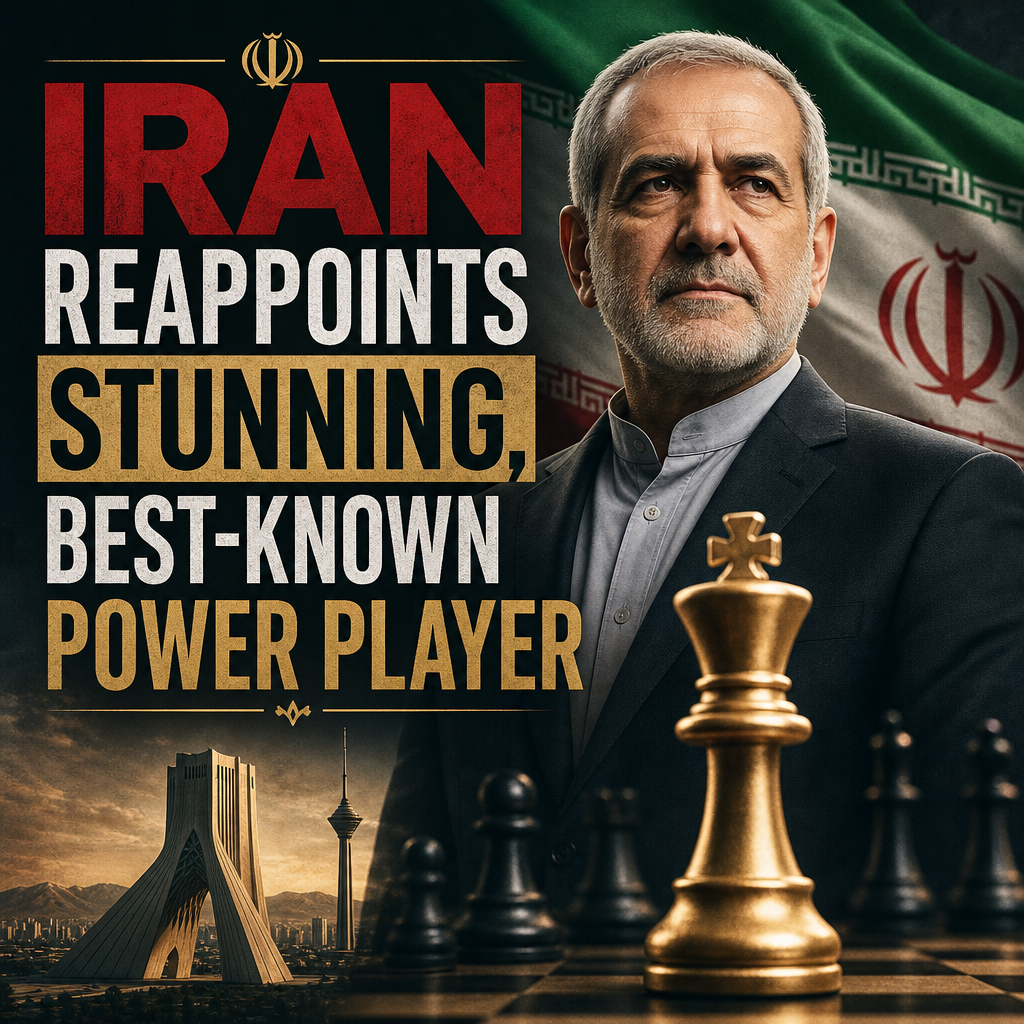
Iran Reappoints Stunning, Best-Known Power Player


Iran Reappoints a familiar hardliner at a moment that says as much about succession politics as it does about day-to-day governance in Tehran.
The move, reported by multiple international outlets, puts one of Iran’s best-known political operators back into a powerful position just as the country is navigating a rare period of transition and uncertainty. To supporters, the appointment signals continuity and a determination to keep the system stable. To critics, it looks like a familiar recycling of trusted insiders at a time when Iranians are already facing economic strain, regional pressure, and questions about who will shape the next phase of the Islamic Republic.



Why this appointment matters now
The timing is the most important part of the story. According to reporting from Al Jazeera, the decision came during a period of intense symbolism around the death and funeral arrangements of Supreme Leader Ayatollah Ali Khamenei. In Iran, personnel changes at the top are never just administrative. They often reveal where power is really moving, who is trusted, and what factions are gaining influence behind the scenes.
RT’s coverage framed the decision as a return of a seasoned figure with deep institutional experience, suggesting that the leadership is prioritizing familiarity and reliability over experimentation. That interpretation makes sense in a system where loyalty, not just competence, is often the deciding factor. In politically sensitive moments, Tehran tends to reach for people who already know how to operate inside the state’s security and clerical hierarchy.




Sky News, meanwhile, emphasized the broader regional and political implications. A reappointment like this is not happening in isolation. Iran is still managing tensions with Western governments, dealing with sanctions and economic pressure, and balancing rival power centers at home. In that context, bringing back a well-known power player can be read as an attempt to project control at a time when uncertainty could otherwise invite challenges from within.
Iran Reappoints a power player: what the sources agree on
Despite different editorial angles, the three outlets point to several shared themes:
– The appointment is highly symbolic, not merely bureaucratic.
– The figure involved is deeply familiar to the system, which suggests trust and continuity.
– The move reflects an effort to consolidate authority during a sensitive period.
– Iran’s succession landscape remains unsettled, even if the official tone is one of calm.
That overlap matters. It suggests this was not simply a personnel update but a strategic signal. In governments like Iran’s, where formal institutions coexist with overlapping centers of influence, such choices often tell observers more than public speeches do.
Continuity versus reform
The most obvious reading is that continuity is winning. Reinstalling a veteran insider can reassure hardliners, clerical allies, and security institutions that the state will not drift. It can also reduce the risk of bureaucratic friction at a moment when the leadership may want a predictable hand on the wheel.
But there is another side to that argument. For many Iranians, especially younger citizens, the repetition of the same political names can reinforce the sense that the system is closed and resistant to renewal. If the economy remains weak and social frustration stays high, a familiar appointment may be seen less as stability and more as evidence that the ruling elite is circling the wagons.
That tension between stability and stagnation is central to understanding the move.
What the appointment reveals about power in Tehran
Iran’s political system is often described as layered, but in practice it is also personal. Networks of trust matter. Senior officials who have already proven loyal, competent, or ideologically dependable tend to remain the safest choices when the stakes are high. That is why the return of a known figure can be so revealing: it shows who is considered dependable enough to manage sensitive relationships, enforce discipline, or act as a bridge between institutions.
It also suggests that, even amid generational change and international pressure, the Iranian establishment is not ready to take risks on outsiders or reform-minded figures. Whether that is a sign of confidence or fear depends on the observer. Hardliners might call it prudence. Reformists would likely call it a missed opportunity.
There is also a succession dimension. With Iran’s leadership structure always shaped by the Supreme Leader’s authority and the machinery surrounding it, every major appointment is scrutinized for hints about what comes next. Even when officials deny long-term political calculation, the pattern of reappointments often hints at which faction is preparing for a more uncertain future.
The bigger picture: stability, but at what cost?
The most honest conclusion is that the appointment probably serves the regime’s short-term interest in control, even if it does little to solve the country’s deeper problems. A trusted insider can help the state stay coordinated, especially in a period of grief, transition, or external pressure. But stability bought through familiar names may not address the underlying grievances that keep resurfacing inside Iran.
Those include:
– economic hardship tied to sanctions and mismanagement
– political fatigue among a population that has heard reform promises before
– internal competition among elite factions
– the challenge of managing Iran’s regional posture without provoking further isolation
That is why the reappointment should be seen as more than a personnel decision. It is a statement about the kind of system Iran’s leadership wants to preserve: controlled, hierarchical, and cautious about change.
Still, the picture is not entirely clear-cut. Public reporting leaves some uncertainty about how much this move reflects strategic planning versus immediate crisis management. It may be both. In Iran, those two things often overlap.
What seems clear is that Tehran is signaling continuity at a moment when continuity itself is becoming harder to guarantee.