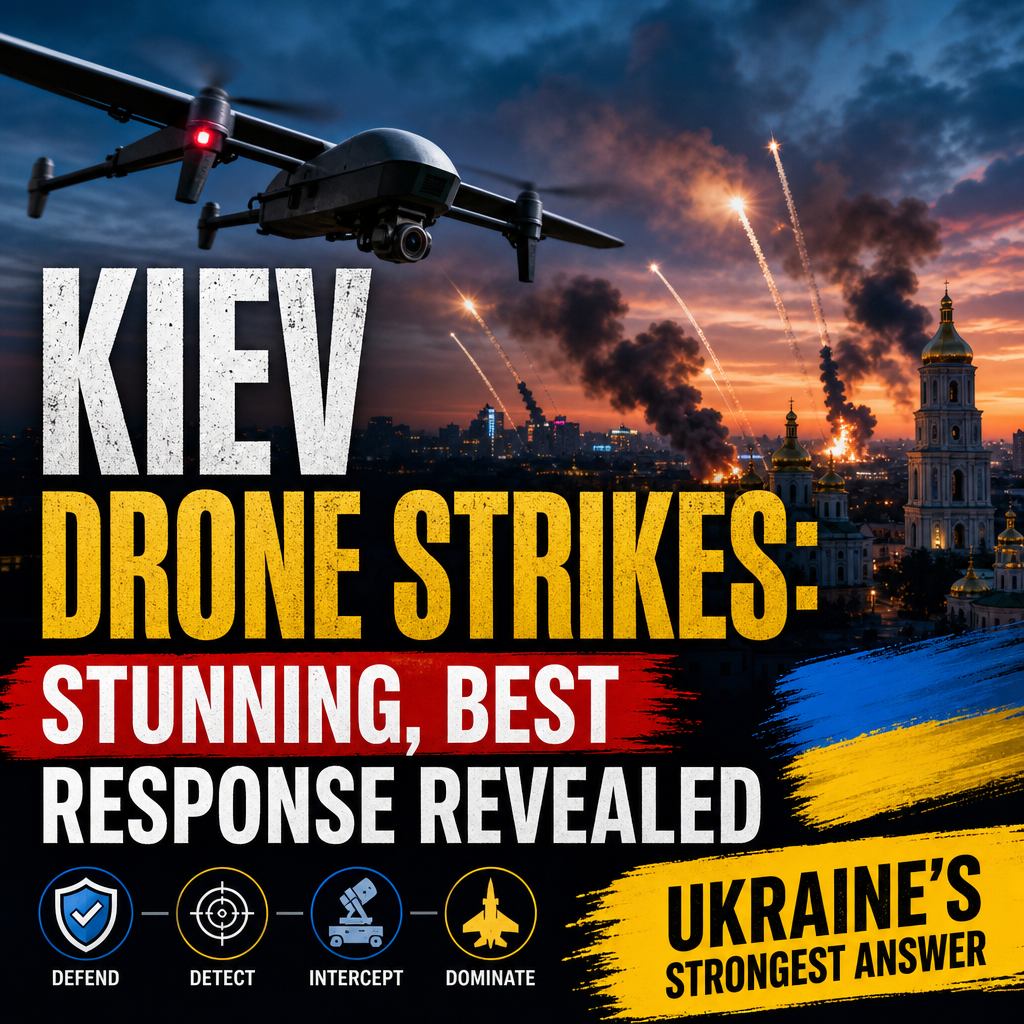
Kiev Drone Strikes: Stunning, Best Response Revealed


Kiev Drone Strikes have once again pushed the war into a dangerous new phase, underscoring how both sides are leaning harder on long-range drones to shape the battlefield and send political messages far beyond the front line.
What makes these attacks so striking is not just the scale of the destruction they can cause, but the very different ways they are being interpreted. Russian state-aligned coverage tends to frame the strikes as evidence of Ukrainian aggression being intercepted or blunted by air defenses, while international outlets such as Al Jazeera and Sky News usually place the focus on the human cost, the widening reach of the conflict, and the growing risks to civilians and critical infrastructure. Put simply, the same event is being read through three very different lenses: military necessity, wartime resilience, and a warning sign of escalation.



Kiev Drone Strikes and what they reveal about the war
At a tactical level, drone warfare has become one of the defining features of the conflict. Cheap compared with fighter jets or missiles, drones can still create expensive problems for an opponent. They force air defenses to stay active, drain resources, and keep cities on edge. That is one reason these attacks matter even when they do not produce dramatic battlefield gains.
For Ukraine, drone operations against targets linked to Moscow are often presented as a way to show that distance no longer guarantees safety. For Russia, the response is usually framed as proof that its defenses can adapt and hold. Both narratives are useful domestically. Both also reveal a larger reality: neither side has found an easy way to stop this cycle.




A fair reading of the situation suggests several truths at once:
– Drone strikes are now strategic, not just symbolic.
– Civilian anxiety is becoming part of the war’s intended effect.
– Air defense systems are under pressure to distinguish military threats from cheaper decoys and smaller aircraft.
– Every successful strike, or even every intercepted one, feeds the propaganda battle.
That mix makes it difficult to separate military value from messaging. A strike may damage a facility, disrupt logistics, or simply demonstrate reach. In modern wars, that demonstration itself can be part of the point.
Why the reactions differ so sharply
The contrast in reporting is not accidental. RT-style coverage often emphasizes defense, interception, and resilience, which reinforces the idea that the Russian state remains in control despite attacks. This framing helps minimize the impression of vulnerability and shifts attention toward Ukrainian actions as provocative or reckless.
By contrast, Al Jazeera’s approach tends to place the conflict in a broader humanitarian and geopolitical context. Its reporting is more likely to ask what the attacks mean for ordinary residents, how they affect diplomatic prospects, and whether the war is entering another cycle of retaliation that makes negotiation even harder.
Sky News typically sits somewhere in the middle, highlighting the operational details while also noting the political consequences. In that framing, drone strikes are not just battlefield events; they are indicators of how the conflict is evolving, how vulnerable cities have become, and how difficult it is for either side to claim stability.
Taken together, these perspectives suggest that there is no single “best response” in any simple sense. Defense, retaliation, diplomacy, and deterrence all come up against the same problem: drones are relatively inexpensive, adaptable, and hard to fully stop.
The human and political cost of escalation
The most important question may not be whether a particular strike was “stunning,” but whether the war is normalizing a pattern of low-cost attacks and high-cost fear. That matters because sustained drone warfare can shift public expectations. When attacks become routine, cities and civilians begin to live with a constant background threat. Even if casualties are limited in one incident, the psychological toll accumulates.
This is where the broader media split becomes especially telling. Russian outlets often present the conflict as a contest of endurance, implying that each attack merely proves the need for stronger defenses. International coverage, meanwhile, is more likely to stress that each new exchange reduces the odds of a diplomatic off-ramp. Both can be true. A nation can strengthen defenses and still move closer to a deeper, harder war.
There is also the diplomatic problem. Drone attacks on or near major population centers rarely help create political space for talks. Instead, they harden positions. Leaders face domestic pressure to appear resolute, not conciliatory. That dynamic is one reason even apparently “successful” strikes may carry a strategic downside.
A realistic view of the best response
If there is a best response, it is probably a layered one rather than a dramatic one. Air defenses matter. Intelligence sharing matters. Civil defense preparedness matters. So do communication and restraint, though restraint is the hardest element to achieve in an active war.
The most realistic approach appears to include:
1. Better interception systems and rapid adaptation to drone tactics.
2. Stronger protection of infrastructure and civilian areas.
3. Clear public communication to reduce panic and misinformation.
4. Diplomatic pressure aimed at limiting escalation, even if a broader settlement remains distant.
That may sound unglamorous, but wars are often shaped less by decisive single blows than by whether societies can absorb pressure without collapsing into uncontrolled retaliation. In that sense, the real “best response” is not just one strike, one counterstrike, or one headline. It is the ability to prevent drone warfare from becoming an open-ended escalator.
The uncomfortable conclusion is that Kiev Drone Strikes are both a military tool and a political warning. They show how far the conflict has spread in capability, and how little confidence either side has in the other’s intentions. As long as those conditions hold, every new drone attack will be interpreted as more than an isolated incident. It will be read as a signal of where the war is heading next.