
How Breaking News Shapes Our Understanding of Global Events
In an era defined by instant notifications and 24-hour media cycles, breaking news has become the primary lens through which we view the world. Whenever a major international incident unfolds, millions of people tune in simultaneously, relying on rapid-fire updates to make sense of complex realities. This immediate stream of information does much more than simply inform us; it actively constructs our perception of global events, influencing everything from public opinion to geopolitical policy.

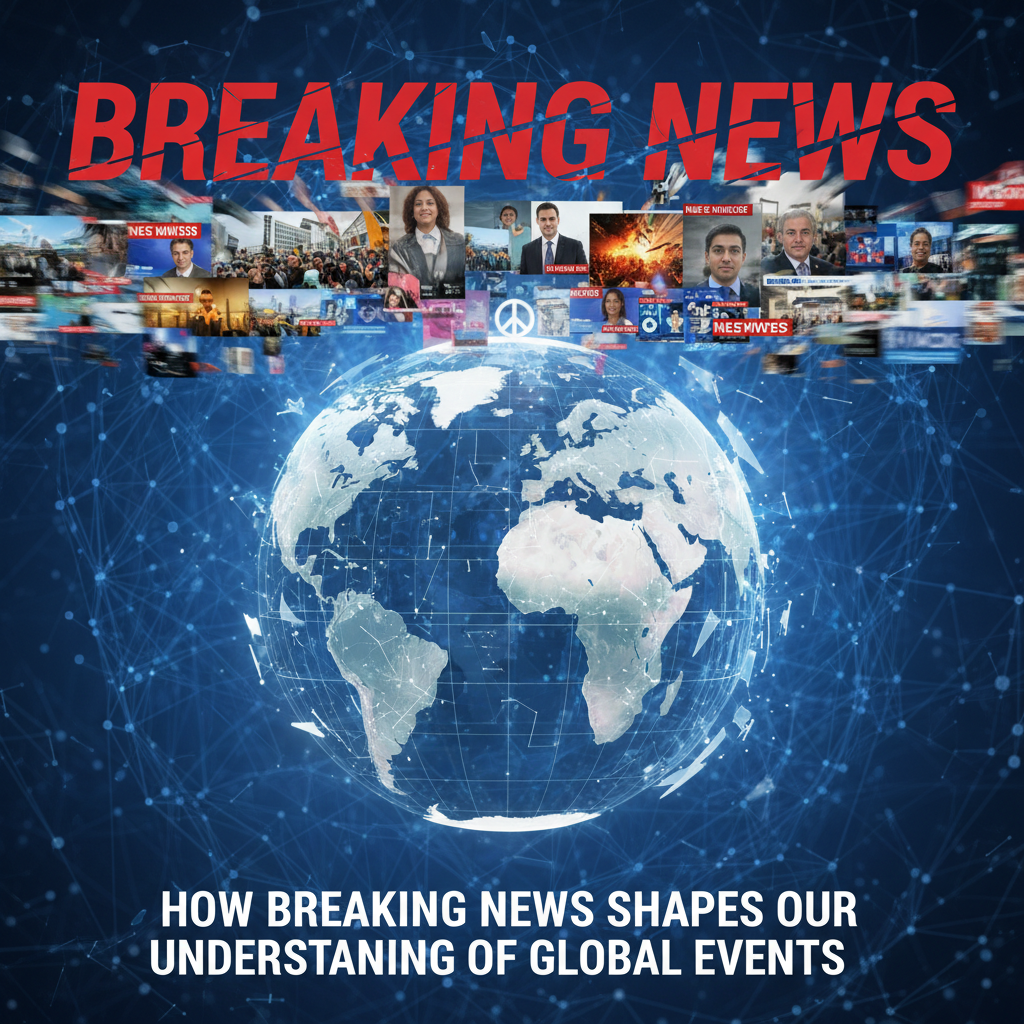
[IMAGE: A digital world map glowing with news feeds and data streams symbolizing global connectivity.]


The psychological impact of real-time reporting cannot be overstated. When stories develop faster than they can be verified, audiences experience a unique cognitive rush. However, this speed often comes at the expense of context, leading to distorted views of international crises.

The Psychology of Instant Information
Human brains are hardwired to pay attention to sudden, dramatic shifts in our environment as a survival mechanism. Modern news outlets capitalize on this instinct by using urgent chyrons, red banners, and breathless anchor commentary. While this ensures that vital safety information reaches the public quickly, it also triggers a state of heightened emotional arousal.
- Emotional Highs: Urgent updates provoke immediate empathy, fear, or outrage.
- Cognitive Shortcuts: Under time pressure, viewers rely on surface-level details rather than deep analysis.
- The Availability Heuristic: Heavily broadcast stories dominate our memory, making them seem more statistically probable than they are.
Because first impressions are remarkably sticky, the initial framing of a breaking story often dictates how people interpret subsequent developments, even if early reports turn out to be inaccurate.
The Challenge of Speed Versus Accuracy
In the digital age, the race to be first often eclipses the duty to be accurate. Social media platforms reward velocity, encouraging citizen journalists and official news agencies alike to publish fragments of information before they are fully vetted.
[IMAGE: A split-screen showing a smartphone with social media alerts alongside a traditional television news broadcast.]
The Ripple Effects of Premature Reporting
When unverified details enter the global ecosystem, they can trigger profound misunderstandings. Financial markets might react violently to a false rumor, diplomatic tensions can flare over misattributed quotes, and local populations can be mischaracterized based on sketchy early accounts. Correcting these initial narratives later requires immense effort, as human beings naturally cling to the first version of a story they heard.
Navigating the 24-Hour News Cycle Responsibly
To maintain a balanced understanding of global affairs in a fast-paced media landscape, consumers must adopt active media literacy habits. Recognizing the distinction between speculation and verified fact is essential for anyone hoping to stay truly informed.
Ultimately, breaking news is a powerful tool that brings the world closer together, but it requires careful navigation. By pausing to look for deep context, waiting for official confirmations, and diversifying our news sources, we can prevent sensationalized headlines from hijacking our worldview and instead build a more mature, accurate understanding of global events.