Iran Deal: Stunning Best Chance for Peace


Iran deal talks have once again pushed diplomacy to the center of a deeply fragile Middle East, and the latest reports suggest that, despite years of mistrust and confrontation, there may still be a narrow opening for negotiation rather than escalation.
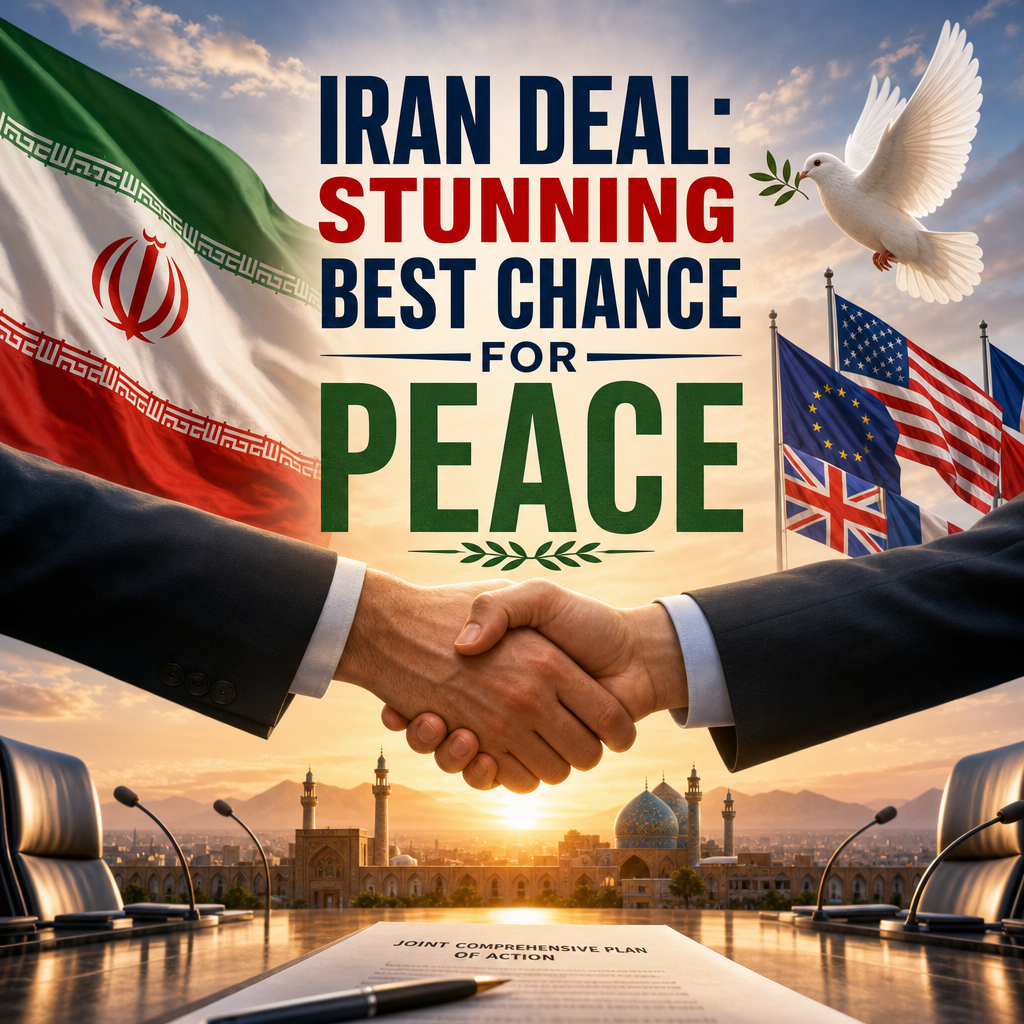
At the heart of the current discussion is a reported plan that Tehran is said to be considering, involving a possible agreement that could be signed by the presidents of Iran and the United States. That idea alone is striking. For years, both sides have moved in and out of indirect talks, sanctions pressure, military threats, and diplomatic deadlock. Yet the fact that a formal deal is being floated again suggests something important: neither side appears eager to drift into a larger conflict, even if both remain wary of looking weak.



Why the Iran deal matters now
The renewed focus on an Iran deal comes at a moment when the wider region is already under severe strain. Conflicts in Gaza and across the wider Middle East have heightened fears that any confrontation involving Iran, Israel, the United States, or their allies could spiral quickly. In that environment, even a limited agreement could carry outsized importance.
Supporters of diplomacy argue that a deal is not just about nuclear policy or sanctions relief. It is also about reducing the risk of miscalculation. If negotiations can create even a temporary framework for communication, that alone may lower the chance of accidental escalation.




There is also a practical argument. Sanctions have placed long-term pressure on Iran’s economy, but they have not produced a lasting strategic breakthrough for Washington. Meanwhile, Iran has gained leverage through its regional alliances and nuclear advances. That stalemate helps explain why some observers see a negotiated settlement as the only realistic path forward.
What the different news outlets suggest
The latest reporting paints a picture of cautious possibility rather than certainty.
Al Jazeera’s coverage emphasizes that Tehran is reportedly weighing a plan connected to direct presidential signing, which would indicate a more serious political commitment than the backchannel diplomacy that often dominates Iran-U.S. talks. That framing underscores the potential significance of the moment: if leaders are being positioned to personally endorse an accord, the deal may be intended to signal durability and seriousness.
RT’s coverage, as usual, tends to frame Western sanctions and U.S. pressure as part of a broader pattern of coercion. That perspective reinforces the argument that Iran has long viewed negotiations through the lens of unequal power, where any deal must also address the burden of economic and political pressure. From that angle, a fresh agreement could be seen as an opportunity to rebalance a relationship that Tehran considers fundamentally adversarial.
Sky News brings a more conventional Western policy lens, typically focusing on the strategic risks, verification questions, and the reaction of regional partners. That viewpoint matters because any Iran deal will not be judged only by the two countries signing it. Israel, Gulf states, European governments, and U.S. domestic politics all shape whether a deal can survive beyond the announcement stage.
The case for optimism — and the limits of it
The best argument for optimism is that diplomacy remains possible even after years of hostility. That is not a small thing. In international relations, serious negotiations often happen only when both sides reach the same conclusion for different reasons: continuing the conflict is too costly, but compromise is still politically survivable.
For Iran, an agreement could mean economic relief, reduced isolation, and a chance to stabilize its domestic situation. For the United States, it could mean increased oversight of nuclear activity, fewer immediate military risks, and a diplomatic win in a region where setbacks have been common.
But optimism should be tempered by hard lessons.
A deal can only work if it is seen as credible by both publics and by the states watching from the sidelines. That means several hurdles remain:
– Verification: Any agreement must include mechanisms to monitor compliance clearly and consistently.
– Sequencing: If sanctions relief comes too late, Iran may distrust the process; if it comes too early, critics in Washington may object.
– Regional reaction: Israel and some Gulf states may fear the agreement gives Iran room to maneuver without fully curbing its influence.
– Political durability: A deal signed in one administration may not survive the next unless it is built on a broader consensus.
These concerns are exactly why a reported presidential-level signing would matter. Symbolism alone will not secure peace, but it may help a deal survive the first wave of skepticism.
A cautious conclusion: peace is possible, but not simple
The phrase “best chance for peace” is attractive because it captures a real truth: diplomacy, however flawed, is still preferable to open-ended confrontation. In a region already scarred by wars, proxy battles, and mistrust, the alternative to negotiation is rarely stability. It is usually a slow drift toward greater danger.
Still, calling the current moment a breakthrough would be premature. Reports indicate possibility, not certainty. The basic disagreements between Tehran and Washington remain profound, and the surrounding geopolitical climate is volatile. If the Iran deal is revived, it will not solve the Middle East’s problems overnight. It may, however, create a space where the most dangerous ones can be managed rather than intensified.
That is why this moment matters. The strongest argument for the deal is not that it promises perfect peace, but that it may offer the most realistic path to avoid a worse outcome. In a region where escalation is often easier than compromise, that alone makes the talks worth watching closely.