Russian Frigate Fires Stunning Warning Shots in Channel


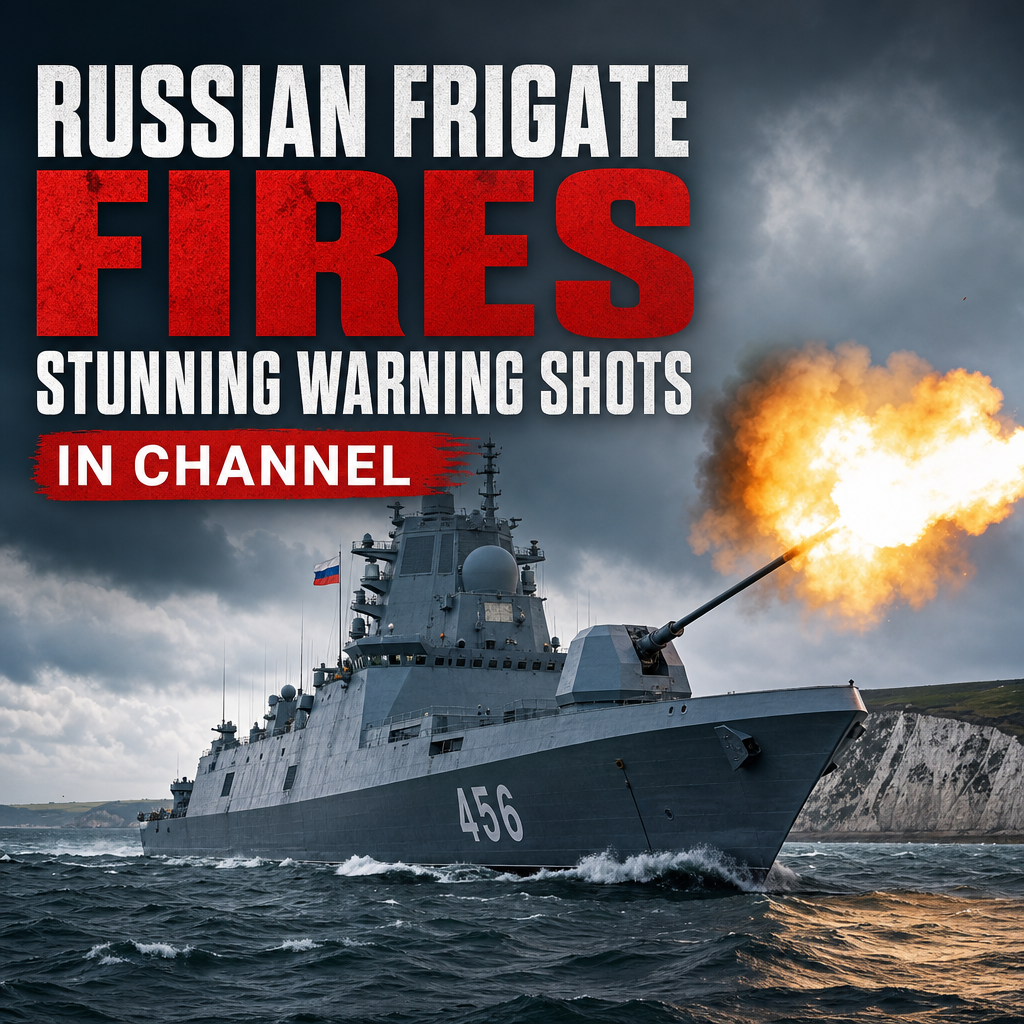
Russian frigate fires warning shots in the English Channel, but the bigger story is less the flashes at sea than the geopolitical tension they reveal.
According to Russian accounts carried by state media, the incident involved a British-operated cargo vessel that did not comply with instructions while moving through a busy maritime corridor. Moscow said a warship issued warning shots to force the vessel to stop or alter course, framing the episode as a matter of enforcing navigation rules and preventing what it described as a potential security breach.



That version of events, however, sits uneasily alongside the broader information climate around the story. Western coverage has tended to emphasize the risk of escalation, the symbolism of a Russian naval presence near UK waters, and the possibility that Moscow uses such encounters to project strength. Meanwhile, regional reporting and international analysis have focused on how quickly maritime incidents can become political flashpoints when relations are already strained by the war in Ukraine.
Russian frigate fires warning shots: what the accounts suggest
At the center of the story is a simple but consequential question: was this a routine enforcement action or a deliberate show of force?




Russian reporting presents the incident as controlled and proportionate. In that framing, the frigate acted after repeated warnings were ignored. The implication is that the ship’s crew followed established procedures and that the warning shots were meant to prevent a larger problem, not provoke one.
Other outlets are more cautious. They note that the English Channel is one of the world’s most heavily trafficked shipping lanes, which makes any military action there highly sensitive. Even if warning shots were legally defensible, the optics are unmistakable: a Russian warship and a civilian vessel in close proximity, with shots fired in a sea lane watched closely by NATO states.
This is where the competing interpretations matter:
– Moscow’s view: the frigate enforced maritime discipline and responded to non-compliance.
– Western view: the episode fits a pattern of Russian signaling and intimidation.
– Neutral maritime view: without full navigational data, it is difficult to judge the legality and proportionality of the response.
That uncertainty is important. In incidents at sea, the facts can be technically specific — positions, radio calls, flag state, course changes, jurisdiction — while the public narrative becomes instantly geopolitical.
Why the English Channel raises the stakes
The English Channel is not just another shipping route. It is a narrow, crowded, strategically watched stretch of water connecting the North Sea to the Atlantic. Commercial ships, fishing vessels, naval units, and coast guards all operate there under tight constraints.
That makes any armed encounter unusually fraught.
Even a small exchange can trigger alarm for several reasons:
1. Close quarters leave little room for error
A misunderstanding over a radio call or navigation instruction can escalate quickly when vessels are moving through a busy lane.
2. Military presence signals intent
A frigate’s appearance in such waters is never neutral. It can be interpreted as routine transit, intelligence gathering, deterrence, or provocation depending on the observer.
3. The political context is already hostile
Since Russia’s full-scale invasion of Ukraine, every maritime and air encounter involving Russian assets near NATO territory has been viewed through a security lens.
Sky News-style coverage of similar events has typically highlighted the domestic reaction in the UK: concern about border security, anger over Russian assertiveness, and calls for clear rules of engagement. That perspective contrasts with Russian state framing, which tends to emphasize sovereignty, lawful enforcement, and Western hypocrisy.
How different outlets frame the same incident
The value of comparing multiple sources is not just to collect facts, but to understand how each outlet organizes those facts.
– RT tends to foreground Russian official explanations and treats the incident as evidence that Russian forces acted within their rights.
– Al Jazeera often places such stories within the wider context of conflict, diplomacy, and maritime risk, stressing uncertainty and the broader consequences for regional security.
– Sky News generally centers the British and NATO response, with attention to public safety, military readiness, and the political implications of Russian behavior near UK waters.
Taken together, those perspectives reveal a familiar media split. One side emphasizes procedure and legitimacy. Another emphasizes risk and intimidation. A third focuses on the wider strategic picture. The truth may contain elements of all three.
What should readers make of it?
The most responsible conclusion is also the least dramatic: this was a serious maritime encounter, but not yet enough is publicly known to treat any single narrative as complete.
A fair reading would say three things at once:
– Russian officials may well have believed they were acting within maritime norms.
– British or Western observers may reasonably see the episode as another example of coercive signaling.
– The public still lacks enough independently verified detail to know whether the response was necessary, excessive, or something in between.
That nuance matters because incidents like this can harden political positions before the facts are settled. In a period of heightened tension, warning shots are never just warning shots. They are messages — to the vessel involved, to neighboring states, and to the wider audience watching for signs of resolve or restraint.
The larger lesson is that naval encounters in contested waters are increasingly about perception as much as procedure. In that sense, the real impact of the Channel incident may be less about the shots themselves and more about what they are intended to communicate: that Russia is willing to assert itself at sea, and that the UK and its allies will scrutinize every move closely.
Until more independently verified details emerge, the safest conclusion is that the event reflects not just a single maritime dispute, but the fragile and deeply political state of European security at sea.