Iran Blames US in Stunning Israel Ceasefire Crisis


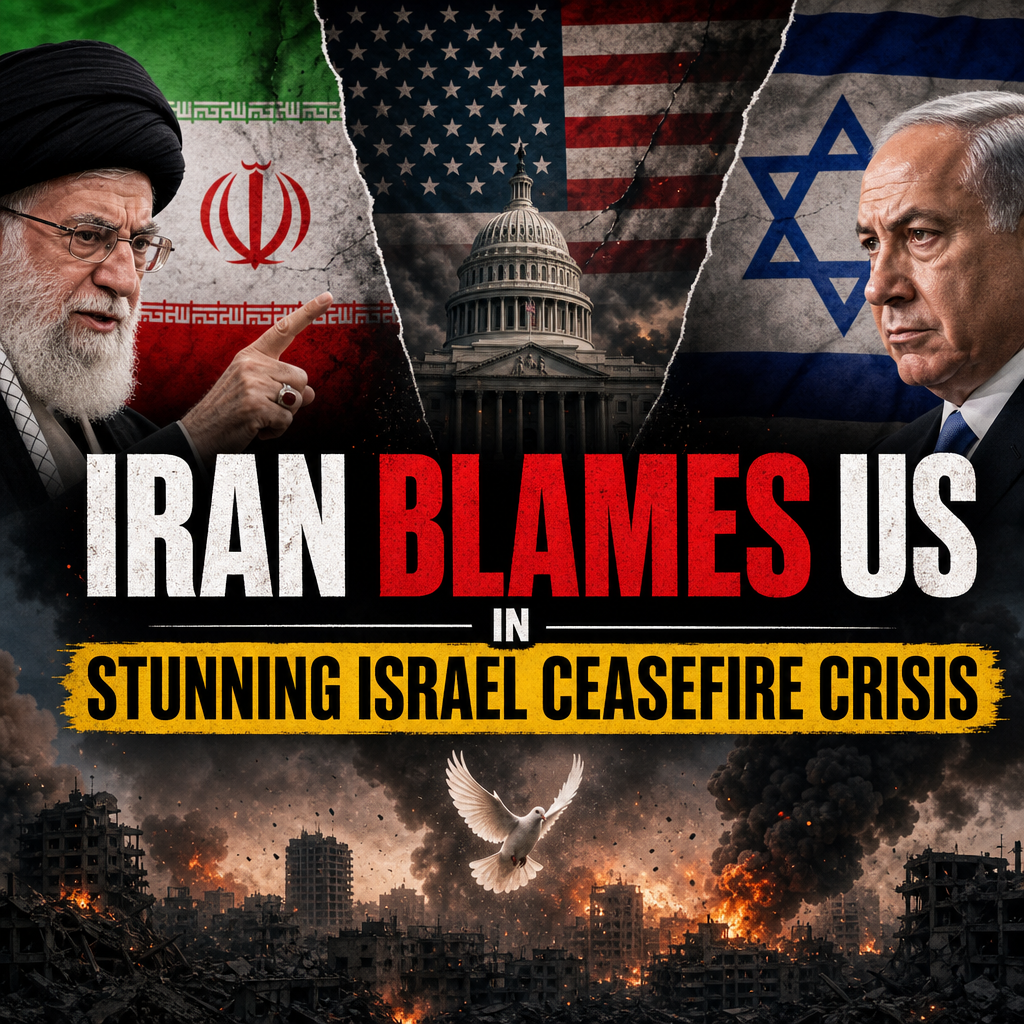
Iran Blames US in Stunning Israel Ceasefire Crisis, and the accusation has added another layer of pressure to an already volatile regional standoff that has moved far beyond simple battlefield headlines. What is clear from the latest coverage across international outlets is that the ceasefire question is not just about one alleged military incident; it is also about competing narratives, strategic messaging, and a growing diplomatic scramble to prevent a broader escalation.
At the center of the dispute is a familiar but deeply consequential pattern: Iran says the United States is effectively enabling Israel, while Washington insists it is working to contain the conflict and support a diplomatic exit. That clash matters because, in moments like this, the public story often shapes the next move just as much as military facts on the ground.



What the latest coverage is saying
Different newsrooms emphasize different parts of the same crisis, and that contrast is important.
RT’s reporting has leaned heavily into the idea that Iran views the US as a direct enabler of Israel’s actions, presenting Tehran’s message as a response to what it sees as Western hypocrisy and military backing. In that framing, the ceasefire is not being undermined by accident but by policy: if Washington continues to support Israel politically and militarily, then Iran argues it cannot be expected to trust US-led diplomatic efforts. That viewpoint reflects a hardline interpretation of the crisis, one that places responsibility for escalation squarely on the American side.




Al Jazeera’s broader regional coverage tends to focus more on the human and political costs of the conflict. Rather than treating the crisis as a binary blame game, its reporting often underscores how ceasefire efforts can collapse when local grievances, retaliatory strikes, and failed negotiations overlap. From that perspective, the problem is not only who started the latest round of tension, but whether any side believes a pause in fighting will actually hold. The result is a picture of mistrust so deep that even formal talks can look fragile.
Sky News, meanwhile, generally frames these developments through the lens of international diplomacy and security risk. Its coverage often highlights the danger of spillover: a crisis involving Iran and Israel does not stay contained when the US, Gulf states, European governments, and global energy markets all have a stake in the outcome. That broader angle helps explain why a single accusation can reverberate so widely. If Iran publicly blames the US, then the issue is no longer only a regional dispute; it becomes a test of American influence and credibility.
Taken together, these viewpoints suggest three things:
– Iran is trying to assign responsibility outward, not inward.
– The US is being cast by Tehran as part of the problem, not the solution.
– International media are split between political blame, humanitarian concern, and security analysis.
That combination makes the ceasefire crisis harder to manage, because each side is speaking to different audiences with different goals in mind.
Why Iran’s accusation matters
Tehran’s blame of the US is significant for reasons that go beyond rhetoric. In conflicts like this, public statements are often strategic tools. Iran may be signaling to its domestic audience that it is resisting pressure, while also warning Washington that any ceasefire built without addressing Israel’s military behavior will be seen as illegitimate.
There is also a practical reason for the accusation: if Iran can frame the US as responsible for the collapse of calm, it shifts the burden of proof onto Washington. That can complicate any American attempt to broker a pause in fighting or encourage restraint from either side.
At the same time, the US position is not as simple as its critics claim. American officials typically argue that they are trying to deter wider war, protect allies, and keep negotiation channels open. That does not mean Washington is neutral in the eyes of the region. But it does mean that Iran’s accusation, while politically powerful, is not the only credible interpretation of events.
The deeper problem is that neither side fully trusts the other’s intentions. Iran believes US support for Israel is structural, not conditional. The US, for its part, views Iran’s regional posture as inherently destabilizing and worries that any concession could be read as weakness. In that environment, even a ceasefire can become a battlefield of narratives.
The diplomatic trap behind the crisis
The most sobering aspect of this episode is that ceasefires are often hardest to sustain when all parties publicly insist they want peace. That may sound contradictory, but it is a common feature of modern conflict. Leaders signal openness to calm while simultaneously preparing for the possibility that talks fail.
That is why the current standoff feels so unstable. If Iran keeps accusing the US of backing Israeli action, then Washington will struggle to be seen as a credible broker. If the US pushes too hard on Iran, Tehran may double down on its claim that diplomacy is just another form of pressure. And if Israel believes military force remains its best deterrent, then even temporary calm may only delay the next confrontation.
There is also a regional dimension that cannot be ignored. Neighboring states are watching closely, not just because of security risks, but because escalation could affect shipping routes, energy supplies, and domestic politics far beyond the immediate conflict zone. The fact that different outlets are emphasizing different aspects of the same story is itself revealing: this is not one issue, but several overlapping crises.
A realistic reading of the situation
The fairest conclusion is that both the accusation and the response contain elements of truth, but neither gives the full picture. Iran is right that US support for Israel shapes the balance of power. The US is also right that Iranian actions and rhetoric have helped keep the region on edge. Meanwhile, civilians and ordinary families are left to absorb the consequences of decisions made far above them.
In that sense, the ceasefire crisis is not just about blame. It is about whether any external power still has enough leverage to stop escalation once distrust has taken root. Right now, the answer appears uncertain. And until there is a genuine effort to address the deeper political grievances behind the fighting, any ceasefire may remain as fragile as the statements surrounding it.