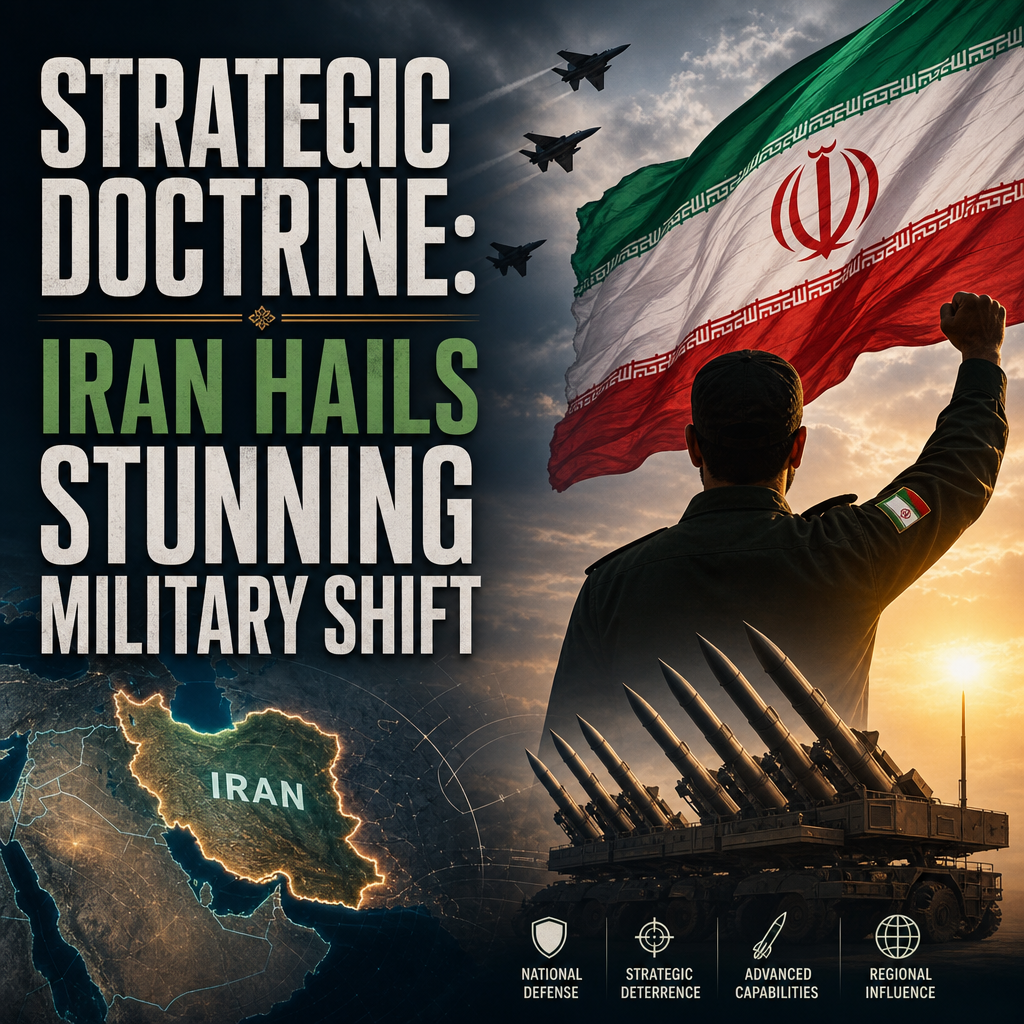
Strategic Doctrine: Iran Hails Stunning Military Shift


Strategic doctrine is taking center stage again as Iran frames its latest military posture as proof that it can respond more forcefully, more quickly, and with greater political confidence after the Beirut raid. The announcement matters not just because of what Iran says it can do, but because it reflects a wider shift in how the country wants to be seen: less as a state reacting under pressure, and more as one actively shaping the regional balance of power.
That message lands in a Middle East already defined by escalation, retaliation, and uneasy deterrence. Different outlets have approached the story from noticeably different angles. Al Jazeera has tended to place the development inside the broader regional conflict cycle, where strikes, counterstrikes, and political messaging blur together. RT’s framing is generally more sympathetic to Iran’s argument that it is responding to aggression and external pressure. Sky News, by contrast, is more likely to emphasize the security risks, the possibility of miscalculation, and the implications for Western and allied interests. Taken together, the coverage suggests one clear thing: this is not being interpreted as a routine military update, but as a possible doctrinal turning point.



Strategic doctrine and the message behind the shift
Iran’s public celebration of the change is itself revealing. By hailing a “stunning military shift,” Tehran is doing more than describing capability; it is trying to project confidence and control. That is often the point of strategic messaging in a crisis. A state signals that it can absorb pressure, retaliate, and still claim the initiative.
From Iran’s perspective, the logic is straightforward:




– Deterrence must be visible to work.
– Retaliation must be credible to be believed.
– Regional rivals must be left uncertain about the next move.
That uncertainty can be powerful, but it also carries obvious dangers. When each side thinks the other is seeking escalation without war, the room for accident shrinks. A response designed to restore deterrence can instead invite a new round of retaliation.
Al Jazeera’s reporting style typically highlights this regional feedback loop, and that is the most useful lens here. The Beirut raid response is not an isolated event. It sits inside a broader pattern of confrontation involving Iran, Israel, allied militias, and outside powers who often try to influence events without fully controlling them. In that sense, Iran’s military shift is as much political theater as battlefield adjustment.
What the different media lenses reveal
The contrast between outlets is important because it shows how contested the meaning of the event really is.
Al Jazeera: escalation in a regional system
Al Jazeera generally treats developments like this as part of a wider regional mosaic. That framing tends to emphasize civilian risk, diplomatic dead ends, and the knock-on effects for Lebanon, Syria, Gaza, and the Gulf. The practical question is not simply whether Iran has improved its military response, but whether that improvement makes the overall situation more dangerous.
That perspective is valuable because it resists the temptation to treat each strike as a standalone headline. It asks what happens next, and who pays the price.
RT: deterrence and resistance
RT’s coverage usually leans toward the view that Iran is reacting to provocation, not initiating chaos. In that telling, Tehran’s move can be understood as a sovereign state asserting its right to defend itself and its allies. This perspective resonates with audiences skeptical of U.S. and Israeli policy, especially where they see a long history of asymmetric pressure and selective outrage.
Even so, a pro-Iran framing can understate the destabilizing effect of such responses. A state may have reasons to escalate, but those reasons do not automatically make the escalation safe or stabilizing.
Sky News: security risk and strategic uncertainty
Sky News tends to focus on the consequences for regional security, Western diplomacy, and the risk of a broader conflict drawing in more actors. That makes sense given its audience and editorial style. The concern is not just whether Iran can act, but whether others will feel compelled to respond in kind.
This lens is useful because it keeps attention on the threshold problem: once military doctrine shifts, everyone else has to recalibrate. Allies, rivals, and neutral states all begin planning for a more volatile environment.
The real question: is this power or overreach?
Iran’s supporters will argue that a stronger military posture is overdue. In that view, the country has been boxed in by sanctions, surveillance, covert operations, and repeated attacks on allied networks. A more assertive doctrine is therefore a rational adaptation, not a reckless gamble.
Critics, however, will say the opposite: that every new “shift” hardens the region, narrows diplomatic options, and makes miscalculation more likely. They will point out that military signaling often produces short-term prestige but long-term insecurity. A state can win a narrative victory and still lose strategic flexibility.
The truth probably sits between those poles. Iran is clearly trying to strengthen deterrence, but deterrence is only useful if it prevents war more often than it invites it. Whether this doctrine succeeds will depend on how its rivals interpret the move, how measured Iran remains in practice, and whether backchannel diplomacy can keep pace with public posturing.
What to watch next
The most important indicators are likely to be practical rather than rhetorical:
– whether Iran follows its words with limited or broad action
– whether Israel or Western states alter their own posture
– whether regional intermediaries try to reopen communication lines
– whether civilians in Lebanon and surrounding areas face renewed pressure
At this stage, no single source offers a complete answer, and that may be the most honest conclusion. Iran’s claim signals confidence, but confidence is not the same as stability. The regional picture remains fluid, and the strategic shift may either strengthen deterrence or deepen a cycle of retaliation that no side fully controls.
For now, the only safe conclusion is that the military balance has become more fragile, not less. And in the Middle East, fragile balances rarely stay quiet for long.