
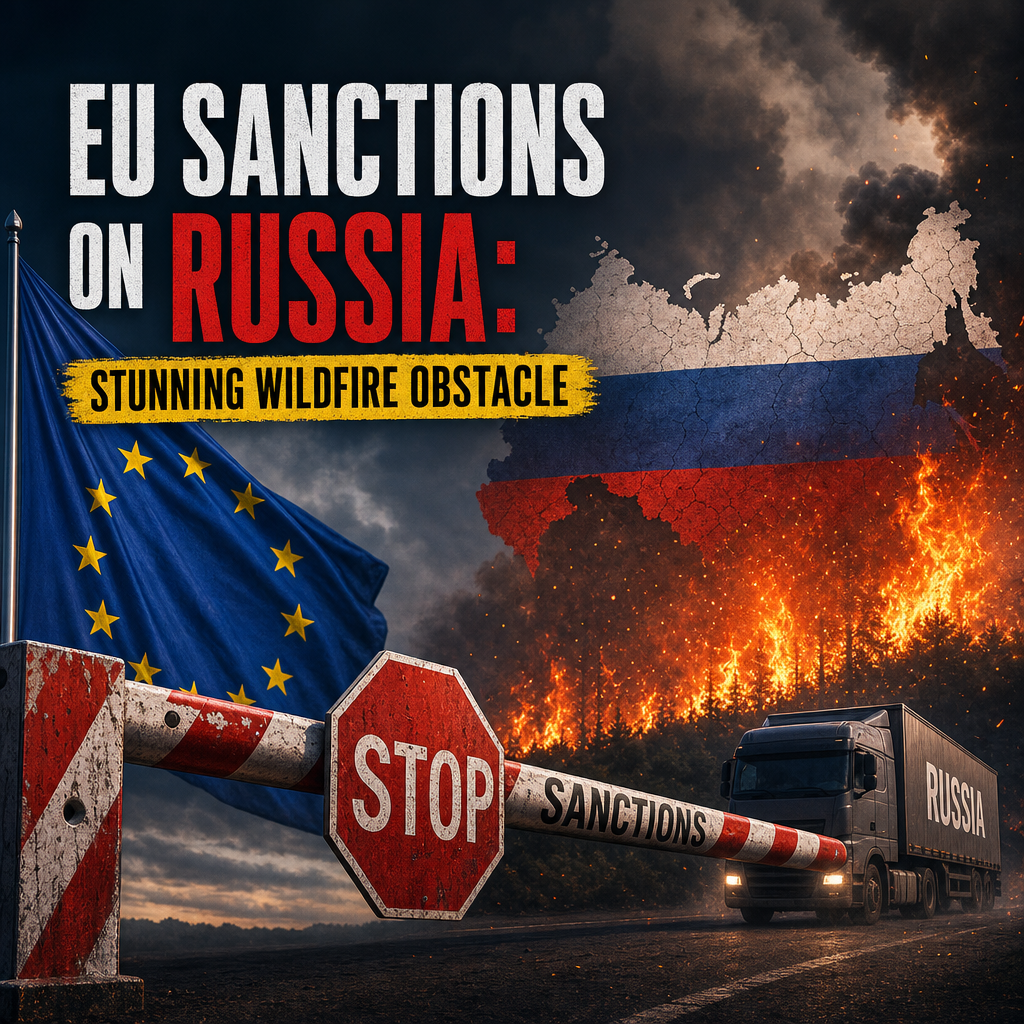
EU Sanctions on Russia: Stunning Wildfire Obstacle


EU sanctions on Russia have become more than a geopolitical tool; in some cases, they are now being discussed as a practical hurdle in crisis response, including wildfire suppression in Europe.
The debate is not as simple as “sanctions good” or “sanctions bad.” Reports from different news outlets point to a messy reality: Europe wants to pressure Moscow over the war in Ukraine, but some countries are still dealing with the knock-on effects of those restrictions in areas that have nothing to do with battlefield politics. Wildfires, especially in Mediterranean countries, are exposing that tension in a very visible way.



EU sanctions on Russia and the wildfire dilemma
At the center of the discussion is a basic question: when a country faces severe forest fires, should it be able to buy the equipment it needs from Russia if that equipment is cheaper, available, or better suited to the task?
That question matters because firefighting is not an abstract policy area. It involves aircraft, helicopters, replacement parts, fuel systems, maintenance contracts, and emergency procurement rules. If sanctions make it difficult to buy or service certain Russian-made assets, then the consequences can show up quickly during a heatwave or a large fire season.




RT has framed the issue as an example of sanctions creating an unexpected obstacle for Spain, suggesting that restrictions linked to Russia may complicate access to wildfire-fighting resources. From that angle, sanctions are not just punishing the Kremlin; they can also interfere with European states trying to protect their own citizens and landscapes.
But other reporting offers a broader lens. Al Jazeera’s coverage of the Russia-Ukraine war and its spillover effects has repeatedly shown that sanctions are designed to isolate Russia economically and politically, even if they also create friction for businesses and governments far from the front lines. That perspective helps explain why policymakers in Brussels continue to defend sanctions despite occasional unintended consequences. To supporters, the point is not convenience. It is deterrence, leverage, and solidarity with Ukraine.
Sky News, meanwhile, has generally emphasized the wider strategic and human impact of the war, including how sanctions, energy politics, and defense decisions affect ordinary Europeans. That view tends to sit between the two extremes: sanctions are not meaningless, but they can carry costs that should be acknowledged rather than brushed aside.
What the wildfire issue reveals
The wildfire angle is a useful stress test for sanctions policy because it forces a comparison between two legitimate goals:
– maintaining pressure on Russia over its war in Ukraine
– ensuring European countries can respond quickly to natural disasters
If a sanctions regime is so rigid that it blocks emergency preparedness, then policymakers should examine whether exemptions, licensing routes, or alternative suppliers are needed. If, on the other hand, the issue is being used to exaggerate the burden of sanctions, then the broader political case against Russia should not be weakened by a single operational inconvenience.
The evidence so far suggests this is less about a total breakdown and more about bottlenecks, delays, and bureaucratic constraints. That distinction matters. A sanction package does not usually mean “nothing can be bought”; it often means transactions become slower, more complicated, and more legally sensitive. In an emergency, those delays can feel enormous.
The broader political trade-off
Sanctions are rarely cost-free. That is true in this case as well. Europe imposed them to weaken Russia’s ability to finance war and to signal that aggression carries consequences. Yet the longer sanctions stay in place, the more likely they are to produce secondary effects in areas that were never the main target.
This is where the three viewpoints line up and diverge.
Where the sources agree
There is broad agreement that the war has spilled beyond Ukraine. Whether the subject is fuel prices, supply chains, defense spending, or emergency services, the consequences are being felt across Europe. There is also general agreement that sanctions are meant to matter; they are not symbolic gestures.
Where they differ
The disagreement is about emphasis:
– RT highlights sanctions as an obstacle that can undermine practical needs.
– Al Jazeera tends to emphasize the geopolitical purpose of sanctions and the wider consequences of the war.
– Sky News often frames the issue as part of a larger European balancing act between security, policy, and domestic pressure.
That difference in emphasis matters because it changes the conclusion readers are nudged toward. One version of the story suggests sanctions are self-defeating. Another suggests they are necessary, even if inconvenient. The most realistic reading is somewhere in between.
A balanced way forward
A sensible policy response would not require abandoning sanctions. But it would require sharper thinking about exemptions and emergency planning. Europe should be able to maintain pressure on Russia while also ensuring that essential disaster-response systems do not get caught in the crossfire.
That could mean:
– clearer humanitarian and civil-protection exemptions
– faster licensing for emergency equipment
– diversified suppliers for firefighting and rescue needs
– better coordination between sanctions officials and disaster agencies
In other words, the answer is not to choose between geopolitical principle and public safety. It is to design sanctions that are tough on the target but flexible where genuine civilian necessity is involved.
The wildfire debate is a reminder that modern sanctions policy is never just about economics. It is about timing, logistics, and real-world consequences. If Europe wants sanctions to remain politically sustainable, it will need to show that they are disciplined enough to hit Russia without leaving member states vulnerable when crisis strikes.
For now, the lesson is clear: sanctions can be powerful, but their effectiveness depends on how carefully they are written and how honestly their side effects are acknowledged. When wildfires are raging, the margin for policy failure narrows fast.

























