Crimea Fuel Crisis: Stunning Worst Since 2014


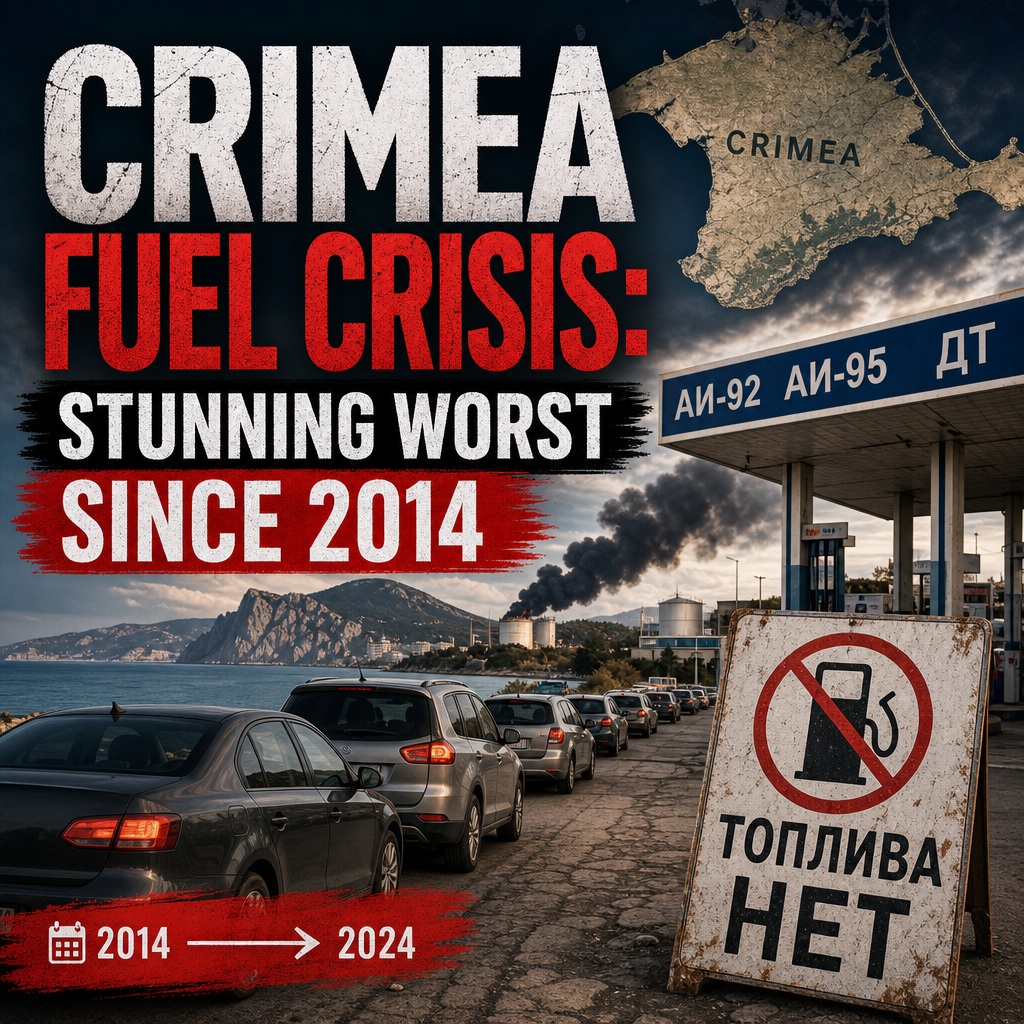
Crimea fuel crisis is becoming one of the clearest signs yet that the peninsula’s wartime logistics are under pressure, with repeated strikes on refineries, storage sites, and fuel routes contributing to the sharpest shortages there since Russia seized the territory in 2014. What makes the situation notable is not just the inconvenience at the pump, but the way it sits at the intersection of military strategy, civilian hardship, and information war.
Reports from multiple outlets point to a pattern rather than a single event: Ukrainian attacks have targeted energy and fuel infrastructure linked to Russian supply lines, while Russian-installed officials in Crimea have responded with rationing, public reassurances, and explanations that range from transport bottlenecks to temporary disruptions. Taken together, the picture is of a peninsula where fuel is no longer just a commodity. It has become a strategic pressure point.



Why the Crimea fuel crisis matters now
Fuel shortages on any territory are disruptive. In Crimea, they carry an added layer of significance because the peninsula is both a civilian home to millions and a heavily militarized zone that Russia uses to support operations in southern Ukraine and the Black Sea.
The immediate effects are easy to see:




– longer queues at filling stations
– limits on how much fuel drivers can buy
– higher costs for businesses and transport operators
– concern among residents about whether shortages will worsen
– pressure on local authorities to keep basic services moving
The deeper issue is that fuel is central to everything from commuting and freight to emergency services and military logistics. If deliveries are interrupted or storage is damaged, the impact spreads quickly. That is why observers describing this as the worst fuel crunch on the peninsula in more than a decade are not just talking about discomfort; they are describing a structural vulnerability.
At the same time, it would be too simple to say the crisis has one cause or one winner. Crimea’s fuel supply has long depended on a fragile chain of road, rail, and bridge connections to Russia, and wartime attacks have only amplified existing weaknesses. In that sense, the current shortages reflect both direct military pressure and the practical limits of keeping an occupied region supplied under strike conditions.
Ukraine’s strikes, Russian responses, and competing narratives
Ukraine’s view: pressure on occupied territory
From Kyiv’s perspective, strikes on fuel infrastructure are part of a broader effort to weaken Russia’s ability to sustain the war. Ukraine has repeatedly signaled that logistics nodes, energy facilities, and military supply chains are legitimate targets because they support operations against Ukrainian forces.
That approach makes strategic sense. Fuel depots and refineries are hard to replace quickly, and even temporary damage can force rerouting, rationing, and repair delays. For Ukraine, the goal is not necessarily to create chaos for its own sake, but to increase the cost of occupation and reduce Russian operational flexibility.
There is also a symbolic element. Crimea has held enormous political and military weight since 2014, and striking infrastructure there sends a message that the peninsula is not a safe rear area. It also complicates Moscow’s effort to present the region as securely integrated into Russia.
Moscow’s view: disruption, not collapse
Russian officials and state-aligned outlets have tended to frame the shortages differently. Their emphasis is usually on temporary disruption, logistical adjustment, and the idea that authorities are managing the problem. In this telling, rationing is a technical response rather than evidence of vulnerability.
That framing matters because it seeks to preserve confidence. If people believe the crisis is short-lived and controllable, they are less likely to panic-buy or interpret shortages as a broader failure of governance. Russian messaging also tends to avoid suggesting that Ukrainian strikes are achieving meaningful strategic effects, even when the shortages themselves tell a more complicated story.
What residents are actually experiencing
For ordinary people in Crimea, the politics matter less than the practical consequences. Fuel shortages are already altering daily routines, and the effects are likely to deepen if attacks continue or supply chains remain strained.
The human side of the crisis includes:
– workers arriving late or missing shifts because of transport disruptions
– small businesses facing higher delivery costs
– farmers and service providers dealing with fuel allocation problems
– drivers waiting longer and paying more at the pump
– uncertainty over how long rationing might last
This is where the crisis becomes more than a military headline. Even if Russian authorities succeed in smoothing supply over time, the episode reveals how vulnerable the peninsula is to disruption. A territory that relies on stable fuel flows cannot easily absorb repeated shocks, especially in wartime.
It also raises a difficult question: how much of the pressure is intended to affect military logistics, and how much inevitably falls on civilians? In practice, the two are hard to separate. That is one reason these events are so politically and morally contested.
The bigger picture: a war of infrastructure
Crimea’s fuel shortages fit a wider pattern seen across the war: both sides are increasingly using infrastructure as a battlefield. Refineries, power stations, bridges, rail links, and depots are no longer background assets; they are targets that can shift tempo and leverage.
This does not mean every strike produces a decisive result. Often, the outcome is incremental: slower deliveries, higher costs, more repairs, and more uncertainty. But those incremental effects can add up, especially over months. The crisis in Crimea suggests that even strong controls and heavy security may not be enough to insulate the peninsula from repeated pressure.
The most balanced conclusion is that the fuel crisis is real, serious, and likely to remain volatile. It does not by itself determine the war, but it does show how Ukraine’s long-range strikes are reaching into Russian-held territory in ways that matter. For residents, the immediate concern is gasoline. For military planners, it is logistics. For everyone watching the conflict, Crimea is once again a reminder that infrastructure can be as important as front lines.