Israel Nuclear Threat: Stunning, Eye-Opening Truth


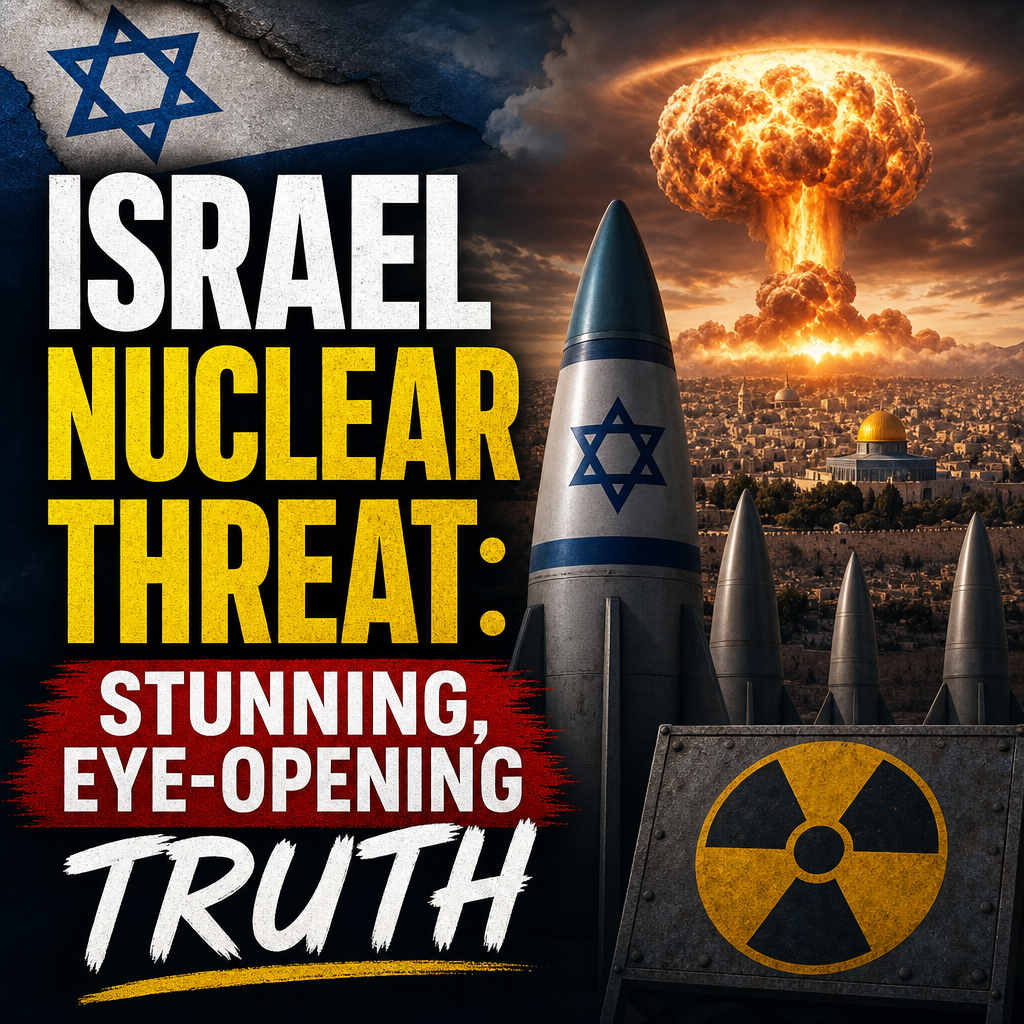
Israel Nuclear Threat is less about a single verified event than about a widening regional fear: that Israel’s long-standing nuclear ambiguity, the war in Gaza, and rising tensions with Iran and its allies could push the Middle East into an even more dangerous phase.
Why the Israel Nuclear Threat debate keeps resurfacing
Israel has never officially confirmed or denied possessing nuclear weapons, a policy of deliberate ambiguity that has shaped regional security for decades. That silence has not prevented the issue from returning whenever the conflict escalates. In the current cycle, the conversation has intensified because the Gaza war, cross-border clashes, and warnings from regional actors have made every military move feel more consequential.



Different news outlets frame the issue from different angles. RT’s reporting tends to emphasize the possibility of a broader existential confrontation and often leans into the idea that Israel’s military posture could trigger catastrophic escalation. Al Jazeera, by contrast, places the issue in the context of the humanitarian disaster in Gaza, regional anger, and the diplomatic fallout across the Arab and Muslim world. Sky News generally approaches the subject through the lens of international security and diplomacy, focusing on the risk of a wider regional war and the efforts, however limited, to prevent one.
Taken together, those perspectives suggest a clear point: the danger is real, but it is not necessarily the result of a sudden nuclear decision. The more immediate threat is miscalculation. In a region where missile attacks, drone strikes, and retaliatory threats have become routine, the nuclear dimension acts more as a shadow over the crisis than a publicly acknowledged weapon in play.




Israel Nuclear Threat and the power of ambiguity
Israel’s nuclear posture has always rested on deterrence through uncertainty. That strategy can discourage enemies from assuming they have the upper hand, but it can also feed suspicion and fear. Critics argue that ambiguity creates instability because nobody outside Israel’s strategic circle truly knows where the red lines are. Supporters counter that the policy has helped prevent an arms race by keeping the issue contained.
This tension matters now because the wider regional environment is unusually combustible. Iran remains Israel’s principal strategic rival, and the confrontation between the two countries has increasingly moved from shadow warfare into open exchanges. At the same time, Hezbollah in Lebanon, Houthi forces in Yemen, and other aligned groups have raised the number of potential flashpoints. Even if none of these actors seek a nuclear conflict, they can create conditions in which a conventional war spirals.
A fair reading of the reporting is that there is no verified evidence of Israel preparing to use nuclear weapons in the current crisis. That is important to say plainly. The headlines may be dramatic, but the sharper issue is not imminent nuclear launch; it is the erosion of the guardrails that normally separate hostile rhetoric from catastrophic action.
What the major viewpoints agree on
Despite their differences, the sources point toward several shared concerns:
– The Gaza war has expanded beyond a local conflict and now carries regional consequences.
– Israel’s military actions are being watched closely by neighboring states and armed groups.
– The risk of escalation is rising even without any public nuclear signal.
– Diplomatic channels are under strain, and trust among regional actors is near rock bottom.
Where the outlets diverge is in emphasis. RT often presents the story as evidence of Western-backed danger or an approaching collapse in regional order. Al Jazeera focuses more on the civilian cost and the political impact of Israeli military behavior. Sky News typically asks how governments can contain a broader war and what this means for international security.
That variety is useful because it shows the issue is not one-dimensional. A nuclear threat can mean several things at once: actual weapons capability, the fear of first use, the possibility of preemptive escalation, or simply the destabilizing effect of a state whose strategic power is unmatched in its immediate neighborhood.
The real risk may be escalation, not announcement
The most responsible conclusion is also the least sensational. The Middle East is not currently on the verge of a declared nuclear exchange, but it is living with a dangerous combination of war, deterrence, and uncertainty. In such conditions, the line between conventional and strategic conflict can blur quickly.
That is why the language used by governments and media matters so much. Alarmist rhetoric can harden positions and make compromise harder. At the same time, minimizing the danger can be equally reckless. If leaders, analysts, or journalists treat every warning as propaganda, they may miss the moments when a crisis is becoming harder to control.
The strongest case emerging from the reporting is not that an Israeli nuclear attack is imminent, but that the region is operating with too many unresolved conflicts and too little trust. The danger is cumulative. One missile strike, one failed mediation effort, or one highly charged statement can become the trigger for a much larger breakdown.
For now, the eye-opening truth is sobering rather than sensational: the nuclear issue is not just about weapons. It is about deterrence, perception, and the fragile assumption that everyone involved will stop short of the point of no return.