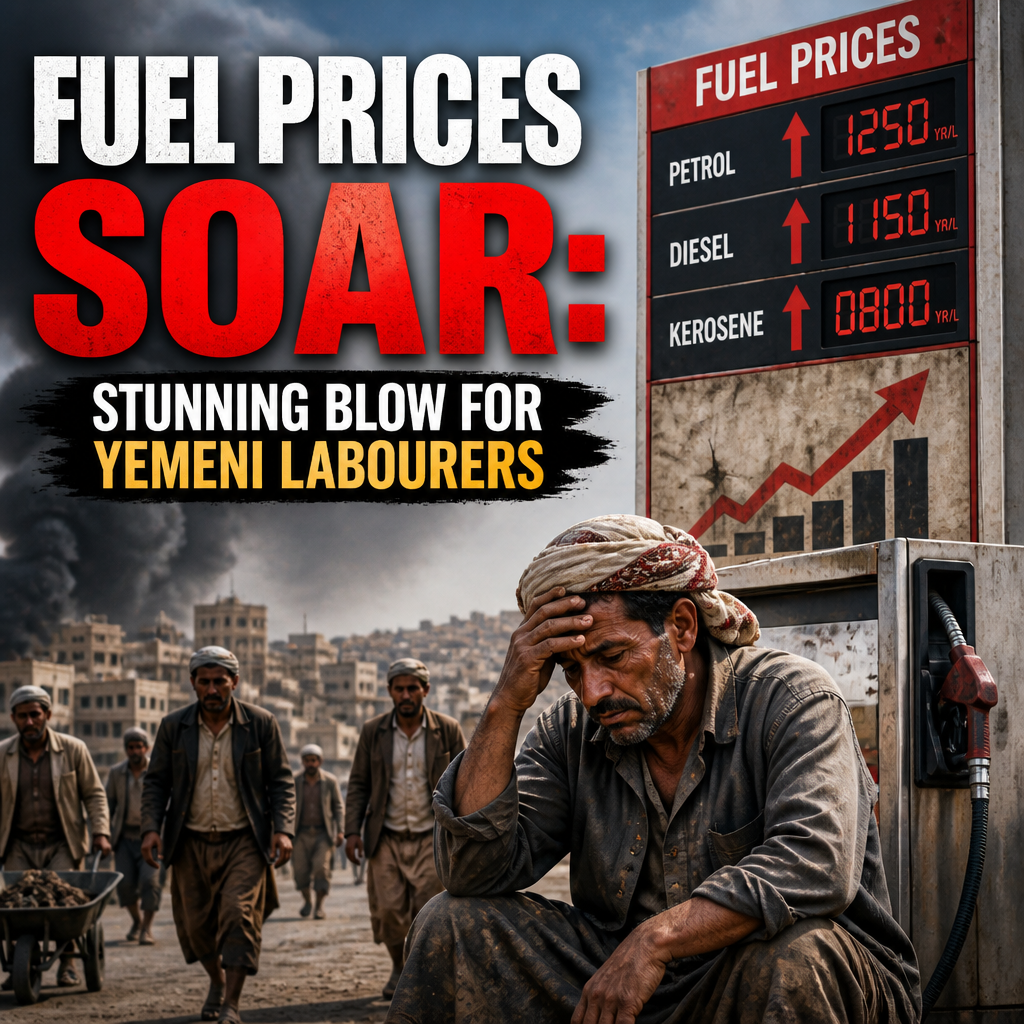
Fuel Prices Soar: Stunning Blow for Yemeni Labourers


Fuel prices in Yemen have surged again, and for many labourers that means the difference between getting to work and staying home unpaid.
In a country where millions already live close to the edge, even a modest rise in fuel costs can ripple through every part of daily life. Transport becomes more expensive, food deliveries slow down, construction projects stall, and informal workers—who make up a large share of the labour force—feel the shock first. Reports from regional and international outlets paint a picture that is bigger than a single market spike: it is a story about war, blockades, inflation, fragmented authority, and the fragile economics of survival.



Why fuel prices matter so much in Yemen
For many outside the country, rising fuel prices may sound like a routine economic problem. In Yemen, it is far more severe. Fuel is not just for cars and generators. It powers water pumps, bakeries, small businesses, and the trucks that move goods from ports and border crossings into cities and rural areas. When fuel gets more expensive, the cost of nearly everything rises with it.
That is especially punishing for labourers who earn daily wages. Construction workers, porters, mechanics, market helpers, and drivers often have no safety net. If transport costs rise, they may spend a larger share of their income simply getting to work. If employers cannot afford higher operating costs, projects can be delayed or shut down altogether. In effect, fuel inflation does not just raise prices—it can erase jobs.




This is where the human impact becomes clear. A labourer who used to cover commuting costs and bring home a modest daily wage may now find that most of the day’s earnings disappear before food is even bought. Families already coping with debt are forced to choose between essentials. That is why fuel shocks in Yemen are not abstract economic news; they are immediate household crises.
The wider forces behind the price spike
The sources reporting on Yemen’s fuel situation point to a familiar but ugly pattern: local hardship is being driven by a mix of internal fragmentation and regional pressure. Yemen’s economy has been broken for years by conflict, competing authorities, and damaged infrastructure. That leaves fuel supply dependent on fragile import routes, political deals, and external conditions that ordinary workers cannot control.
There are at least three lenses through which this situation is being viewed:
– Humanitarian organizations and local workers emphasize the day-to-day damage: transport costs, shrinking wages, and higher food prices.
– Political and security analysts focus on the role of regional tensions, sanctions, shipping disruptions, and competing power centers inside Yemen.
– Market and business observers stress that uncertainty itself pushes prices higher, because importers, distributors, and employers all pass risk down the chain.
Together, these views explain why fuel in Yemen often behaves less like a normal commodity and more like a pressure gauge for the whole conflict.
Some coverage also links the problem to broader regional dynamics involving Iran and the Red Sea area, where tensions have repeatedly affected shipping and trade expectations. Even when the direct cause of a price increase is local, the fear of disruption elsewhere can raise insurance, transport, and security costs. That burden eventually reaches Yemeni consumers.
Fuel Prices Soar, but the burden is uneven
The sharpest point worth making is that fuel price increases do not affect everyone equally. Wealthier households can absorb part of the hit, perhaps by reducing travel or switching to alternative generators. Small business owners may be able to raise prices slightly. But labourers in unstable work often have no such cushion.
For them, the effects can include:
– fewer work opportunities, as employers scale back projects
– longer commuting times when public transport becomes less affordable
– higher food bills, because transport costs are built into market prices
– reduced access to basic services when fuel shortages affect water and electricity
This is why international reporting on Yemen often highlights malnutrition, displacement, and wage erosion alongside fuel shortages. These problems are linked. When a worker cannot afford to reach a job site, that is not only a transport problem. It is also a livelihood problem, a food security problem, and increasingly a dignity problem.
What the reporting agrees on—and what remains uncertain
Across the different sources, there is broad agreement on one point: fuel price surges in Yemen are devastating for ordinary people and especially for labourers. There is also common recognition that the crisis is not just about supply and demand in a normal market. It is tied to the country’s political fragmentation and to regional instability that continues to distort trade routes and costs.
Where the reporting becomes less certain is in the question of how long the pressure will last. Some analysts suggest prices could ease if import flows stabilize or if political arrangements reduce bottlenecks. Others warn that as long as conflict remains unresolved and regional tensions remain high, any relief may be temporary. That uncertainty itself is part of the crisis, because households cannot plan when tomorrow’s fuel price may be even higher.
The most responsible conclusion is not that Yemen’s labourers are facing a short-term inconvenience. It is that they are enduring yet another round of economic punishment layered on top of years of war and instability. Fuel inflation may be measured in market terms, but its real cost is counted in missed wages, emptied kitchens, and exhausted families.
If there is a lesson in this latest surge, it is that any serious response to Yemen’s hardship has to go beyond emergency shipments and temporary price controls. It must address the deeper structures that keep making fuel unaffordable in the first place. Until that happens, the country’s labourers will remain the first to pay for a crisis they did nothing to create.