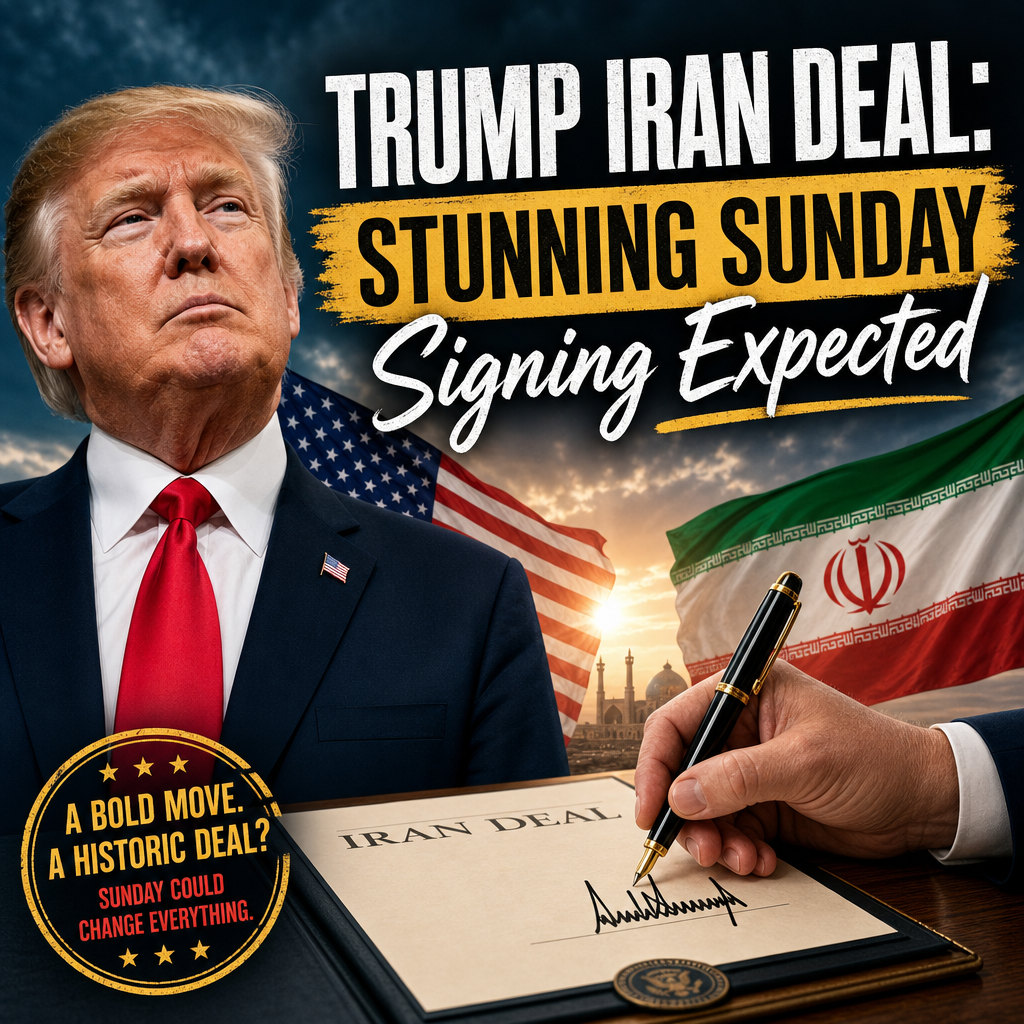
Trump Iran Deal: Stunning Sunday Signing Expected


Trump Iran Deal talk has once again pushed the Middle East into the center of global attention, with reports suggesting a dramatic Sunday signing could be imminent. Even so, the real story is less about a single headline-making moment and more about whether any agreement can survive the political, security, and trust deficits that have defined U.S.-Iran relations for decades.
At this stage, the broad picture is clear: multiple outlets are treating the possibility of a deal as serious, but not yet settled. That matters. In diplomacy, especially involving Iran, the difference between “expected” and “confirmed” can be the difference between a breakthrough and another cycle of false hope. The news feeds also show that reactions are far from uniform. Some coverage frames the development as a pragmatic opening, while other reporting is more skeptical, emphasizing how fragile any understanding would be given the history of breakdowns, sanctions, and military pressure.



Trump Iran Deal: Why the timing matters
The timing alone makes this moment significant. A Sunday signing, if it happens, would send a strong signal that both sides are trying to lock in momentum before political conditions shift again. For the Trump camp, that could mean presenting the deal as evidence of deal-making strength and a route to reducing tensions without appearing weak. For Tehran, the value would likely lie in sanction relief, diplomatic recognition, or at least a temporary easing of economic pressure.
But timing can also be a warning sign. Deals announced under deadline pressure can be politically useful while still being operationally thin. In the case of Iran, the biggest question is not whether leaders can stand in front of cameras and sign something. It is whether the agreement includes enough detail to prevent collapse over implementation.




That concern appears in the way different news organizations are framing the story:
– RT’s coverage tends to emphasize the possibility of a major diplomatic shift and the geopolitical significance of U.S.-Iran engagement.
– Al Jazeera’s reporting usually places such developments in a broader regional context, focusing on how neighbors, proxy conflicts, and sanctions shape the outcome.
– Sky News often highlights the uncertainty surrounding Western diplomacy and the domestic political risks on both sides.
Taken together, those angles suggest that the issue is not simply whether a deal exists, but what kind of deal it is and who is expected to live with it.
What each side may be trying to gain
A fair reading of the situation suggests that Washington and Tehran are likely seeking different benefits from the same process.
For Washington
The White House’s potential incentives are straightforward:
– demonstrate diplomatic momentum;
– reduce the risk of escalation in the Gulf;
– show that pressure can produce concessions;
– create a foreign-policy win that can be sold at home.
A Trump-led administration would also know that Iran policy is one of the clearest tests of its ability to turn confrontation into leverage. If the deal is seen as too soft, critics would attack it as appeasement. If it is too hard, Tehran may refuse to comply or withdraw from the process.
For Tehran
Iran’s calculations are probably even more sensitive. Any deal must be defensible to domestic hardliners, while still meaningful enough to justify compromise. That means the leadership would want:
– sanctions relief that is real, not symbolic;
– guarantees that the agreement will not be reversed quickly;
– some protection for trade and oil revenue;
– a path away from permanent isolation.
This is where previous attempts have struggled. Iran has repeatedly argued that it cannot accept agreements that leave it economically constrained while demanding major concessions in return. That complaint has helped shape international skepticism, especially after earlier deals were undermined by later policy reversals.
The regional stakes are bigger than the headline
A Trump Iran Deal would not exist in a vacuum. Any accord would immediately affect allies and rivals across the Middle East. Gulf states would be watching for signs that their security concerns are being traded away. Israel would likely judge the deal against one criterion: whether it limits Iran’s regional influence and nuclear capability enough to be credible.
Al Jazeera’s regional lens is especially useful here. It reminds readers that diplomacy with Iran is never just bilateral. It intersects with conflicts in Gaza, Lebanon, Syria, Iraq, and Yemen, as well as with energy markets and shipping routes. A deal may ease tensions in one area while creating anxiety in another.
That complexity is why early celebration would be premature. Even if a document is signed, the next stage is where most deals are tested:
– Are the commitments measurable?
– Is verification independent and strong?
– Can sanctions relief be reversed if compliance fails?
– Do both governments have enough political room to defend the agreement?
Without clear answers, a signing can become a photo opportunity rather than a durable settlement.
A cautious conclusion
The most responsible reading is neither triumphant nor dismissive. There may indeed be a meaningful diplomatic opening, and if so, that would be notable given years of hostility and deadlock. But the history of U.S.-Iran negotiations argues for caution. These talks often begin with optimism and end with mutual accusations over noncompliance, loopholes, or bad faith.
So the best assessment is this: if a Sunday signing happens, it should be seen as the start of a difficult test, not the end of one. The sources point to real momentum, but they also reveal a shared uncertainty about whether the deal can outlast the politics surrounding it. In that sense, the story is not just about whether Trump and Iran can shake hands. It is about whether either side can trust the other long enough to make the handshake matter.