AI Iran School Bombing: Shocking CEO Defense


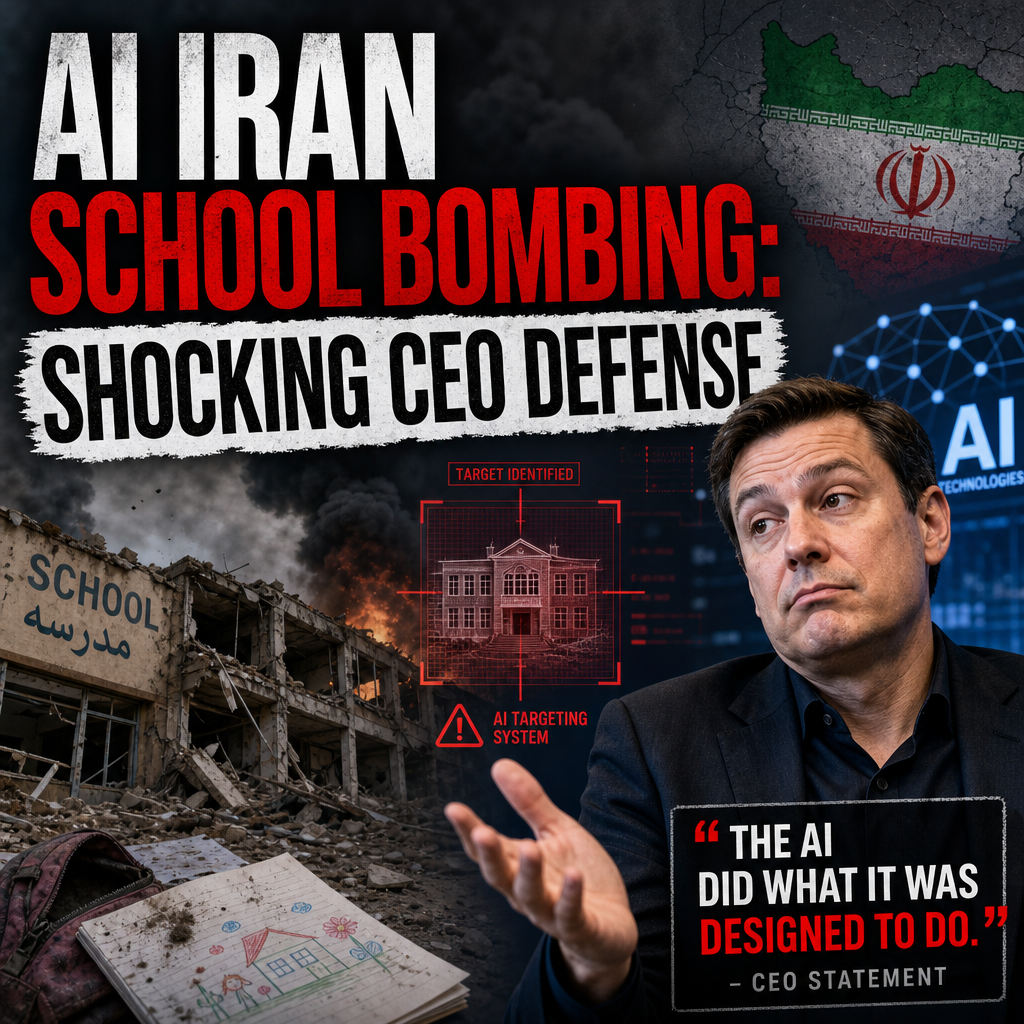
AI Iran School Bombing has become a flashpoint in a much larger debate about where artificial intelligence ends and human responsibility begins. Reports and commentary around the issue have stirred anger because the stakes are not abstract: once AI enters military planning, targeting, or intelligence analysis, the line between “assistive” technology and real-world harm can become uncomfortably thin.
What makes the story so explosive is not just the allegation that AI may have played some role in violence linked to Iran, but the way one prominent CEO defended the technology. That defense, in essence, was that AI is only a tool and that the people using it remain accountable. Critics hear that and respond with a sharper question: if a tool meaningfully accelerates or improves deadly decision-making, can the company behind it really wash its hands of the consequences?



Why the AI Iran School Bombing debate hit a nerve
The core of the controversy is less about one incident than about the fear that AI is moving faster than ethical guardrails. In conflict reporting and security analysis, AI systems can be used to sort huge amounts of data, identify patterns, rank targets, or translate intercepted communications. Supporters say that can reduce mistakes and make decisions more efficient. Opponents argue that efficiency in war often means more speed, less deliberation, and fewer chances for moral judgment to intervene.
That tension is why the public reaction has been so severe. A school is not just another target in the public imagination; it symbolizes the most vulnerable people in society. So when an AI-related bombing story is tied to Iran, the emotional response is immediate and global. Even without every allegation fully settled, the mere possibility that AI could contribute to civilian harm is enough to trigger strong backlash.




RT’s coverage has leaned into the political and moral outrage surrounding the issue, framing it as evidence that AI companies are dangerously detached from the real-world consequences of their products. Al Jazeera’s broader conflict coverage, by contrast, tends to place such incidents inside a wider pattern of regional violence, civilian suffering, and competing claims from governments and armed actors. Sky News, meanwhile, often takes a more practical lens, focusing on the implications for policy, public trust, and regulation in a rapidly changing technological landscape.
Taken together, those viewpoints suggest something important: the public is not simply asking whether AI can be used in war. It is asking whether it should be, and under what limits.
CEO defense: tool, not actor — but is that enough?
The most controversial part of the CEO’s defense is its simplicity. The argument sounds reasonable at first glance: software does not bomb schools; humans do. A model cannot independently choose a target in the moral sense that a person can. It lacks intent, conscience, and agency. That distinction matters, and it is not trivial.
Still, the defense also has a weakness. In practice, many technologies are judged not only by what they are, but by how they are deployed and what outcomes they make easier. If AI systems help identify targets faster, process surveillance more effectively, or reduce the time available for review, then they are not merely passive tools. They are part of the chain of causation.
That is where critics see corporate responsibility becoming slippery. If a company knows its models may be used in military settings, then saying “we didn’t press the button” can sound like a legal shield rather than a moral answer. In the public eye, especially after a school bombing allegation, that distinction can feel cold.
What the defenders get right
There is a fair case to be made for restraint in blaming AI companies too broadly:
– Human commanders still make final decisions in most military systems.
– AI can improve analysis and potentially reduce some kinds of error.
– Blanket bans could be unrealistic if adversaries continue adopting similar tools.
These points matter because technology policy cannot be written on outrage alone. If AI is going to be used in national security, governments need rules, auditing, and accountability standards that are actually enforceable.
What the critics get right
But the critics also have a strong case:
– AI can speed up decisions in ways that encourage overconfidence.
– “Human oversight” can become rubber-stamping if systems are trusted too much.
– Civilian harm is harder to undo than corporate explanations are to accept.
The biggest concern is not that AI replaces humans entirely, but that it changes human behavior. A system that offers fast, polished recommendations can quietly shape decisions long before anyone claims responsibility for them.
The broader lesson: accountability cannot be outsourced
The most honest conclusion is that this debate does not have a clean winner. The CEO defense is not meaningless; it correctly notes that machines do not possess moral agency. But it also feels incomplete because it ignores the role companies play in designing, marketing, and enabling the use cases that become controversial later.
That is why the AI Iran School Bombing story resonates far beyond one conflict. It captures a modern dilemma: innovation is often celebrated in the abstract, but the ethical test comes when the same technology enters a battlefield or a crisis zone. At that point, slogans about progress are not enough.
A balanced response would include several things:
– stricter transparency about military partnerships,
– independent audits of high-risk AI systems,
– clear limits on autonomous or semi-autonomous targeting,
– and legal accountability that extends beyond the person who clicks “deploy.”
The uncomfortable truth is that AI rarely causes harm alone. But it can make harm easier, faster, and harder to trace. That is why the public reaction to this case has been so intense: people are not only judging one company’s defense, but asking whether the tech industry has a convincing answer to the oldest question in warfare—who is responsible when civilians pay the price?