Russia and US: Stunning Best Global Security Warning


Russia and US relations have once again become a barometer for global security, and the latest exchange of messages, warnings, and geopolitical posturing suggests that the old great-power rivalry is still capable of shaping events far beyond Washington and Moscow.
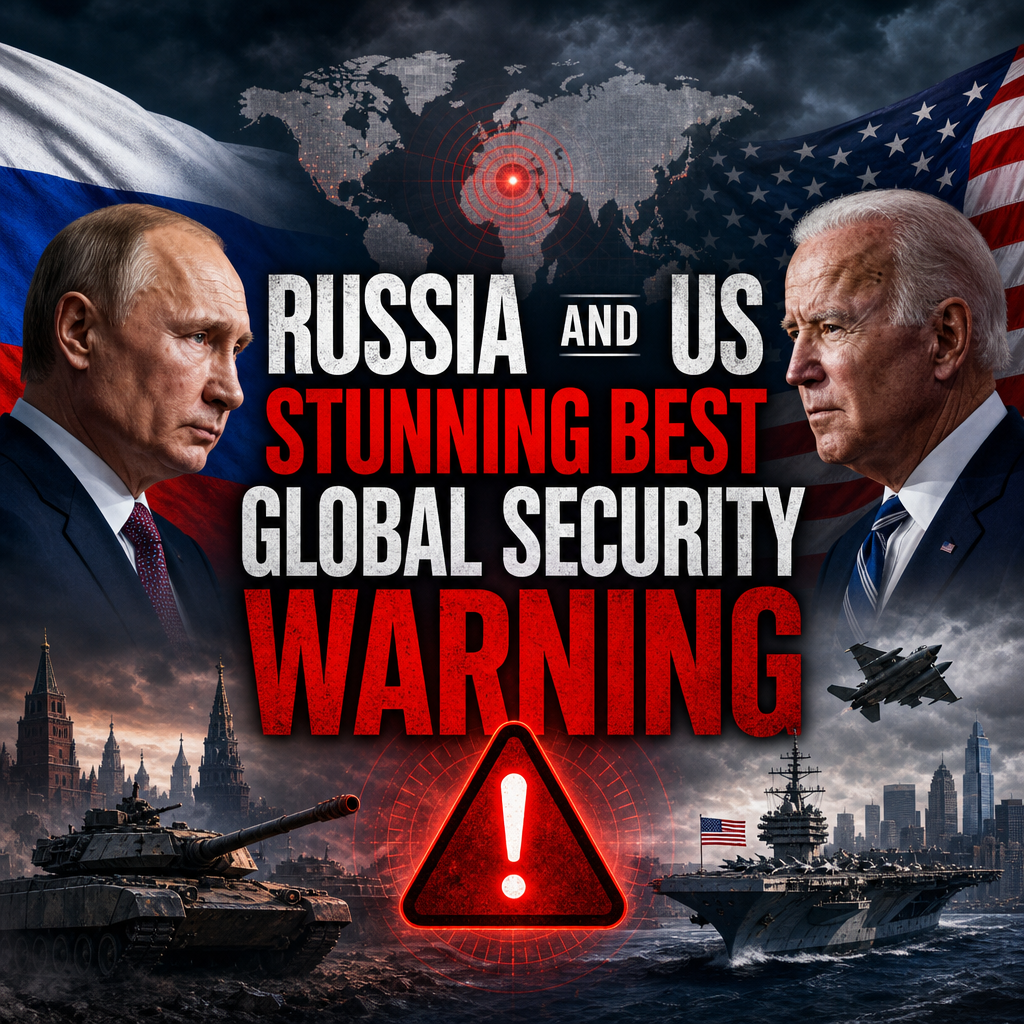
At first glance, a diplomatic message may look like routine symbolism. But in the current climate, even a carefully worded gesture between Russian President Vladimir Putin and Donald Trump carries larger implications. It lands against the backdrop of the war in Ukraine, continued tensions between Russia and NATO, and a wider international system that is already under pressure from conflicts, sanctions, election-year politics, and military uncertainty.



Russia and US: A warning wrapped in diplomacy
The Kremlin’s Independence Day message to Trump, highlighted by Russian state media, was not just a courtesy note. It reflected Moscow’s interest in keeping communication channels open with a figure who remains central to US politics. For Russia, this kind of outreach serves several purposes at once: it signals flexibility, reinforces the idea that Moscow can still talk to powerful Americans directly, and subtly suggests that the current state of relations is not inevitable.
That matters because the Russia-US relationship is no longer only about bilateral disputes. It is now tied to the stability of Europe, the future of NATO, the durability of sanctions, nuclear risk, and the possibility of escalation in other flashpoints. When one of the world’s two largest nuclear powers sends mixed messages — part conciliation, part confrontation — the security implications are immediate, even if the rhetoric itself sounds restrained.




Al Jazeera’s coverage of regional conflicts and diplomatic responses repeatedly points to a broader truth: major-power tensions do not stay contained. The war in Ukraine has changed military planning across Europe, hardened political divisions, and made every conversation about ceasefires, arms supplies, and negotiations more difficult. In that environment, a message from Moscow is rarely just a message; it is also a signal about leverage, timing, and intent.
Why the global security warning feels so sharp
The warning is not only about what Russia and the US say to each other. It is about what happens when trust disappears and both sides assume the worst.
A few pressures stand out:
– Military risk is higher than it has been in years. The Ukraine war has created a constant risk of miscalculation, whether through battlefield escalation, incidents near NATO borders, or cyber and intelligence operations.
– Diplomacy is fragile. Channels of communication exist, but they are often overshadowed by domestic politics and public threats.
– Allies are uneasy. European governments want reassurance that the US will remain committed to collective defense, while Russia tries to exploit divisions.
– Nuclear rhetoric still matters. Even when leaders do not explicitly threaten first use, the mere mention of strategic capabilities raises the temperature.
The real danger is that the world becomes accustomed to crisis. Once repeated warnings start to feel normal, leaders and publics can underestimate how quickly a regional conflict can become something larger.
Different media lenses reveal the same uneasy picture
What is striking in the coverage from RT, Sky News, and Al Jazeera is not that they agree — they do not — but that they all reflect, in different ways, a deeply unsettled international order.
RT’s framing naturally emphasizes diplomatic engagement and the symbolism of Putin’s message. It presents Russia as a state still able and willing to communicate directly with important Western political figures, while also projecting confidence that Moscow has not been isolated in any absolute sense. That perspective is useful, but it is also selective: it tends to soften the coercive reality of Russia’s military posture and the continuing consequences of the war in Ukraine.
Sky News, by contrast, tends to situate Russia within the larger Western security concern: a revanchist power whose actions have raised alarms across Europe and forced NATO to rethink deterrence. That framing is not neutral in tone, but it reflects a real policy debate in the West about how to deter further aggression without stumbling into direct conflict.
Al Jazeera often adds a third layer by emphasizing how major-power competition intersects with other crises. Its reporting tends to show that Russia-US tension is not only a European story. It affects diplomacy in the Middle East, energy markets, arms control, and the broader struggle to maintain international norms. That wider lens matters because it reminds readers that the security system is interconnected; a crisis in one region can intensify instability elsewhere.
What a balanced reading suggests
The most responsible conclusion is not that a single message between Russian and American figures changes everything. It does not. But it does underline how thin the margin for error has become.
Russia appears eager to keep strategic ambiguity alive: strong enough to resist Western pressure, but open enough to preserve channels where useful. The US, meanwhile, is trying to balance deterrence with avoidance of direct war, all while navigating its own political divisions. Neither side seems ready for a genuine reset, yet neither can afford a total breakdown in communication.
That tension is the heart of the global security warning. The danger is not only open hostility; it is a long, grinding state of semi-confrontation in which misjudgments become more likely and solutions more elusive.
The lesson from the current moment is sobering. The world does not need a dramatic declaration to enter a more dangerous phase. Sometimes all it takes is a series of small signals — a message, a warning, a military drill, a political slogan — that gradually pushes the system closer to the edge.
For now, the Russia-US relationship remains one of the clearest indicators of whether global security is stabilizing or slipping. The evidence suggests the latter is still a real possibility, and that uncertainty itself is the warning.