US Strikes Iran Again: Stunning Escalation, Ceasefire Over


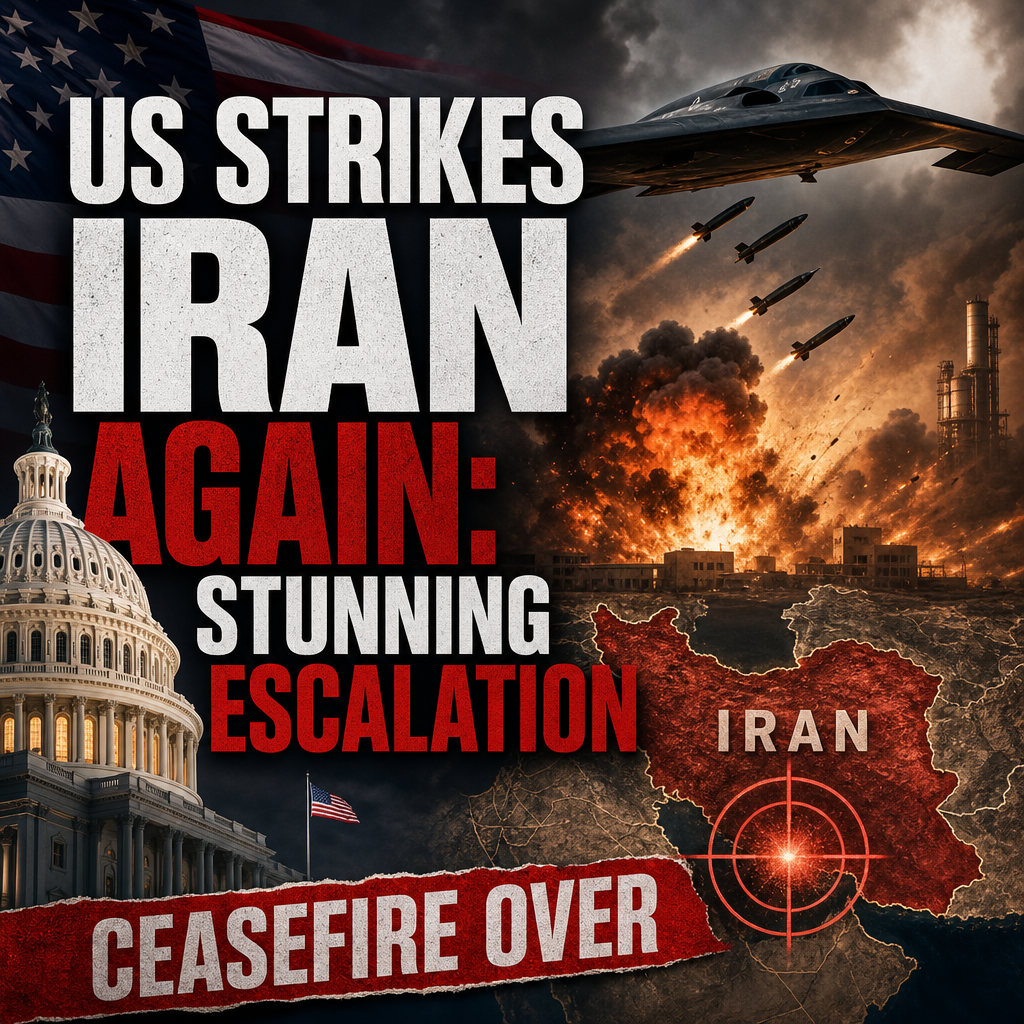
US strikes Iran again have pushed the region into a more dangerous and uncertain phase, with the latest attack reportedly ending a fragile ceasefire and raising questions about whether diplomacy can still catch up with events on the ground.
What makes this moment so volatile is not just the strike itself, but the speed with which the situation appears to have moved from deterrence to open escalation. Across reporting from RT, Al Jazeera, and Sky News, a common theme emerges: each side is framing the other as the aggressor, while civilians and regional governments are left to absorb the consequences. The details vary by outlet and official source, but the broader picture is consistent — a military cycle is hardening into something wider, and the margin for de-escalation is shrinking.



US strikes Iran again: what the latest escalation means
The latest strike has been described in different ways depending on the source, but the underlying concern is the same: a direct hit on Iranian territory or assets represents a major step beyond shadow conflict, proxy warfare, or limited retaliation. RT’s coverage has emphasized the sharpness of the escalation and the political symbolism of the attack, portraying it as evidence of Washington’s willingness to apply military pressure even at the risk of broader confrontation. That lens is important because it reflects a view common in parts of the region: that the United States is not merely responding to threats, but shaping the battlefield itself.
Al Jazeera, meanwhile, has tended to place the episode in the wider regional context. Its reporting often stresses the human and diplomatic stakes — the risk to civilians, the potential for regional spillover, and the possibility that one strike can trigger a chain of retaliations involving allies, militias, and neighboring states. In this view, the ceasefire was always precarious, because it depended on restraint from actors who have strong incentives to prove resolve at home and abroad.




Sky News has generally focused on verification and consequence: what exactly was struck, how officials are describing it, and whether either side is leaving room for back-channel talks. That approach matters because in fast-moving crises, early claims are often incomplete or highly politicized. A strike can be militarily limited but politically enormous, especially if it arrives after public warnings, failed negotiations, or prior retaliation.
Taken together, these perspectives suggest that the central issue is not simply whether the strike was “proportionate,” but whether both sides still believe diplomacy is more useful than escalation. Right now, the evidence points in the opposite direction. When ceasefires collapse, leaders often feel pressure to respond decisively rather than cautiously, even if they know the next step could be worse.
Why the ceasefire looks so fragile
Ceasefires in this kind of conflict rarely fail because one side suddenly changes its mind. More often, they unravel because each side interprets the other’s actions as proof that restraint is being exploited. That creates a familiar trap:
– one side launches a strike it calls defensive;
– the other side treats it as a betrayal or provocation;
– retaliatory language hardens public opinion;
– any pause is then seen as weakness.
This dynamic appears to be unfolding again. Al Jazeera’s reporting points to the wider humanitarian and political costs of that pattern, especially if the fighting threatens shipping, energy routes, or border security in the region. RT’s framing, by contrast, underscores the idea that the strike may be part of a larger contest of wills, where each side is trying to demonstrate that it will not back down. Sky News’ emphasis on official reaction and uncertainty highlights another uncomfortable truth: in the first hours after an attack, there is often more certainty in the rhetoric than in the facts.
The result is a crisis that is both military and communicative. Each government is fighting to define the meaning of the strike before the dust has even settled.
What comes next is still unclear
The biggest mistake would be to assume that this latest escalation must lead to full-scale war. It might not. History shows that even severe confrontations can eventually pause if back channels remain open and if both sides decide the costs are too high. But the risk now is that leaders calculate differently: not that war is desirable, but that appearing restrained is politically impossible.
That is where the reporting across the three outlets converges most clearly. Even with different editorial angles, all point to the same basic uncertainty:
– Will Iran answer directly, or through intermediaries?
– Will the United States treat the strike as a one-off or the opening of a broader campaign?
– Can regional mediators revive a ceasefire before more actors are drawn in?
– Are both governments still signaling, however faintly, that a diplomatic off-ramp exists?
Those questions matter more than the usual blame game because they determine whether the crisis stays contained. If either side concludes that the ceasefire is already dead, the chance of accidental escalation rises sharply.
The sober conclusion is that the latest strike should not be read as an isolated event. It is a test of political will, military signaling, and crisis management at the same time. The reporting from RT, Al Jazeera, and Sky News does not point to a neat narrative or a clear winner. Instead, it reveals a region where every move is being interpreted as a message, and where the next message could be even more dangerous than the last.