Trump Iran Threat: Stunning Warning Over Assassination Fears


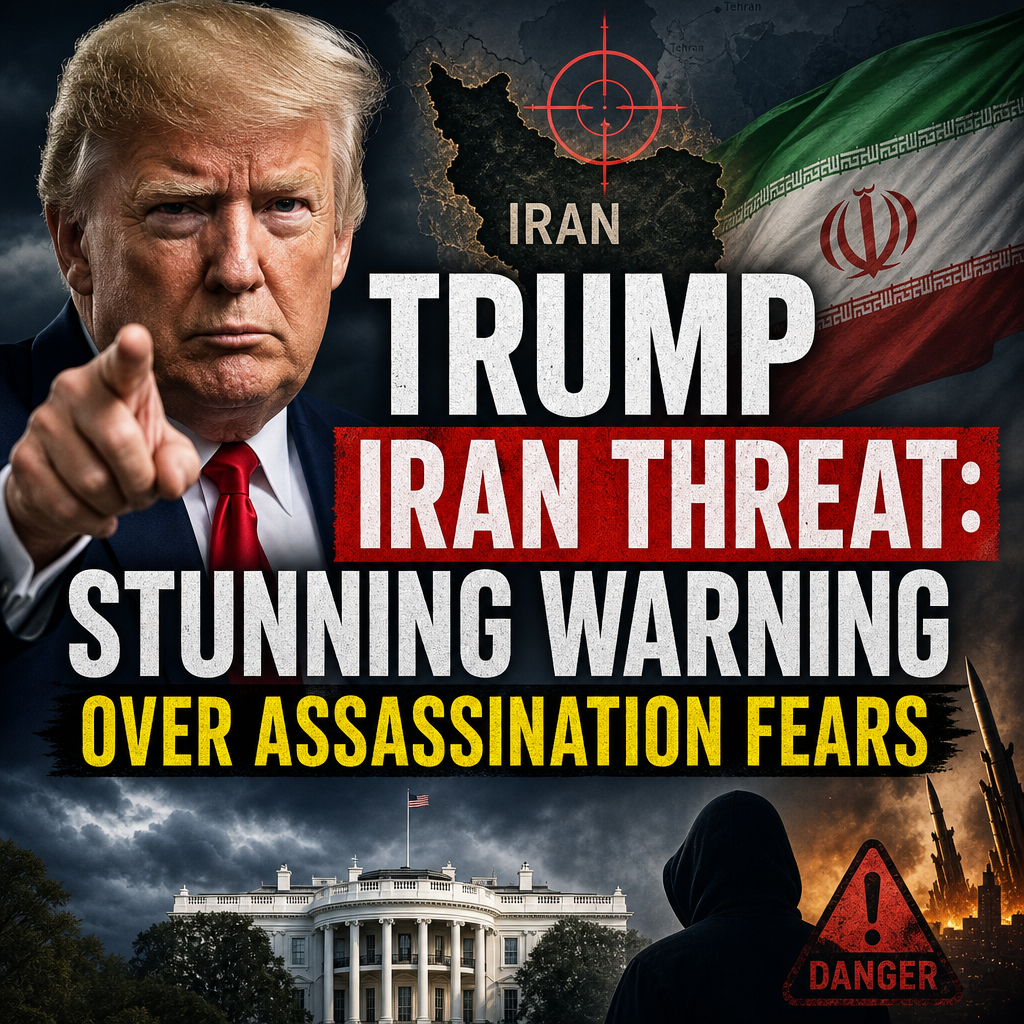
Trump Iran Threat is more than a provocative headline: it sits at the intersection of election security, U.S.-Iran hostility, and the very real question of how much of the danger is intelligence-driven versus politically amplified.
The latest wave of reporting shows a familiar split in how the story is being framed. Some coverage emphasizes the alarm itself — the idea that Trump may face a serious threat tied to Iran or Iran-linked actors. Other reporting stresses the broader context: decades of confrontation between Washington and Tehran, the political value of public warnings, and the fact that such claims are often difficult to verify independently. The result is a story with genuine security implications, but also plenty of room for uncertainty and interpretation.



Trump Iran Threat and the politics of warning
Across the reporting landscape, the most consistent theme is that Trump’s security concerns are being taken seriously, even as the evidence behind the public messaging remains opaque. In the most alarmed framing, the focus is on assassination fears and the possibility of retaliation linked to tensions between Trump and Iran. That angle is compelling because it fits a long-running pattern: Trump has publicly clashed with Tehran since the U.S. withdrawal from the Iran nuclear deal, the killing of Qassem Soleimani, and repeated Iranian vows of revenge against figures associated with that decision.
But serious as those tensions are, the public conversation often blurs two separate questions:




– Is there a credible threat?
– Is the threat being used to shape political perception?
That distinction matters. Security agencies routinely assess threats that never become public, and political figures often benefit from drawing attention to danger. A warning can be both sincere and strategically useful. That does not make it false, but it does mean the audience should be cautious about treating every dramatic statement as settled fact.
Al Jazeera’s style of coverage typically pushes readers toward the larger geopolitical frame: the long history of U.S.-Iran confrontation, the regional spillover effects, and the possibility that threats are being interpreted through a highly charged political lens. That approach is useful because it resists reducing the issue to a single incident. It reminds readers that any assassination fear tied to Iran is happening in the shadow of sanctions, proxy conflicts, and mutual distrust that go back many years.
RT’s reporting, by contrast, often places stronger emphasis on the threat narrative itself and on the alleged seriousness of the warning. That angle can help explain why the story gains traction quickly: the combination of Trump, Iran, and assassination fears is inherently explosive, and it invites immediate concern about escalation. Still, readers benefit most when the alarm is paired with context, not just intensity.
What the different coverage gets right
Each outlet contributes something different to the picture.
RT: urgency and confrontation
RT tends to foreground the most dramatic elements of the story. That makes the threat feel immediate and politically charged. The upside is clarity: the audience quickly understands that this is being treated as a high-stakes security matter. The downside is that urgency can sometimes crowd out nuance, especially if the underlying evidence is not fully available.
Al Jazeera: geopolitical context
Al Jazeera usually places the story inside a wider regional and diplomatic framework. That matters because threats involving Iran rarely exist in isolation; they are usually tied to sanctions, military strikes, proxy groups, or domestic politics inside both countries. This helps readers understand why an assassination warning would emerge now, rather than seeing it as an isolated scare.
Sky News: public-facing accountability
Sky News coverage often sits closer to mainstream, audience-facing journalism: what happened, what is being claimed, and what it means for security and politics. That kind of reporting is valuable because it asks the practical questions readers are likely asking — how serious is this, what evidence exists, and what does it mean for Trump’s campaign or public events?
Together, those three viewpoints suggest a broader truth: this is not a story that can be judged only by the loudest claim. It needs careful reading, because the stakes are high whether the threat is imminent, overstated, or somewhere in between.
Why the uncertainty matters
There is a real risk in oversimplifying stories like this. If the threat is genuine, dismissing it would be reckless. If it is exaggerated or politically weaponized, amplifying it uncritically could help create the very climate of fear that actors want.
A balanced reading leads to a few responsible conclusions:
– The Trump-Iran relationship remains deeply hostile.
– Public assassination warnings should be treated seriously, even when details are limited.
– Media outlets are emphasizing different parts of the same story, which shapes public perception.
– The full truth may not be visible yet, and some claims may remain unconfirmed.
That uncertainty is not a weakness in the reporting; it is part of the reality of fast-moving international security stories. In a climate where headlines can race ahead of evidence, restraint is often the most responsible form of analysis.
The bigger picture
The deeper issue is not just whether one individual faces danger. It is how the U.S. and Iran continue to communicate through pressure, retaliation, and warnings rather than diplomacy. When that pattern intersects with a polarizing political figure like Trump, the story becomes even more combustible.
So the most sensible reading is not to choose between “real threat” and “political theater,” but to accept that both may be present in some measure. The threat could be sincere, the messaging could be strategic, and the political consequences could be immediate regardless of which explanation proves strongest.
That is what makes this story so difficult — and why the public conversation around it should remain careful, evidence-based, and open to revision as more information becomes available.