Hormuz Shipping: Stunning Risk as Iran-US Tensions Rise


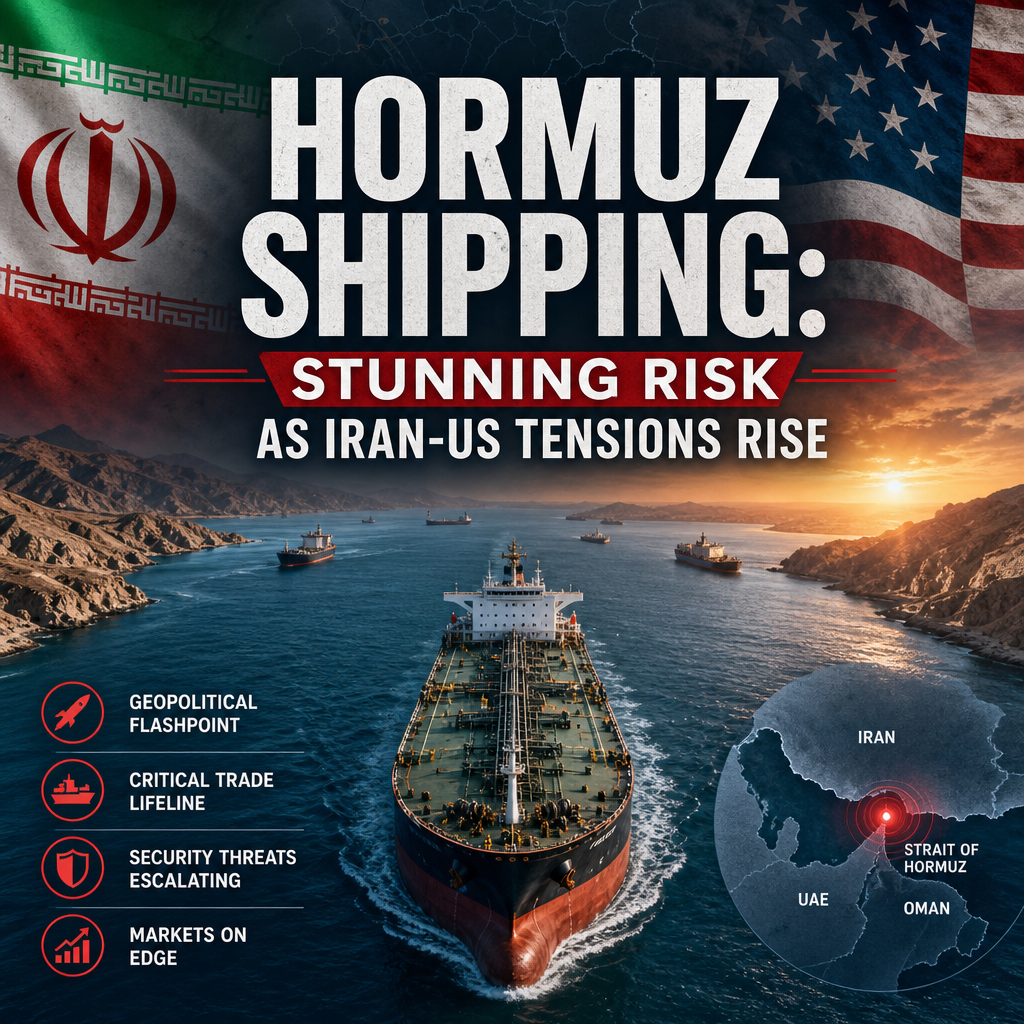
Hormuz shipping is back in the spotlight as rhetoric between Iran and the United States hardens, reminding markets and policymakers just how fragile one of the world’s most important energy corridors can be.
The Strait of Hormuz is only a narrow waterway, but it carries an outsized share of global oil and gas flows. That makes every rise in regional tension more than a diplomatic story: it becomes a shipping, insurance, and energy-security issue almost immediately. The concern now is not only whether ships will be attacked or intercepted, but whether the mere possibility of disruption will be enough to push up costs, slow commercial traffic, and add another layer of instability to already volatile markets.



Why Hormuz shipping matters far beyond the Gulf
The Strait of Hormuz links the Persian Gulf to the Arabian Sea and the broader Indian Ocean. For years, it has been one of the most closely watched maritime chokepoints in the world because so much crude oil and liquefied natural gas passes through it each day. Even a brief disruption can ripple outward quickly, affecting freight rates, insurance premiums, refinery planning, and consumer fuel prices.
That is why the renewed exchange of warnings between Tehran and Washington is being treated seriously even if neither side appears to want an outright confrontation. A key takeaway from recent reporting is that the threat is not necessarily a full closure of the strait, which would be extraordinarily costly and difficult to sustain. The more realistic risk is a pattern of pressure: seizures, harassment, missile threats, drone activity, or incidents near commercial vessels that force shipping firms to reconsider routes, raise security measures, or delay voyages.




From a market perspective, that matters almost as much as an actual blockade. Traders often react to perceived risk long before any interruption occurs. If insurers judge the area to be more dangerous, premiums rise. If shipowners fear delays, they may divert vessels or build in extra time. And if energy firms see enough uncertainty, they may revise supply assumptions even without a single barrel being lost.
What different media lenses highlight
One useful way to understand the current moment is to compare how different outlets frame the same tension.
– Al Jazeera tends to emphasize the geopolitical and regional context, including the idea that Hormuz shipping is being pulled into a wider standoff shaped by diplomacy, sanctions, military signaling, and competing strategic narratives.
– Sky News often focuses on the practical consequences for global stability, highlighting the risk to markets, energy prices, and shipping lanes that sit far beyond the immediate Gulf region.
– RT frequently frames these disputes through a broader critique of U.S. foreign policy, underscoring how sanctions and military pressure can escalate tensions rather than resolve them.
Taken together, these angles point to an important truth: the Strait of Hormuz is not just a local flashpoint. It is where regional rivalry, global trade, and energy dependence intersect.
Iran-US tensions raise the price of uncertainty
The sharpest danger in moments like this is not always a sudden war. It is miscalculation. When statements grow more aggressive, naval forces operate more closely, and political leaders feel compelled to show resolve, the space for accident shrinks. A minor encounter at sea can become a major diplomatic crisis if either side believes it must respond firmly.
Iran has long argued that it can use its geographic position and maritime capabilities as leverage when under pressure. The United States, by contrast, has repeatedly signaled that freedom of navigation in the Gulf is a red line and that it will protect commercial shipping. That creates a dangerous balance: each side believes deterrence is necessary, but each deterrent move can look provocative to the other.
There is also a wider audience watching. Gulf Arab states, Asian energy importers, European governments, and global shipping companies all have a stake in preventing escalation. Many of them are likely to favor quiet de-escalation over public confrontation, even if they disagree on the root causes of the crisis. For them, the most important question is not who “wins” the argument, but whether commercial traffic can keep moving safely.
The real-world effects if the risk stays high
If tension remains elevated, the impact could show up in several ways:
– higher war-risk insurance premiums for tankers and cargo vessels
– longer voyage planning and greater security spending
– temporary rerouting or slowing of some shipments
– volatility in oil and gas prices
– increased pressure on governments to reassure markets and protect supply chains
These effects would not require a dramatic military incident. In fact, persistent ambiguity can be just as disruptive as a one-off event. The shipping industry dislikes uncertainty above almost everything else. When operators cannot predict how long a voyage will take or whether a vessel will be targeted, the system becomes more expensive and less efficient.
A fragile balance, not a simple crisis
The most balanced reading of the situation is that both restraint and risk are present at the same time. Neither Tehran nor Washington appears eager for a major conflict that could damage energy markets, regional stability, and domestic political standing. Yet both sides also continue to use strong rhetoric and deterrent messaging because backing down can be politically costly.
That is why the current moment feels so unsettled. It is not simply a question of whether Hormuz shipping will be interrupted. It is whether the broader climate around the strait becomes so tense that the region’s trade arteries start functioning under a permanent shadow of threat.
The best-case scenario is a return to quieter diplomacy, even if formal trust remains low. The worst case is a cycle of provocation and response in which commercial vessels become bargaining chips in a geopolitical contest. For now, the evidence suggests a genuine but not yet inevitable danger: a situation where one of the world’s most important shipping routes remains open, but increasingly expensive to trust.