EU Parliament Backs Poland in Stunning Ukraine Row


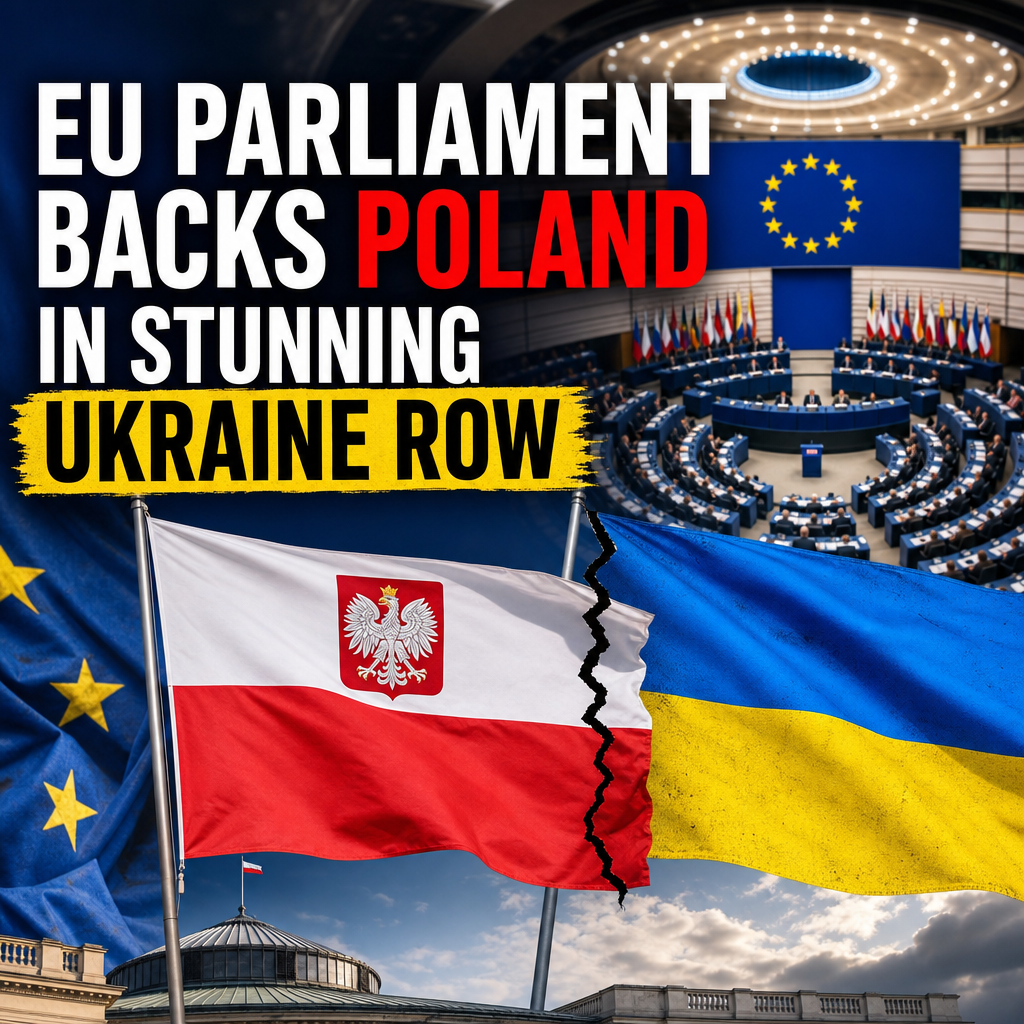
EU Parliament backs Poland in a dispute with Ukraine that is as much about history as it is about today’s war, and the reaction shows how quickly old wounds can become new diplomatic problems. What looks on the surface like a narrow parliamentary gesture is really a collision between memory politics, wartime solidarity, and the EU’s attempt to keep its members aligned behind Kyiv.
The immediate trigger appears to be a long-running Polish grievance over the legacy of World War II-era violence in areas now part of western Ukraine, especially the massacres of Poles in Volhynia and related regions. Warsaw has repeatedly pressed Kyiv for fuller acknowledgment of those crimes, as well as access to exhumations and memorial sites. Ukraine, meanwhile, has often treated these issues carefully, wary of reopening historical disputes at a time when it depends heavily on European support for its fight against Russia.



What makes the latest development noteworthy is not simply that the European Parliament weighed in, but that it did so in a way that appears to have strengthened Poland’s position. That matters because Poland has been one of Ukraine’s most important allies since Russia’s full-scale invasion began. It has taken in millions of refugees, supplied weapons and logistical help, and argued consistently for stronger European backing for Kyiv. When Warsaw says it feels ignored on historical questions, Brussels cannot easily dismiss that complaint as minor.
Why the row matters beyond history
This is not just a quarrel over the past. In Central and Eastern Europe, historical memory is political currency. For Poland, recognition of wartime atrocities is tied to national dignity and the idea that reconciliation requires truth. For Ukraine, public figures linked to anti-Soviet or nationalist traditions are sometimes seen as part of a broader struggle for independence, even if some of those figures are deeply controversial abroad.




That tension is difficult enough in peacetime. During a major war, it becomes even more sensitive. Ukraine needs unity from its partners, but it also needs space to preserve its own national narrative. Poland wants to remain one of Kyiv’s strongest supporters, but it does not want that support to mean silence on painful history. The European Parliament’s intervention suggests that other EU actors are increasingly willing to validate Poland’s concerns, even if that adds friction to an already fragile alliance.
There is also a broader EU calculation at work. Brussels has spent much of the past two years trying to present a common front: support Ukraine, contain Russian influence, and keep internal disputes from undermining that strategy. Yet the bloc is not monolithic. Countries bordering Ukraine often see the war through a different lens than western EU members do. For Poland, the emotional and historical stakes are unusually high.
Three competing readings of the dispute
The source material points to at least three different ways this row is being understood:
– Poland’s view: historical justice has been delayed for too long, and Ukraine should not expect unconditional solidarity while avoiding difficult truths.
– Ukraine’s view: the country is fighting for survival, and foreign criticism of nationalist symbols or wartime history risks weakening national cohesion and giving ammunition to hostile actors.
– The EU’s view: solidarity with Ukraine remains essential, but member states with legitimate historical concerns should not be pressured to stay quiet for the sake of appearances.
RT’s framing of the issue is notably sharper, emphasizing alleged Nazi-era links and casting the dispute in highly adversarial terms. That language reflects a broader criticism of Ukraine’s nationalist past and of Western institutions’ willingness to overlook it. Al Jazeera’s coverage of similar EU-Ukraine tensions tends to place such disputes inside a larger geopolitical context, stressing the strain of war, diplomacy, and public opinion rather than reducing the issue to a single historical narrative. Sky News, by contrast, usually treats these episodes as part of the practical politics of alliance management, where support for Ukraine must coexist with domestic pressures inside European capitals.
Taken together, those perspectives suggest that the Parliament’s stance is not a clean moral verdict so much as a political signal: Poland’s concerns have enough weight to matter, but Ukraine’s broader strategic importance has not disappeared.
The hard part: balancing memory and strategy
The danger for European leaders is that they treat historical reconciliation as a side issue when, in fact, it shapes trust. Poland is unlikely to be satisfied by vague expressions of sympathy. Ukraine is unlikely to accept language that appears to delegitimize its wartime identity. And the EU cannot afford a public split between two countries that should, in theory, be pulling in the same direction.
A durable solution would probably need three things:
1. Clear acknowledgement of historical suffering, especially by Kyiv.
2. Practical cooperation on memorials and exhumations, so the issue is not left to symbolism alone.
3. Careful political language from EU institutions, avoiding rhetoric that inflames national sensitivities while still recognizing legitimate grievances.
That may sound tedious, but it is exactly how international reconciliation usually works: slowly, awkwardly, and without any perfect resolution. The deeper lesson from this episode is that the war in Ukraine has not erased history; it has made history more politically dangerous.
In that sense, the European Parliament’s backing of Poland is significant not because it settles the matter, but because it exposes the limits of wartime unity. Europe can support Ukraine and still argue over the past. The challenge is to do both without turning memory into another front in the conflict.