Iran Bids Farewell: Stunning Farewell Photos & Videos


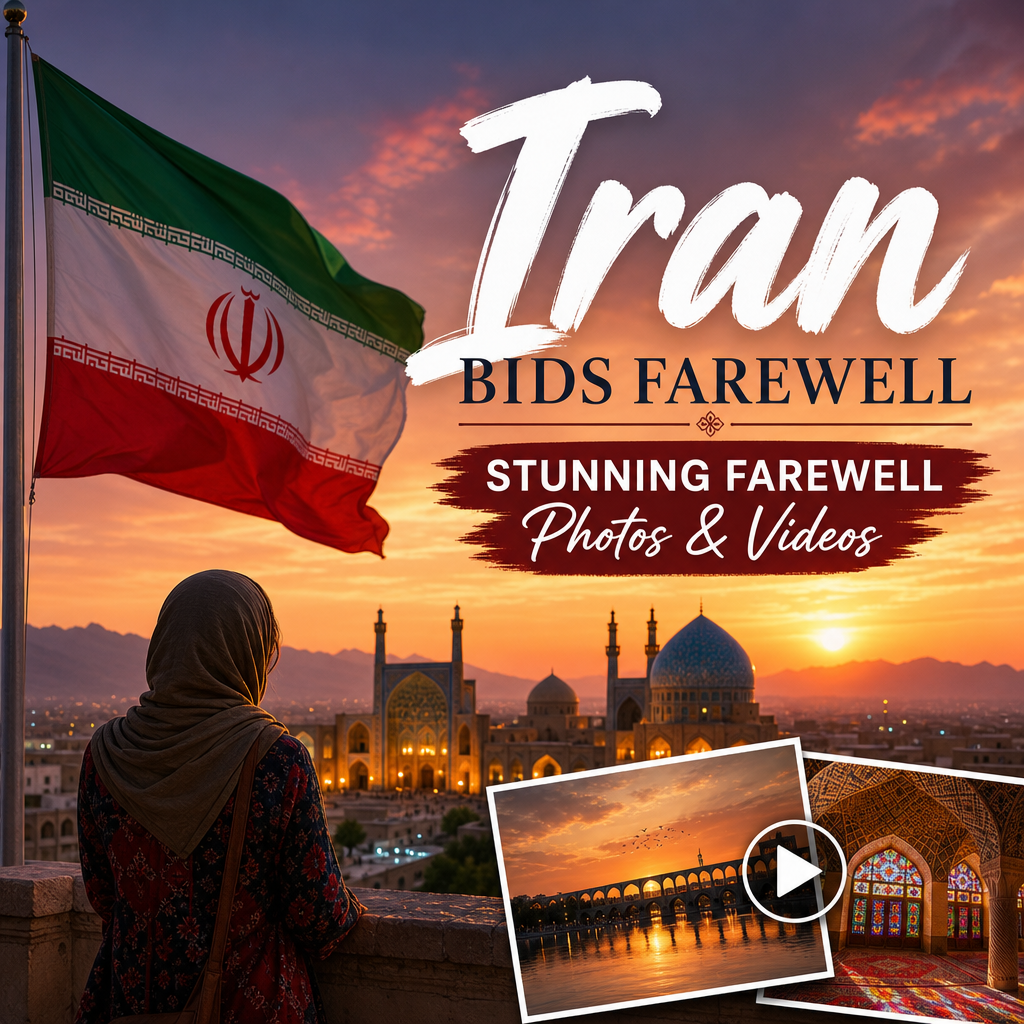
Iran bids farewell in a way that is both deeply emotional and unmistakably political, with striking photos and videos capturing crowds, flags, chants, and public mourning at a moment when the country remains under intense domestic and international pressure.
What stands out in the visual coverage is not only the scale of the farewell itself, but the different meanings people appear to be attaching to it. In the images circulating through major outlets, the event reads as a national act of grief. At the same time, it also functions as a show of state unity, resilience, and defiance. That duality is central to understanding why such scenes resonate far beyond the ceremony or procession being documented.



Iran bids farewell: grief, symbolism, and state power
In coverage from regional and international broadcasters, the farewell is presented as more than a private moment of loss. It is public ritual, carefully staged and widely watched. That matters in Iran, where mourning ceremonies often carry political weight and where large gatherings can become statements about legitimacy, loyalty, and national identity.
Photos and videos from the scene tend to emphasize several recurring details:




– tightly packed crowds moving through major streets or public squares
– black banners, portraits, and religious symbolism
– military, clerical, or state figures participating prominently
– solemn chants and visible signs of mourning
– moments of stillness that contrast with the scale of the gathering
Taken together, those visuals suggest a country trying to project order and continuity, even amid uncertainty. That interpretation is reinforced by the way state-linked coverage often frames such events: as evidence of unity, sacrifice, and collective resolve.
But other outlets, including those covering the broader regional context, invite a more cautious reading. Public mourning in Iran can be genuine and widespread without being politically uniform. A large turnout does not necessarily mean the same thing to every participant. Some are there out of religious duty, some out of loyalty, and others because major state events leave little room for neutrality. The images alone cannot fully distinguish between those motivations.
What the images reveal—and what they don’t
Visual reporting is powerful because it makes an event feel immediate. A photograph of thousands of mourners says something important that a text brief may not: this mattered to many people, and it mattered enough to fill public space. Yet images also have limits. They can show emotion, not always consent. They can show scale, not necessarily consensus.
That distinction is especially important when the subject is Iran, where domestic politics, religion, and foreign policy are tightly intertwined. Coverage from Al Jazeera often places Iranian events in a wider geopolitical frame, reminding readers that any major public gathering in the country is inevitably read through the lens of regional tensions, sanctions, and internal debate. Sky News, by contrast, tends to highlight the external consequences and the international reaction, which helps explain why a farewell event in Iran can quickly become a story about broader instability, succession, or strategic signaling.
RT’s framing, based on its regional and geopolitical emphasis, typically leans toward the optics of state defiance and the narrative of a nation standing together against outside pressure. That viewpoint is useful, but it is only one part of the picture. The fuller truth likely sits somewhere between mass sincerity and state-managed symbolism.
Why the farewell resonates internationally
A major reason these images travel so widely is that they tap into familiar themes:
– a society gathering around a central figure or moment
– the emotional power of public ritual
– questions about who speaks for the nation
– the contrast between human grief and political theater
For viewers outside Iran, the farewell may also evoke larger questions about continuity: what comes next, who gains influence, and whether public mourning reflects stability or tension beneath the surface. Those questions are fair, but the visual evidence alone rarely provides definitive answers.
A measured reading of the moment
The most responsible interpretation is probably the least dramatic one. The farewell appears to be real in the emotional sense and strategic in the political sense. Those two things are not opposites. In many countries, especially one as politically layered as Iran, a state ceremony can be simultaneously heartfelt and instrumental.
That is why the best reporting on these images avoids treating them as simple proof of either mass devotion or pure propaganda. The crowds may indeed be sincere. The organization may also be deliberate. The symbolism may feel organic to participants even if it is useful to officials. Public life in Iran often works that way: layered, contradictory, and difficult to summarize in a single frame.
If there is one clear takeaway from the farewell photos and videos, it is that they show a nation performing unity under scrutiny. Whether that unity is deep, temporary, or partly choreographed remains open to interpretation. What is not in doubt is the importance of the moment itself. In Iran, mourning is rarely just mourning. It is memory, message, and politics all at once.