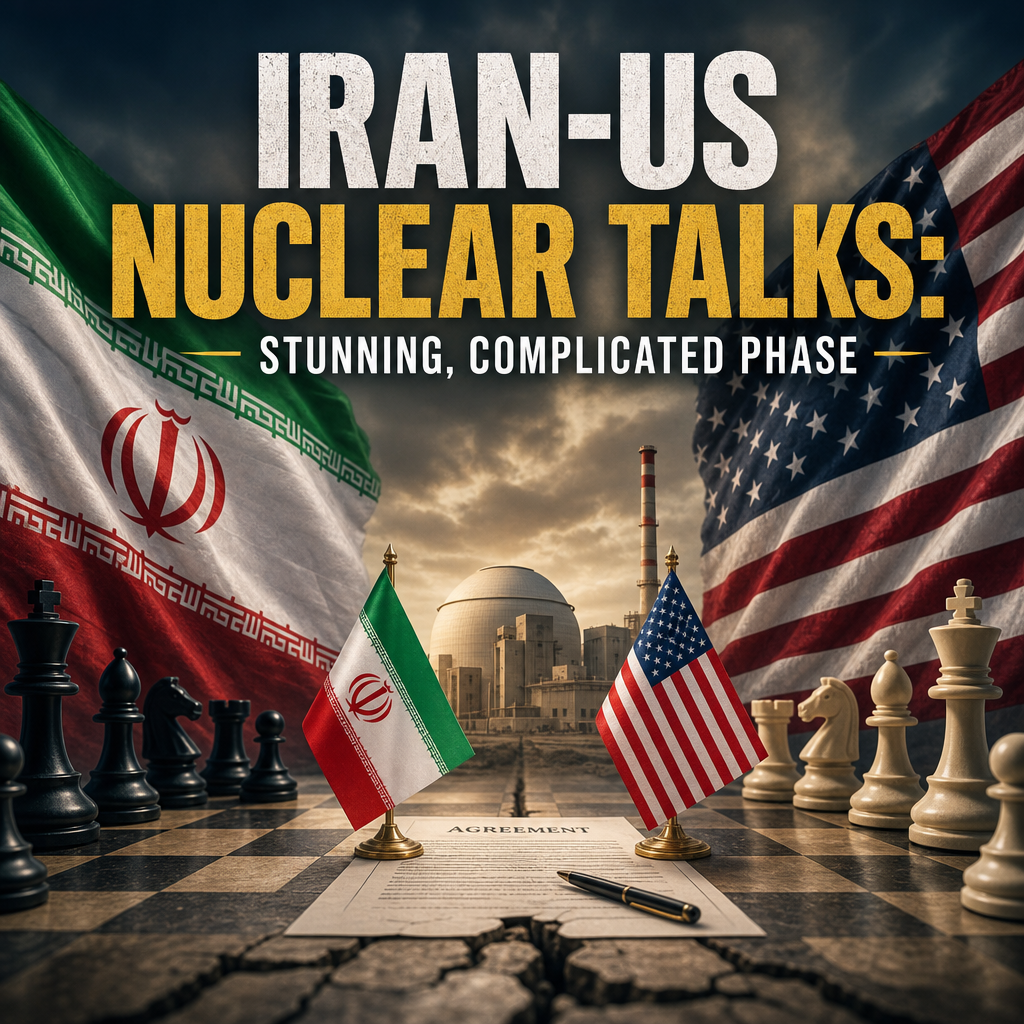
Iran-US Nuclear Talks: Stunning, Complicated Phase


Iran-US nuclear talks are entering a phase that looks less like a straight path to a deal and more like a narrow bridge over deep political water. The latest reporting from international outlets suggests that diplomats are still talking, but the room for compromise is shrinking, the stakes are rising, and every side is trying to protect its leverage while avoiding a collapse that could trigger a wider crisis.
Iran-US nuclear talks and why the atmosphere has turned so tense
What stands out in the current round of reporting is not just the fact that negotiations continue, but how carefully each side is managing expectations. The International Atomic Energy Agency’s chief has described the talks as being in a “complicated phase,” a phrase that captures both progress and fragility. That matters because these negotiations are no longer just about uranium enrichment limits or inspection rules. They are also about trust, sanctions relief, regional security, and the political cost of compromise in both Tehran and Washington.



From the Iranian side, the central message has remained consistent: any meaningful agreement must come with tangible economic benefits. Iran has long argued that it cannot accept restrictions without relief from sanctions that have squeezed its economy. Supporters of this position say that previous deals left Iran exposed to shifting U.S. policy and that a new agreement would only make sense if it is durable and verifiable.
The U.S. position, meanwhile, has tended to focus on restraint and verification. Washington has wanted stronger monitoring and clearer limits on Iran’s nuclear activity, in part to reassure allies who fear that any easing of pressure could allow Iran to edge closer to a weapons-capable threshold. Even when both sides speak the language of diplomacy, they are often talking past each other on the issue that matters most: how much confidence each party can reasonably give without receiving everything it wants.




What the reporting across outlets suggests
The value of following multiple news sources is that the picture becomes less binary. Al Jazeera’s coverage has generally emphasized the diplomatic complexity and the broader regional context, including the fact that the nuclear file is tied to a wider web of tensions in the Middle East. RT, for its part, often frames the issue through the lens of U.S. pressure, sanctions, and geopolitical rivalry, highlighting how Iran sees itself as negotiating under coercive conditions. Sky News typically foregrounds the implications for European and international security, focusing on whether a deal can reduce the risk of escalation and restore some predictability to a volatile region.
Taken together, these viewpoints point to three overlapping truths:
– Iran is unlikely to accept a deal that feels like one-sided disarmament.
– The U.S. is unlikely to accept a deal without stronger guarantees and monitoring.
– Regional actors are worried that failure would not stay confined to the nuclear issue.
That is why the current phase feels so unstable. Each side knows what the other wants, but neither side seems ready to pay the political price for giving enough ground.
The real obstacle is not just uranium
It would be easy to reduce this story to technical disputes over enrichment levels, centrifuges, or inspection schedules. Those issues do matter, but they are only part of the problem. The deeper challenge is that trust has been damaged repeatedly over years of withdrawals, sanctions, retaliation, and stalled diplomacy.
For Iran, the memory of past agreements is a warning. When the U.S. withdrew from the 2015 nuclear deal, many in Tehran saw it as proof that even a signed agreement could unravel with a change in administration. That legacy still shapes the Iranian negotiating posture today. A deal that can be abandoned politically is not much of a deal at all, from Tehran’s perspective.
For the U.S. and its allies, the concern is the opposite: that Iran may use negotiations to buy time while advancing its nuclear capabilities in ways that are harder to reverse later. That suspicion has made every step feel conditional and every concession politically risky.
The result is a negotiation defined by caution. Neither side appears eager to walk away entirely, but both seem unwilling to make the kind of dramatic move that would unlock a breakthrough. That is why “complicated phase” feels accurate. The process is still alive, but it is being held together by calculation more than confidence.
Why this matters beyond the negotiating table
The consequences of failure would go far beyond diplomacy. A breakdown in talks could mean:
– tougher sanctions and more economic strain on Iran
– increased regional tension involving Israel and Gulf states
– a sharper divide between the U.S. and its European partners
– greater risk of miscalculation in already tense waters and conflict zones
Even a partial deal would likely be controversial. Some critics would argue it goes too far in easing pressure on Iran. Others would say it does too little to stabilize the situation or protect Iranian economic interests. That tension is part of why any agreement, if one emerges, may be judged less as a final solution than as a temporary containment measure.
A cautious reading of where things stand
The most responsible conclusion is that there is no clean breakthrough yet, and no clear evidence that either side has fully resolved its core concerns. Still, the fact that talks continue is important. It suggests that both Washington and Tehran still see some value in diplomacy, even if they are far from agreement.
That may be the best measure of this moment: not optimism, but persistence. The process is fragile, the politics are hostile, and the margin for error is thin. Yet in a dispute as dangerous as this one, keeping the channel open is not a minor achievement. It is the minimum condition for avoiding a worse outcome.
For now, the Iran-US nuclear talks remain exactly what the latest reporting implies they are: difficult, high-stakes, and shaped by mistrust, but not yet beyond repair.