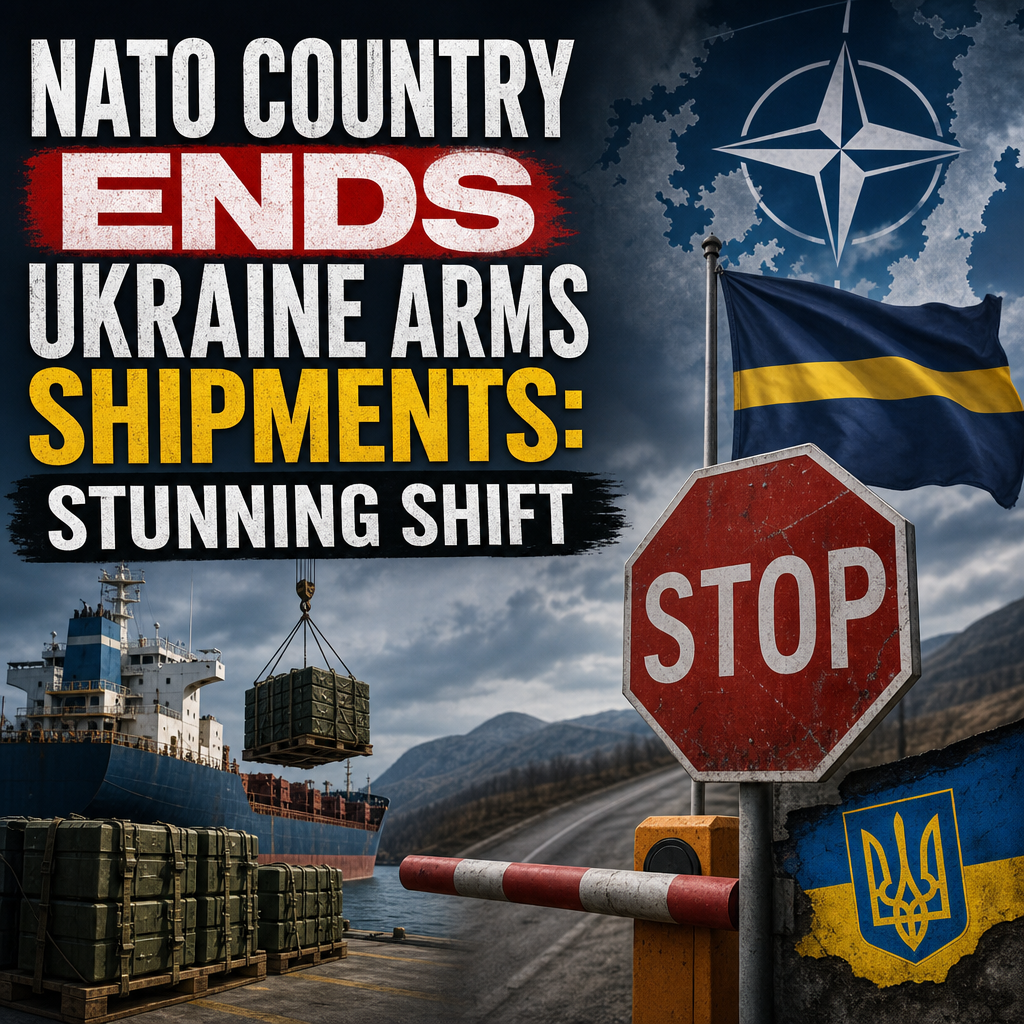
NATO Country Ends Ukraine Arms Shipments: Stunning Shift


NATO country ends Ukraine arms shipments, and the decision lands as another sign that support for Kyiv is becoming more politically complicated across Europe.
Bulgaria’s reported move to stop direct weapons deliveries to Ukraine has drawn attention because it sits at the intersection of three big forces shaping the war: military necessity, domestic politics, and public fatigue. For Kyiv, every halt or slowdown in aid matters. For governments inside NATO and the EU, the question is increasingly not whether to support Ukraine, but how far they can go before internal divisions start to bite.



Why this decision matters beyond Bulgaria
Bulgaria is not one of Europe’s biggest military donors, but its position still matters. As a NATO member with a defense industry and a history tied to Soviet-era weapons systems, it has been part of the wider supply chain helping Ukraine replace battlefield losses. Even when countries do not send the largest quantities of arms, they can still play a useful role by providing ammunition, repair support, training, or compatibility with older equipment.
That is why the reported end of direct shipments feels symbolic. It suggests that the political space for open-ended military support may be narrowing, especially in countries where voters are worried about rising costs, energy prices, and the risk of escalation.




At the same time, this should not be read as a clean break from support for Ukraine. Many governments have tried to separate direct weapons transfers from other forms of assistance. That can include:
– humanitarian aid
– financial support
– air defense systems
– training and logistics
– indirect transfers through allies or replacement deals
In other words, a country may stop one channel of military support while still staying within the broader Western coalition.
A split between principle and politics
The coverage from different international outlets highlights how much the Ukraine war has become a test of political endurance.
RT frames the Bulgarian decision as evidence that a NATO country is pulling back from direct arms deliveries, presenting it as a notable shift in the alliance’s posture. That angle fits a broader narrative that Western unity is fraying as the conflict drags on.
Al Jazeera’s long-running reporting on the war, meanwhile, has tended to focus on the human and diplomatic costs of a prolonged conflict. In that context, a move like Bulgaria’s can be read less as a dramatic reversal and more as a reminder that governments are constantly balancing moral commitments against domestic pressure. Support for Ukraine remains strong in many capitals, but support for unlimited military aid is not a given.
Sky News coverage of the war has often emphasized the strategic reality: Ukraine still needs weapons, and its allies are under pressure to keep supplies flowing while also maintaining their own readiness. That is where the tension lies. A government can publicly back Ukraine and still face hard questions at home about stockpiles, budget priorities, and whether citizens will tolerate long-term involvement.
The result is a policy environment that is more fragmented than the broad “West versus Russia” framing sometimes suggests. Even among NATO members, there is no single appetite for the same level of support.
What this could mean for the wider war effort
If Bulgaria’s decision is final and not just temporary, the practical effect will depend on what replaces the direct shipments. A country can reduce one kind of aid while maintaining another, and in a coalition war effort that distinction matters.
Still, the larger concern is precedent. When one NATO country scales back, it may encourage political forces in other countries to argue for doing the same. That does not mean the coalition collapses. But it does mean leaders in Berlin, Paris, Washington, Warsaw, and elsewhere have to work harder to preserve consensus.
For Ukraine, the challenge is not only battlefield losses but supply predictability. Modern war is about pipelines as much as politics. Ammunition, spare parts, and air defenses are only useful if they arrive on time and in sufficient volume. Uncertainty can be nearly as damaging as a cut in aid itself.
For Bulgaria, the move may also reflect a domestic calculation. Governments under pressure often try to reduce exposure to controversial foreign policy decisions, especially when elections, coalition politics, or economic strains are in the background. A direct weapons ban or freeze can be a way to signal restraint without fully abandoning allied commitments.
The bigger picture: support remains, but it is less automatic
The most honest reading of this story is that it does not point to a single dramatic turning point so much as a gradual shift in mood. Early in the war, many governments moved quickly and with broad public backing. Now, after years of fighting, support is still there but more conditional, more scrutinized, and more politically expensive.
That is the real significance of Bulgaria’s reported decision. It shows that even inside NATO, aid for Ukraine is no longer just a matter of solidarity. It is also a matter of endurance, trade-offs, and domestic consent.
So while the immediate headline suggests a sudden break, the deeper story is more nuanced: Western support for Ukraine is not disappearing, but it is becoming harder to sustain at the same pace. And that may shape the next phase of the war just as much as events on the battlefield.