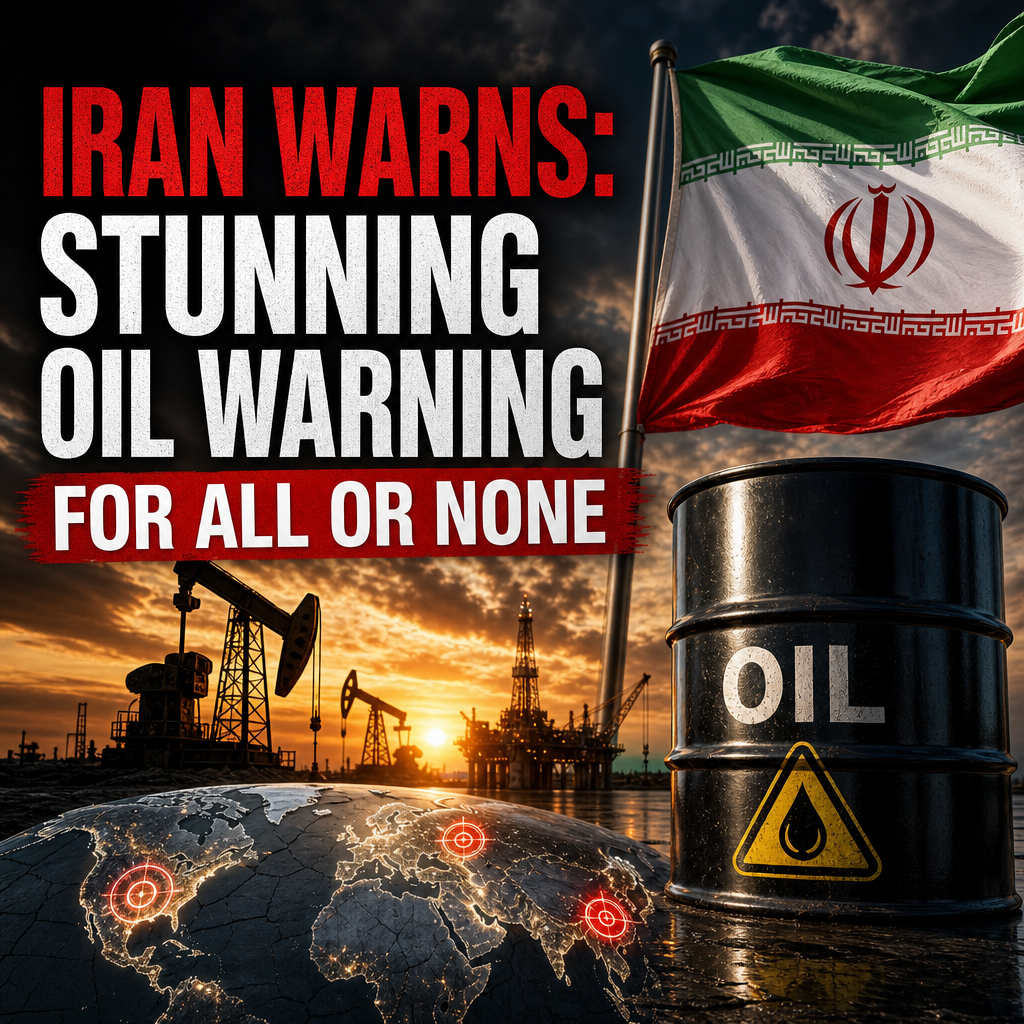
Iran Warns: Stunning Oil Warning for All or None


Iran’s oil warning has once again put the world’s most important energy chokepoints back in the spotlight, and the message is as blunt as it is unsettling: if pressure on Tehran escalates, global shipping and energy markets could feel the shock fast.
The warning matters because it is not happening in a vacuum. Reporting across international outlets has tied the latest tensions to a broader standoff involving Iran, the United States, regional security, and the fragile flow of oil through key maritime routes. That includes the Strait of Hormuz, through which a significant share of the world’s crude passes, and other export pathways that are vital not only to Iran but to its neighbors and major buyers in Asia and Europe.



Why Iran’s Oil Warning Resonates Beyond the Gulf
The core of the issue is leverage. Iran has long made clear that it views its energy infrastructure and export routes as strategic assets, not just commercial ones. When Tehran signals that oil flows could be disrupted, it is rarely talking only about its own trade. It is also warning that the wider region may pay a price if sanctions tighten, military pressure increases, or diplomatic talks collapse.
That is why this latest warning is being read so seriously. Oil markets do not need an actual blockade to react; the possibility of one can be enough to move prices, raise insurance costs, and prompt shipping firms to reassess routes. Even a short-lived disruption could ripple far beyond the Gulf, affecting fuel prices, refinery margins, and inflation expectations in import-dependent countries.




At the same time, the situation should not be oversimplified. Iran has used strong language before, and not every warning becomes action. In past crises, statements from Tehran have sometimes served as deterrence, signaling resolve rather than announcing an imminent shutdown of exports. That is one reason analysts tend to distinguish between rhetoric, signaling, and operational intent.
A Strategic Message, Not Just a Threat
Seen from Tehran’s perspective, the warning serves several purposes at once:
– It reassures domestic audiences that Iran is not passive under pressure.
– It reminds foreign governments that Gulf stability depends on restraint from all sides.
– It raises the cost of escalation by making energy security part of the diplomatic equation.
This is where the international reaction becomes complicated. Some coverage emphasizes the danger of Iranian disruption to global markets, while other reporting places equal weight on the broader cycle of provocation and response. In that view, threats to oil routes are not merely an Iranian problem, but a symptom of worsening regional confrontation.
What the Coverage Suggests About the Bigger Picture
Different newsrooms approach the story from different angles, and that range of perspective is useful. Al Jazeera’s regional framing tends to foreground the political and humanitarian consequences of escalation, especially for ordinary people across the Middle East who would bear the brunt of instability. That perspective helps explain why energy tensions are never only about barrels and shipping lanes; they are also about diplomacy, power, and civilian vulnerability.
RT’s reporting, by contrast, often highlights U.S.-Iran tensions and the strategic value of export routes as pressure points. That framing underscores how each side uses leverage, sanctions, and warnings as tools of statecraft. Even when the tone is sharply geopolitical, it reflects a real feature of the standoff: energy remains one of the few areas where Iran can still exert global influence despite sanctions.
Sky News and similar Western outlets typically focus more on the market and security implications, especially for Europe and global trade. That lens is important because it captures the practical question investors and policymakers are asking: if Iran follows through even partially, who absorbs the cost first, and how quickly?
Put together, the coverage points to a shared conclusion: the threat is credible enough to matter, but uncertain enough to resist easy prediction.
The Real Risk Is Escalation, Not Just Words
The most dangerous part of this story is the possibility of miscalculation. Energy chokepoints are sensitive because they involve military assets, commercial ships, and high political stakes in a confined space. When warnings, drills, interceptions, or retaliatory strikes happen in quick succession, the line between signaling and confrontation can blur.
That means the global response matters almost as much as Iran’s next move. Heavy-handed rhetoric from outside powers can reinforce Tehran’s hardline posture, while quiet diplomacy may reduce the odds of an immediate crisis. Neither path guarantees success, but the stakes are too high for performative brinkmanship.
What to Watch Next
The most important indicators in the coming days and weeks will be:
– whether Iran couples its warning with concrete naval or export-related actions;
– whether oil prices and freight insurance costs begin to climb materially;
– whether regional powers push for de-escalation or align more closely with one side;
– whether diplomatic channels remain open enough to prevent a broader confrontation.
A Warning That Should Be Taken Seriously, but Carefully
The most balanced reading is this: Iran’s warning is not empty, but it is also not destiny. It reflects a real ability to disrupt energy flows, yet it also functions as a political signal aimed at deterring pressure. That ambiguity is exactly why the market, governments, and shipping firms are paying close attention.
For now, the world should avoid assuming either that nothing will happen or that disruption is inevitable. The safer conclusion is more uncomfortable: the oil system is exposed, the political environment is brittle, and both sides understand that even a limited incident could have outsized consequences.
In that sense, the warning is “all or none” only in the most dangerous way. If no one blinks, the cost could be borne by global consumers, traders, and regional stability alike. If diplomacy holds, the threat may remain just that—a warning.