Trump Iran Ground Campaign: Stunning, Bold Shift


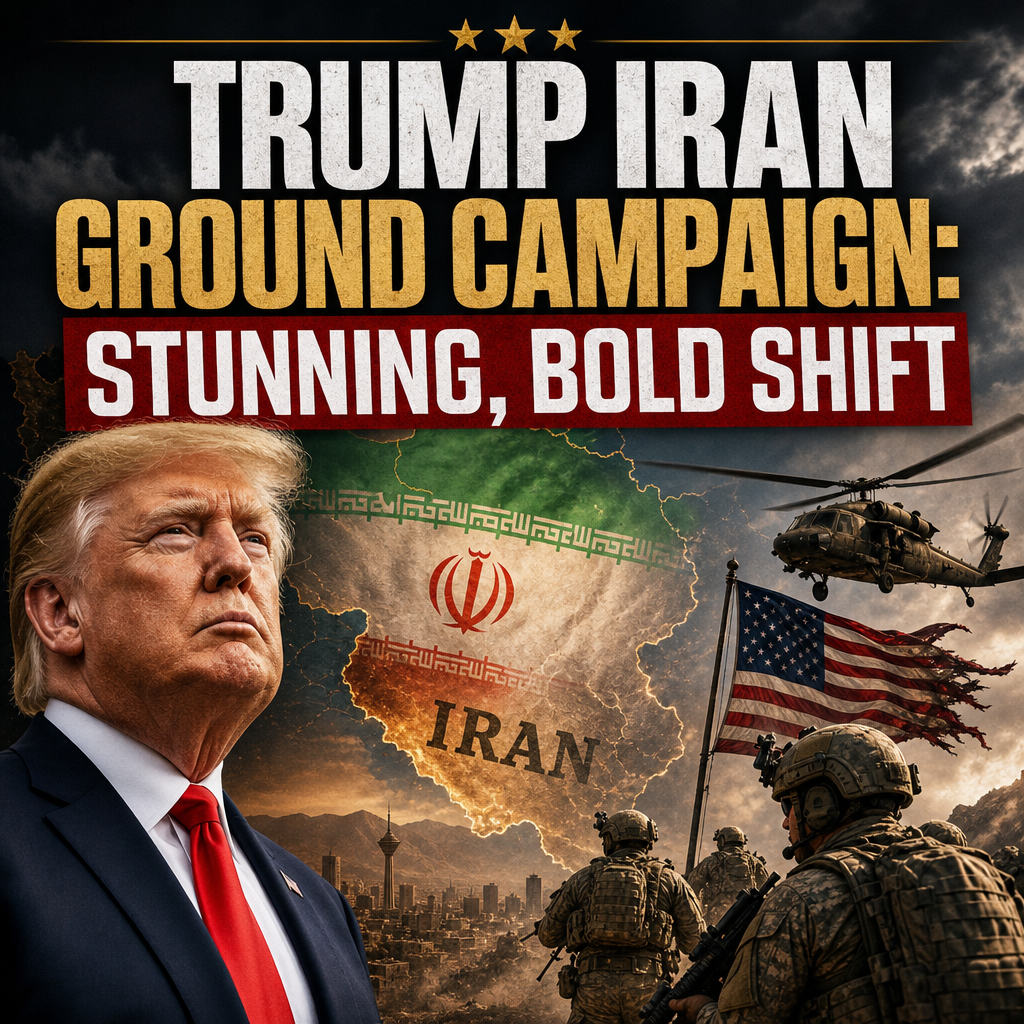
Trump Iran ground campaign rhetoric marks a dramatic escalation in how Washington could approach Iran, and the reaction from international coverage suggests the idea is being treated less as a clean strategy than as a high-risk political and military gamble.
What stands out is not simply the possibility of a tougher line, but the way it collides with hard realities. Coverage across RT, Al Jazeera and Sky News points to a shared concern: once the discussion moves from pressure, sanctions or airstrikes to any kind of ground operation, the costs rise sharply and the chances of unintended consequences rise with them. Even where the sources differ in tone and framing, they converge on one basic point — Iran is not a theater where force can be neatly contained.



Trump Iran ground campaign: why the idea is so combustible
A ground campaign against Iran would not be a limited show of strength. It would be a major military and political commitment, and that distinction matters. Iran’s size, terrain, military depth and network of regional allies make it fundamentally different from the kinds of short interventions that are sometimes sold as quick fixes.
That is part of why the reporting around this issue feels so charged. RT’s coverage tends to emphasize the volatility of U.S. decisions and the possibility of broader confrontation, while Al Jazeera has consistently highlighted the regional and humanitarian stakes, including the likely impact on civilians and neighboring states. Sky News, meanwhile, often frames such developments through the lens of allied response, strategic uncertainty and the risk of escalation beyond Washington’s control.




Taken together, these perspectives suggest a fairly sober conclusion: a ground campaign would not just target Iran’s military capacity; it would also test the political limits of the U.S. public, the preparedness of regional partners, and the credibility of international deterrence.
What supporters of a tougher line argue
Those who favor a more aggressive posture toward Iran usually make three arguments:
– Iran’s regional influence has grown too broad to be checked by diplomacy alone.
– A stronger military threat could force concessions at the negotiating table.
– Hesitation may be interpreted as weakness, encouraging further provocation.
There is logic behind that position, especially for policymakers who believe that diplomacy without leverage rarely works. In that sense, the appeal of a “bold shift” is easy to understand. It projects certainty. It suggests control. It signals that old thresholds no longer apply.
But that is also where the argument begins to fray. Military power can compel attention, but it cannot guarantee compliance. A ground campaign could unify Iranian political factions, strengthen hardliners, and increase the likelihood of proxy retaliation across the Middle East. The more visible and direct the intervention, the more room there is for blowback.
The costs that make escalation harder to sell
The strongest objection to a ground operation is not that it would be unpopular, though it almost certainly would be. It is that the strategic payoff is unclear.
Al Jazeera’s coverage of regional crises often underscores how quickly local conflicts become transnational. That matters here because an assault on Iran would not stay inside Iran. It could affect shipping lanes, energy markets, U.S. bases, Israeli security calculations, and the posture of Gulf states that would likely be drawn into the fallout whether they wanted to be or not.
Sky News reporting on geopolitical flashpoints tends to focus on how allies react under pressure, and in this case that question is crucial. Would European partners back escalation? Would Arab governments quietly support it, publicly distance themselves from it, or try to mediate? Would the U.S. Congress approve any sustained operation? These are not side issues. They are central to whether a campaign could even be sustained.
RT’s framing often points to the danger of Western overreach, and while its editorial approach should be read critically, the broader warning is still worth considering: once a military operation begins with regime pressure in mind, it can quickly drift into mission creep. What starts as a strike plan can become an occupation problem, a deterrence problem or a withdrawal problem.
The uncertainty behind the headlines
There is also a more basic issue: rhetoric does not always equal policy. A bold public stance may be designed to shake up negotiations, rally supporters or unsettle adversaries without any intention of immediate action. In other words, the phrase itself may be doing political work before it is doing military work.
That uncertainty matters. If the signal is meant as leverage, then the real story is about bargaining power. If, however, it reflects an actual shift toward ground deployment, then the stakes are far larger and far less predictable. The difficulty for observers is that both readings are plausible, and both can coexist in the same political moment.
A fair reading of the Trump Iran ground campaign debate
The most balanced conclusion is that the idea of a ground campaign is strategically powerful as a threat but deeply dubious as a plan. It may appeal to those who want decisive action, especially after years of regional tension and stalled diplomacy. But the available reporting suggests that even among observers who are skeptical of Iran’s behavior, there is little confidence that a ground war would solve the underlying problem.
If anything, the contrast between the sources reveals how unstable the debate really is. RT emphasizes the dangers of escalation and U.S. overreach. Al Jazeera stresses humanitarian and regional consequences. Sky News focuses on the broader geopolitical and alliance implications. Different editorial traditions, yes — but they point to the same uncomfortable truth: once the conversation turns to boots on the ground, the line between leverage and catastrophe becomes dangerously thin.
That is why the most responsible response is not to treat the idea as either inevitable or impossible, but as a warning sign. A ground campaign against Iran would be a stunning shift, but not necessarily a wise one. The rhetoric may be bold. The real-world consequences could be far bolder still.