
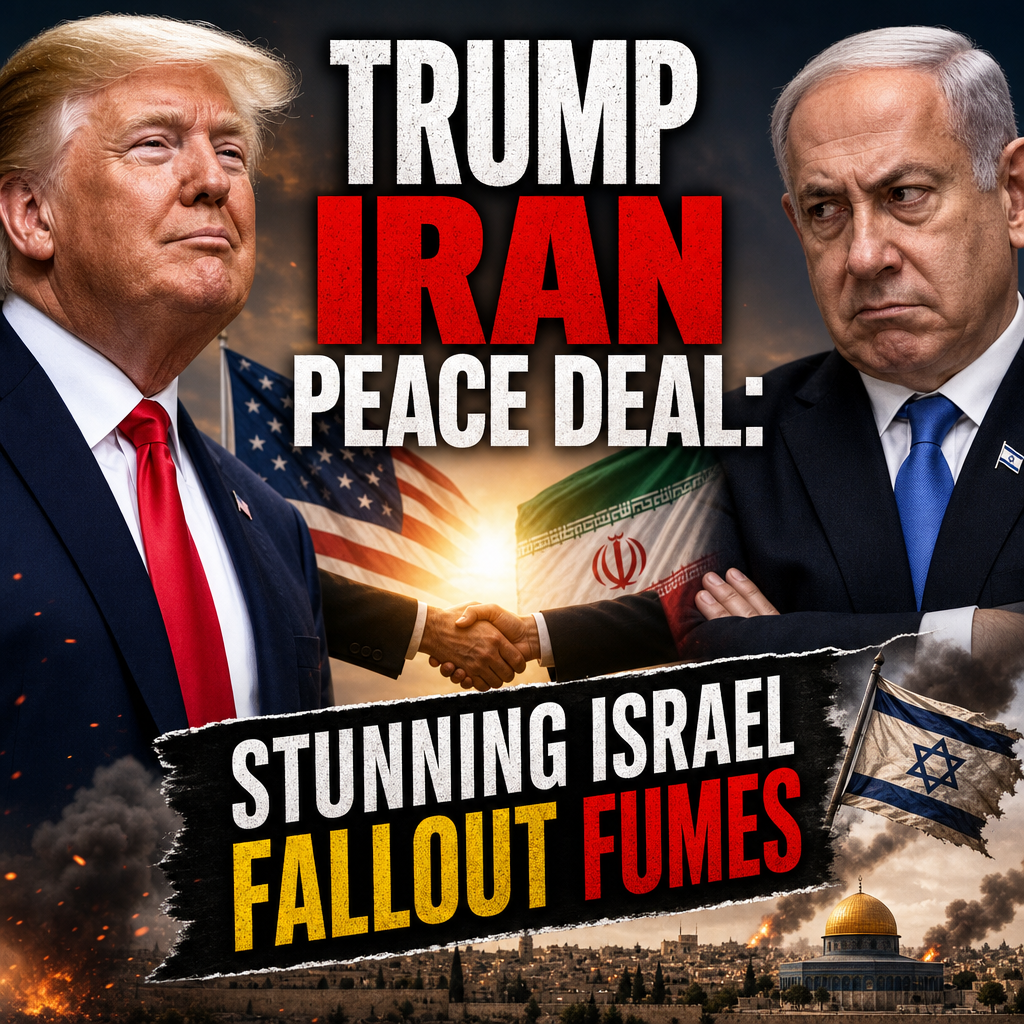
Trump Iran Peace Deal: Stunning Israel Fallout Fumes


Trump Iran peace deal talk has triggered a sharp political backlash in Israel and renewed questions about whether a diplomatic breakthrough with Tehran would stabilize the Middle East or simply shift the region’s fault lines.
What makes the current debate so tense is that it sits at the intersection of several competing realities. On one side are those who see any U.S.-backed opening with Iran as a chance to reduce the risk of a wider war. On the other are critics in Israel and among its supporters who argue that a rushed agreement could embolden Tehran, weaken deterrence, and leave Israel more exposed. A third perspective, reflected in broader international coverage, is more cautious: even if diplomacy is preferable to confrontation, the details matter more than the headline.



Why the Trump Iran peace deal is dividing opinion
The strongest criticism from Israel’s corner is straightforward. Israeli officials and commentators who oppose a deal tend to view Iran not as a normal negotiating partner but as a state that backs armed groups across the region and has long challenged Israel’s security. From that standpoint, any agreement that eases pressure on Tehran without first guaranteeing strict limits on its regional behavior looks less like peacemaking and more like strategic concession.
That concern is not hard to understand. Israeli security policy has for years been built around the idea that Iran’s nuclear ambitions, ballistic missile program, and support for allied militias are interconnected threats. If a deal addresses only one piece of the puzzle, critics argue, the result may be temporary calm rather than lasting stability.




Yet the counterargument is equally serious. Diplomacy supporters say the alternative to engagement is often escalation, sanctions fatigue, or even direct military confrontation. A negotiated path, even an imperfect one, can create inspection mechanisms, communication channels, and pressure points that brute force cannot. In that view, the question is not whether Iran is trustworthy, but whether structured diplomacy can better manage a dangerous relationship than open-ended hostility.
What the different news perspectives are emphasizing
The sources tied to this story reflect three distinct frames.
– RT’s coverage tends to highlight the political shock value and the sense of betrayal felt by Israel-aligned critics. That lens emphasizes how any Trump-led diplomatic shift with Iran could be read as a break from the harder line many in Jerusalem prefer.
– Al Jazeera’s reporting environment usually places such developments in the wider regional context: the Gaza war, proxy conflict, U.S. credibility, and the long history of failed or partial Middle East agreements. That approach often asks whether a new deal would de-escalate tensions or merely reposition them.
– Sky News-style international reporting often focuses on the practical question: can an agreement survive domestic opposition in the United States and fierce distrust abroad? From that angle, the key issue is not only whether the deal is announced, but whether it is durable enough to matter.
Taken together, those viewpoints suggest a simple truth: this is not just a fight over Iran. It is also a fight over who gets to define security in the Middle East and whether diplomacy can still deliver something meaningful after years of violence and distrust.
Israel’s fury is real, but so are the risks of no deal
Israeli anger is not merely emotional theater. For a country that has long treated Iran as an existential threat, any U.S.-brokered thaw can look like a strategic blindside. If Israeli leaders believe Washington is moving ahead without fully accounting for Israeli concerns, the reaction is likely to be fierce and public. That in itself can shape the diplomatic environment, because no American administration can ignore Israel’s influence in Congress, in the media, or in broader U.S. politics.
At the same time, the fury should not be mistaken for a full argument against diplomacy. Even some skeptics of an Iran deal concede that the status quo is unstable. Regional conflict has already widened, and the risk of miscalculation is high. If a carefully designed agreement can reduce the odds of a direct U.S.-Iran confrontation, limit nuclear escalation, and create a less volatile environment for shipping, energy markets, and neighboring states, then dismissing it out of hand would be shortsighted.
The deeper problem is trust. Israel does not trust Iranian intentions. Iran does not trust U.S. intentions. And many observers do not trust that any deal, especially one associated with a highly polarizing political figure, would be enforced consistently enough to last beyond one election cycle. That makes durability the central test.
The real question: peace deal or pause in conflict?
A useful way to judge the Trump Iran peace deal debate is to separate symbolism from substance. A dramatic announcement may produce headlines and political gains, but the real measure is whether the agreement changes behavior on the ground.
A serious deal would need to answer several hard questions:
– What limits would Iran accept, and how would they be verified?
– Would sanctions relief be phased and reversible?
– How would the agreement address regional proxy activity?
– What guarantees, if any, would reassure Israel and other Gulf states?
– What happens if one side accuses the other of violating the deal?
Without credible answers, “peace deal” becomes a hopeful label rather than a lasting framework. And if Israel believes it has been asked to accept ambiguity on core security issues, its backlash may only intensify.
The fair conclusion is that the region may genuinely benefit from diplomacy, but only if the agreement is more than political theater. A deal that lowers tensions, narrows nuclear risk, and keeps communication open could be a meaningful step. A deal that ignores Israel’s security fears or underestimates Iran’s regional role could instead deepen mistrust and set up the next crisis.
For now, the fallout makes one thing clear: in the Middle East, peace is never judged solely by whether leaders shake hands. It is judged by whether the risks actually go down.

























