Trump Iran Deal: Stunning Lose-Lose-Lose Warning


Trump Iran Deal talks are once again exposing how hard it is to find a workable path between pressure, distrust, and the threat of escalation.
The latest warnings around U.S.-Iran diplomacy show why this issue keeps cycling back to crisis. From one angle, the White House wants leverage: stronger sanctions, sharper threats, and a bigger demand for compliance. From another, Iran sees those demands as less a negotiation than an ultimatum. And from a third, regional and international observers worry that the hard-line approach could backfire by making a nuclear agreement harder, not easier, to reach.



That is why the current debate feels so stark. Supporters of pressure say Iran has long used delay and defiance as bargaining tools. Critics argue that coercion has repeatedly produced the opposite of what Washington wants: more mistrust, fewer concessions, and greater incentive for Tehran to harden its position.
Trump Iran Deal and the logic of pressure
The most forceful argument in favor of Trump’s approach is simple: previous diplomacy did not stop the dispute from resurfacing. The 2015 nuclear agreement, negotiated under the Obama administration, was meant to place limits on Iran’s program in exchange for sanctions relief. But after the U.S. withdrew from the deal in 2018, the accord unraveled, and Iran gradually expanded its nuclear activities beyond the original limits.




That history helps explain why some voices still argue that only maximum pressure can force a serious Iranian concession. In this view, sanctions are not the problem; they are the leverage. The logic is that Iran, facing economic strain and political isolation, will eventually come back to the table if the price of resistance becomes high enough.
RT’s coverage tends to frame this approach as something closer to capitulation than diplomacy, reflecting a broader skepticism toward Washington’s demands. In that telling, a deal presented under threat is not really a deal at all. It is surrender dressed up as negotiation. That perspective captures a real concern: if the terms are too one-sided, the result may be compliance on paper and defiance in practice.
Still, that view does not answer the key question of what kind of pressure actually works. History offers mixed evidence. Sanctions can weaken an economy, but they can also strengthen hardliners by allowing them to blame foreign hostility for domestic pain. That makes the strategy powerful in theory and uncertain in practice.
Why the Trump Iran Deal warning lands so strongly
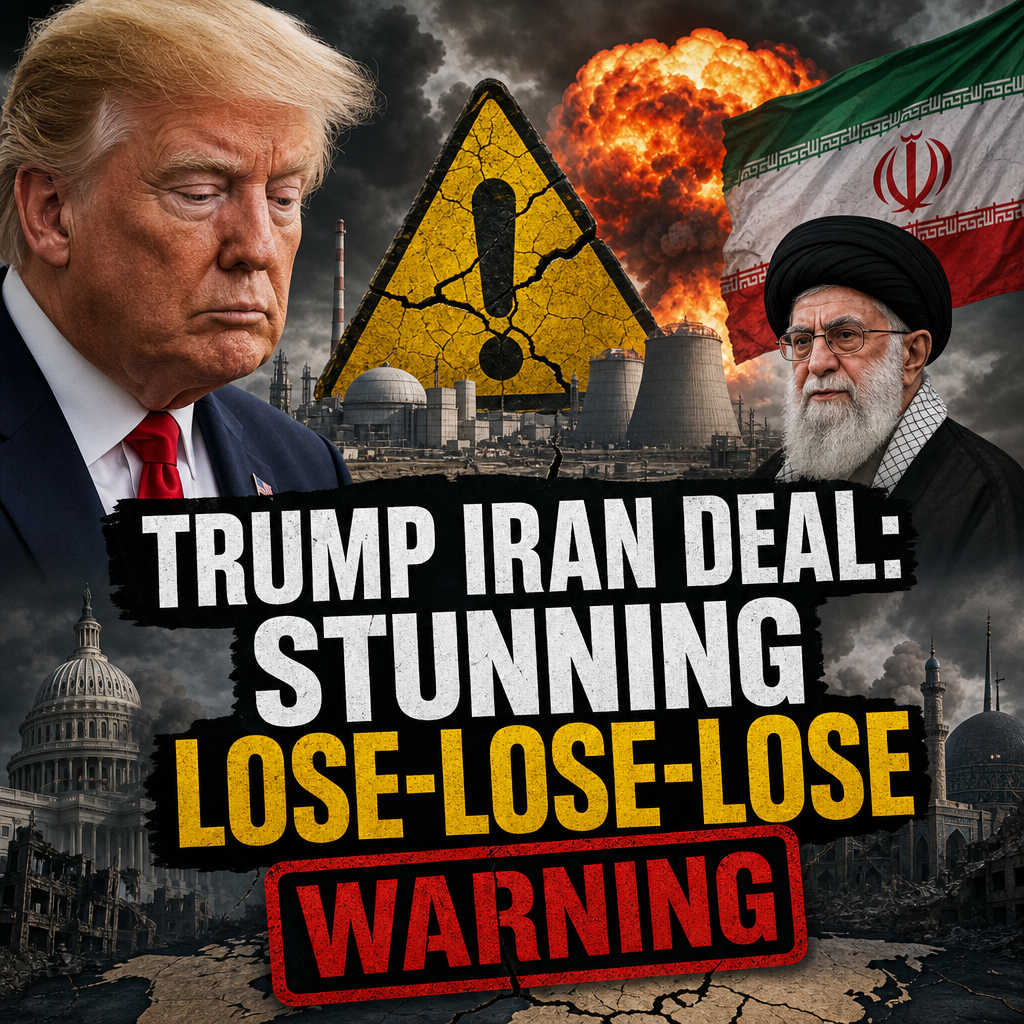
The phrase that keeps surfacing around this dispute is “lose-lose-lose,” and it resonates because the downside is obvious on all sides:
– For the U.S.: escalation could trigger a new Middle East crisis without guaranteeing a better nuclear outcome.
– For Iran: refusing talks may deepen sanctions and isolation while increasing the risk of military confrontation.
– For the region: instability can raise the danger to shipping, energy markets, and neighboring states already wary of spillover conflict.
That is the core problem. Pressure may create urgency, but urgency does not automatically produce agreement.
What Al Jazeera and Sky News highlight differently
Al Jazeera’s reporting often places more emphasis on the distrust built up by years of sanctions, threats, and broken expectations. From that perspective, Iranian leaders are unlikely to view American demands as neutral or fair. They are more likely to see them as part of a broader campaign to weaken the country economically and politically. That makes compromise harder, because each side assumes the other is negotiating in bad faith.
This matters. Diplomacy depends not only on the content of a proposal but also on whether both sides believe the deal will be honored. After the U.S. left the 2015 accord, Tehran had a powerful argument that any future agreement could be undone by a change of administration. That fear is not abstract; it is central to Iran’s reluctance to give up leverage.
Sky News, meanwhile, tends to focus on the international and security implications. Its framing often reflects concern about the wider consequences of a collapse in diplomacy: allied anxieties, regional retaliation, and the possibility that even a limited misunderstanding could spiral into a larger confrontation. In that view, the issue is not whether Washington sounds tough enough, but whether toughness is being matched by a credible off-ramp.
That is an important distinction. A warning without a clear diplomatic pathway can push both sides toward brinkmanship. A deal, by contrast, needs enforcement, verification, and enough face-saving language for each side to claim some success at home.
A deal still possible, but only under narrow conditions
The most balanced reading of the current situation is that neither unconditional pressure nor unconditional trust is likely to work. A lasting agreement would probably require a smaller, more pragmatic bargain rather than a grand political reset.
That could mean:
– limited nuclear restraints in exchange for targeted sanctions relief;
– phased verification measures to build confidence gradually;
– direct or indirect channels that reduce the risk of miscalculation;
– clearer guarantees, or at least stronger international commitments, to prevent immediate collapse.
The challenge is political. In both Washington and Tehran, compromise is easy to attack. Hard-liners in each camp benefit from portraying the other side as untrustworthy and dangerous. That makes diplomacy fragile even when the strategic logic for negotiation is strong.
So the biggest lesson from this moment is not that one side is obviously right. It is that the current formula is unstable. A posture of maximum pressure may produce headlines and leverage, but it can also deepen the very deadlock it is supposed to solve. At the same time, Iran’s resistance tactics and nuclear advances make it hard to argue that patience alone will solve anything.
The result is a deeply unsatisfying stalemate: too much conflict for comfort, but not enough trust for a breakthrough. That is what makes the warning so compelling. On this file, almost every move carries a cost, and the danger is that in trying to avoid one loss, both sides may end up creating three.