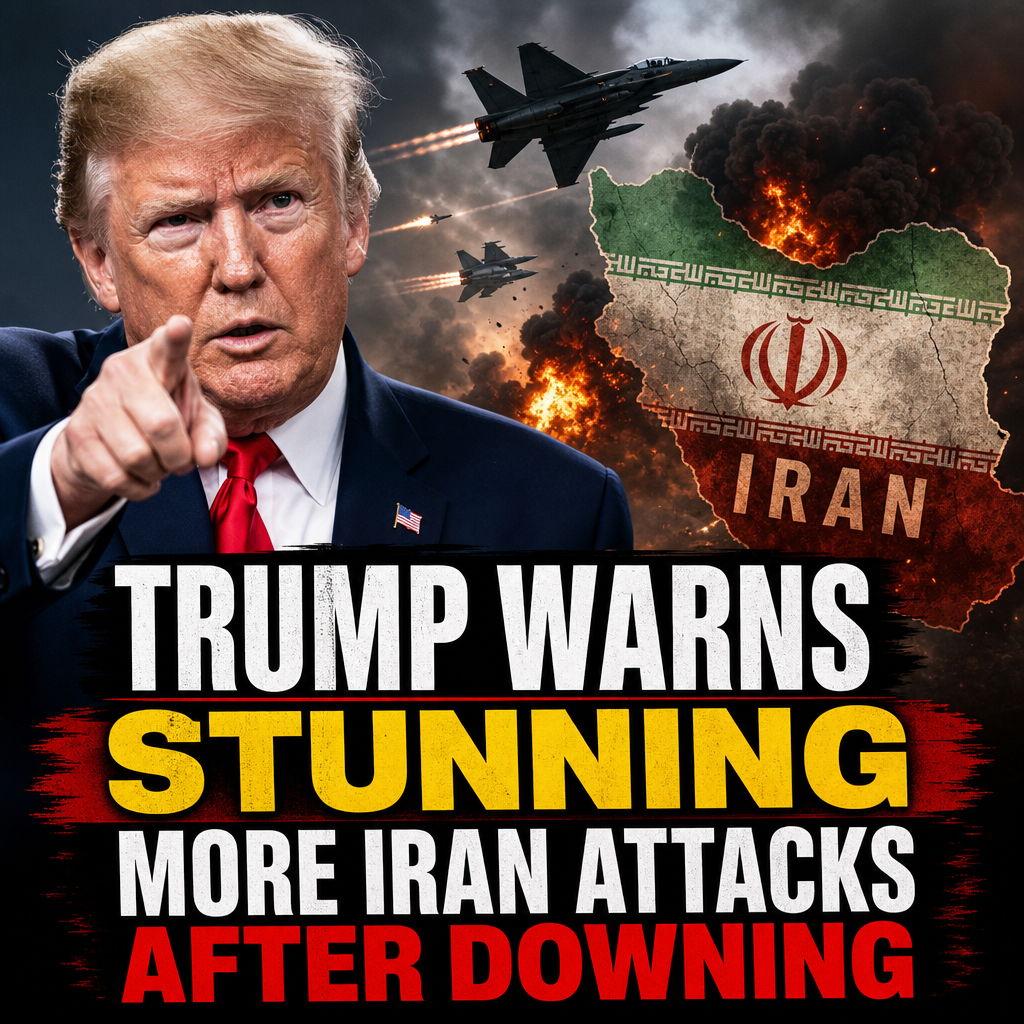
Trump Warns Stunning More Iran Attacks After Downing


Trump Warns Stunning More Iran Attacks After Downing has quickly become a flashpoint in an already volatile U.S.-Iran relationship, with the latest reports suggesting that a helicopter incident has pushed tensions into even more dangerous territory. While the exact sequence of events is still being reported differently across outlets, the broad picture is clear: Washington is signaling that any attack on U.S. assets or personnel will be met with a strong response, while Iranian officials and their supporters are likely to frame the same developments as a consequence of American pressure and military posturing.
The most important thing to understand is that this is not just a story about one downed aircraft. It is a story about escalation, deterrence, and the risk that a single incident could be interpreted as a larger message. In that sense, the rhetoric matters almost as much as the facts on the ground.



Trump Warns Stunning More Iran Attacks After Downing: What the reports suggest
Across the reporting ecosystem, there is a consistent theme: the situation is tense, the details are incomplete, and both sides have incentives to shape the narrative.
Al Jazeera’s coverage tends to place events in the broader regional context, emphasizing how quickly isolated military incidents can spiral when U.S.-Iran hostility is already high. That framing matters because it avoids presenting the confrontation as a simple one-off clash. Instead, it treats the downing of the helicopter as part of a longer cycle of retaliation and counter-retaliation, especially in a region where proxy conflicts and direct military signaling often overlap.




Sky News, by contrast, typically approaches such events from a Western security angle, where the core question is whether the U.S. response will deter further attacks or invite them. That lens highlights the immediate political stakes for Washington: if the administration sounds too soft, it risks appearing vulnerable; if it sounds too aggressive, it risks widening the conflict. This is where Trump’s warning becomes politically significant. It is not only a military message but also a domestic one, meant to project strength and resolve.
RT often pushes readers to consider the anti-Western narrative that Iranian officials and allied voices may use to explain the confrontation. From that perspective, the U.S. is not merely responding to aggression; it is participating in a broader pattern of pressure, sanctions, and military presence that Tehran sees as provocative. That does not excuse attacks on aircraft or personnel, but it does help explain why the crisis is being interpreted so differently depending on the outlet and audience.
Why this incident is especially dangerous
Even when the facts are still being verified, the risks are obvious:
– Miscalculation: A single strike, interception, or downing can be mistaken for the opening move in a larger campaign.
– Retaliation pressure: Once leaders speak in public terms about consequences, they often narrow their own room to de-escalate.
– Conflicting narratives: Competing claims about who acted first, and why, can harden positions before diplomacy begins.
– Regional spillover: Any U.S.-Iran escalation can quickly affect Iraq, Syria, the Gulf, and shipping routes beyond the immediate incident.
This is why the language of “more attacks” is so alarming. It suggests that decision-makers are already bracing for escalation rather than trying to prevent it. Even if the threat is meant as deterrence, it can be heard in Tehran as confirmation that Washington is preparing for broader confrontation.
The political meaning of Trump’s warning
The warning itself may be as much about perception as military readiness. Trump has long built his foreign-policy identity around being unpredictable and forceful, and that style can work as a deterrent only if opponents believe the threat is credible. But credibility cuts both ways. If the threat is too sweeping, it can make diplomacy harder. If it is too vague, it can sound like theater.
That tension is central to the current moment. Supporters of a hard line argue that only strong public warnings prevent further attacks. Critics counter that maximum-pressure messaging has repeatedly failed to produce lasting restraint and instead increases the odds of an exchange no one fully intends.
There is also a practical issue: the U.S. must balance military signaling with the need to avoid being dragged into an open-ended conflict. That means any response has to answer several questions at once:
– Was the downing an isolated act or part of a coordinated pattern?
– Was it carried out by Iranian forces, a proxy group, or another actor?
– Does a response need to be immediate, symbolic, or measured over time?
– How can Washington protect personnel without triggering a wider war?
Those unanswered questions are why headlines can feel more decisive than the reality behind them. The public may see a firm warning; policymakers see a fragile situation with very few good options.
A fair reading of the road ahead
The most balanced conclusion is that this is a genuine escalation risk, but not yet proof of a full-blown regional crisis. The reporting from different outlets points to a common truth: both the U.S. and Iran are operating in a highly charged environment where signaling matters and mistakes are costly. Each side will likely insist it is acting defensively, and each side will accuse the other of destabilizing the region.
That is why caution is warranted. The public should be skeptical of overly simple narratives—whether they frame the incident as an unprovoked attack, a justified defense, or a dramatic sign that war is imminent. The reality is more complicated. In crises like this, the biggest danger is often not a single dramatic announcement, but the slow accumulation of actions and reactions that leave leaders with fewer ways to step back.
For now, Trump’s warning appears intended to project resolve and discourage further aggression. Whether it succeeds will depend less on the force of the statement than on what happens next: the evidence that emerges, the military posture on both sides, and whether diplomatic channels remain open long enough to prevent the next incident from becoming the one that tips the region over the edge.