US-Iran Agreement: Stunning Breakthrough or Bluff?


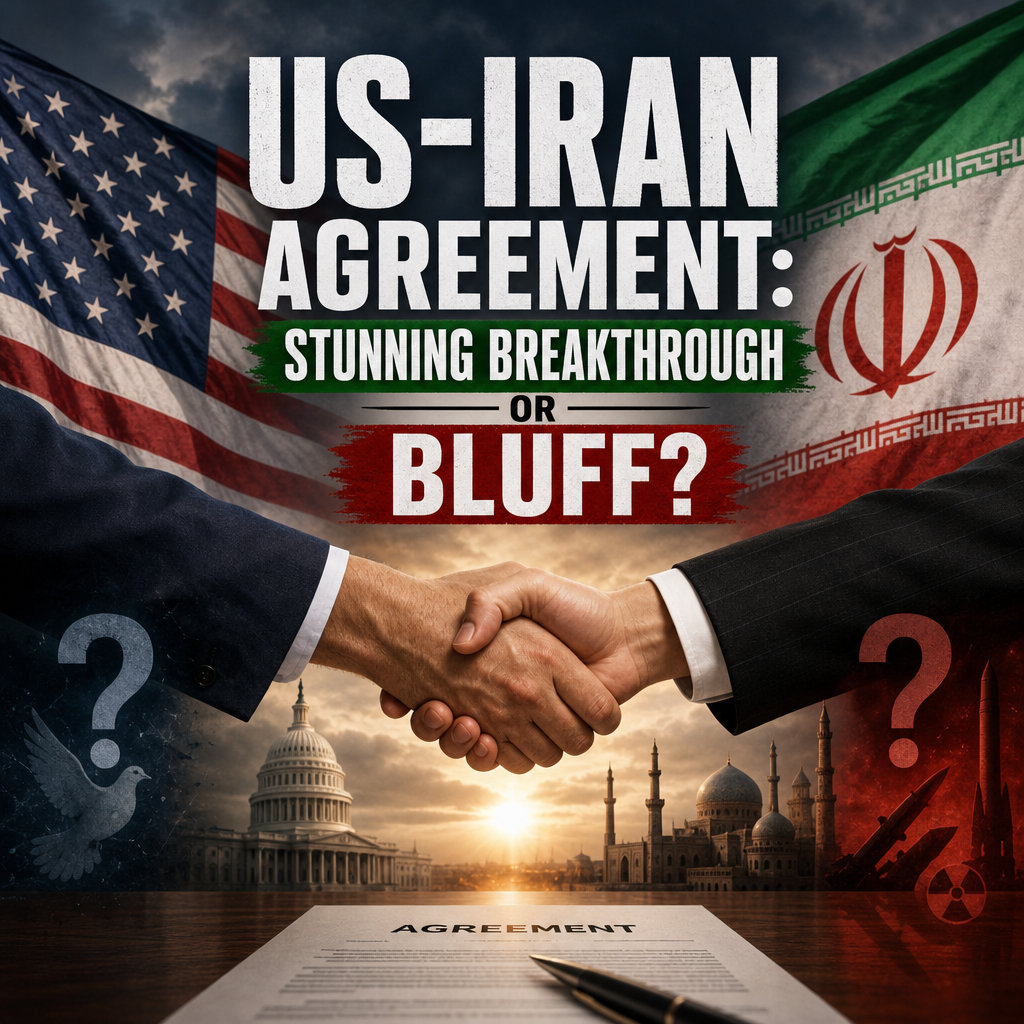
US-Iran agreement talks have once again pushed Washington and Tehran into the spotlight, but whether they represent a real breakthrough or just another tactical pause is still far from clear.
For now, the most honest reading is that the latest diplomatic signals are important precisely because they are limited. Across international coverage, including Sky News, Al Jazeera, and RT, one theme stands out: there is movement, but not yet enough certainty to call it a lasting thaw. Depending on which part of the story you emphasize, this can look like a meaningful opening, a carefully managed bluff, or simply another round in a long game of pressure, mistrust, and brinkmanship.



What the US-Iran agreement may actually mean
At the core of the debate is a familiar question: does a narrow agreement create momentum toward broader diplomacy, or is it mainly designed to buy time?
Supporters of the “breakthrough” interpretation argue that even limited understandings matter between countries with such a deep history of hostility. In practical terms, a temporary arrangement on sanctions relief, nuclear oversight, prisoner exchanges, or de-escalation can reduce immediate risks. When tensions between the US and Iran rise, the stakes are rarely abstract. They can affect shipping lanes, regional militias, oil markets, and the security calculations of neighboring states.




That is why some analysts see value in incremental diplomacy. A small deal can open channels that were previously shut, lower the temperature, and create a framework for more substantial negotiation later. In that sense, a modest agreement is not a final answer, but it may be the only realistic first step.
Still, a cautionary reading is just as plausible. Skeptics note that both governments have incentives to present progress without making the kind of concessions that would anger domestic audiences. For Washington, that can mean signaling control over a volatile foreign policy file. For Tehran, it can mean gaining economic breathing room while avoiding the appearance of surrender. If the deal is mostly about optics, then the word “agreement” may overstate what has really happened.
Why some observers call it a bluff
The bluff argument rests on a simple idea: if the underlying disputes remain untouched, then the latest announcement may be more performance than policy.
That suspicion is strengthened by the long record of breakdowns in US-Iran relations. Previous negotiations have shown how quickly trust can evaporate once enforcement, verification, or sanctions become politically contentious. Even when both sides benefit from a temporary calm, each side also fears being the one that compromises first and gains least.
From this perspective, the current move could be aimed at shifting blame rather than building consensus. If talks stall later, leaders can claim they tried. If tensions rise again, each side can accuse the other of bad faith. In that scenario, the “agreement” becomes a strategic placeholder, useful in the short term but unstable by design.
What the different source perspectives suggest
The Sky News framing appears to center on uncertainty: the phrase “breakthrough or bluff” itself reflects how hard it is to separate genuine diplomacy from political theater. That framing is useful because it resists the temptation to treat a single development as historic when the facts may not yet support that.
Al Jazeera’s broader regional coverage often places US-Iran relations in a wider Middle Eastern context, where diplomacy is never just bilateral. Any arrangement affects Iraq, Syria, Lebanon, the Gulf states, and the regional balance around Israel as well. From that angle, even a modest US-Iran understanding matters because it can change how other actors behave. But it also means the agreement’s success depends on more than just signatures on paper.
RT, meanwhile, tends to emphasize the power politics behind Western-Iranian tensions, often highlighting skepticism toward US intentions and the role of sanctions and coercion. That viewpoint is valuable as a reminder that Iran’s leadership will judge any deal through the lens of past pressure campaigns and the possibility of renewed enforcement. In Tehran’s view, diplomacy without credible guarantees may look less like compromise and more like vulnerability.
Taken together, these perspectives point to a realistic middle ground: the latest development is probably neither a fake nor a full breakthrough. It is a tentative opening in a relationship built on distrust.
The practical tests to watch
Whether this becomes meaningful will depend on a few concrete questions:
– Are the terms specific enough to verify?
– Do both sides have reasons to keep the deal alive after the headlines fade?
– Is there any sign of broader regional de-escalation?
– Can domestic political pressure be managed in Washington and Tehran?
– Will sanctions, nuclear commitments, or prisoner issues be handled in a way that survives the next crisis?
Those details matter more than celebratory language. Diplomacy often looks successful at the announcement stage and fragile in implementation.
A cautious verdict
The best answer, at least for now, is that the US-Iran agreement is significant but not yet transformative. It may be a real diplomatic opening, but the evidence so far does not justify calling it a breakthrough in the historic sense. Nor does it make sense to dismiss it outright as mere bluff.
The more likely truth is that both interpretations contain part of the picture. There may be genuine interest in avoiding escalation, especially given the costs of conflict for both sides and the wider region. At the same time, both governments almost certainly remain guarded, tactical, and deeply skeptical of each other’s intentions.
That combination does not produce certainty. It produces a fragile opportunity.
And in US-Iran relations, fragile opportunities are often the only ones available.