
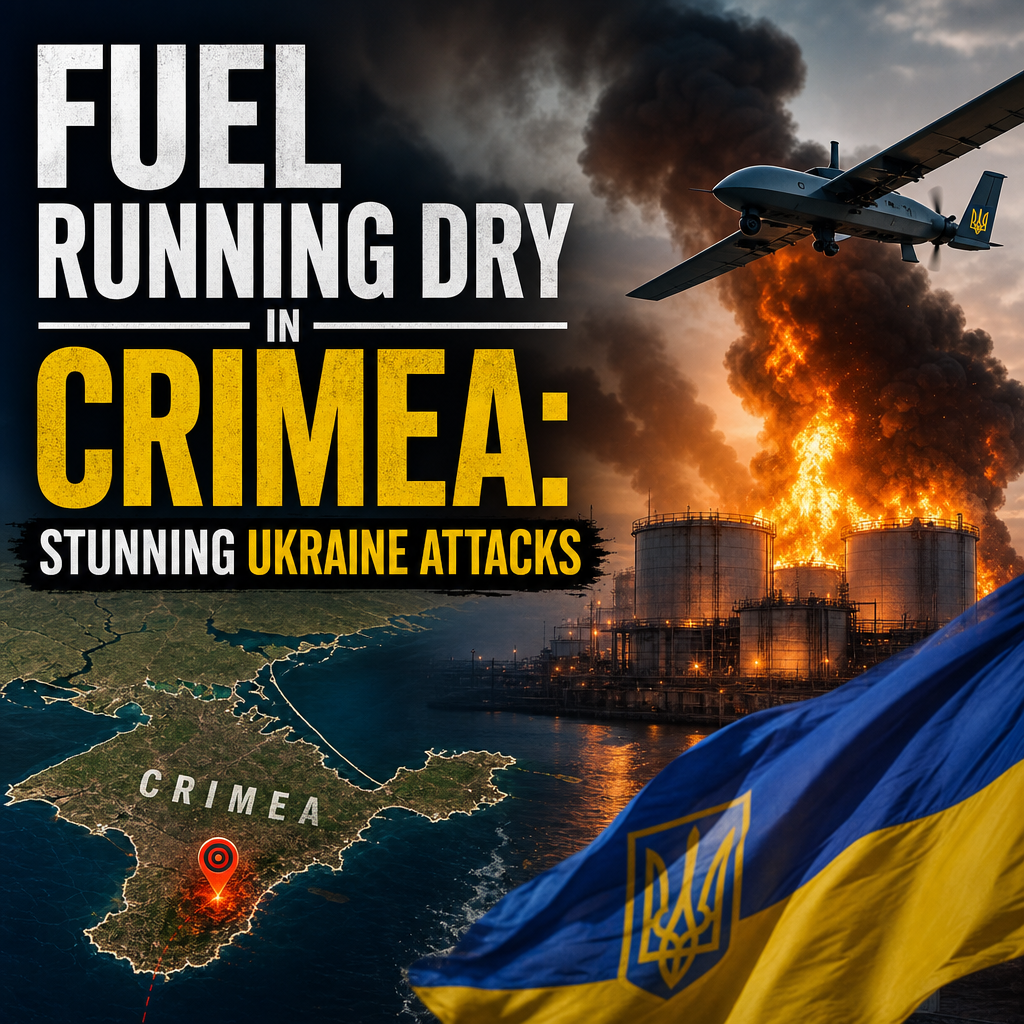
Fuel Running Dry in Crimea: Stunning Ukraine Attacks


Fuel running dry in Crimea is emerging as one of the clearest signs that the war between Russia and Ukraine is increasingly being fought through logistics, infrastructure, and supply chains rather than battlefield lines alone. Recent reporting from Sky News, alongside broader coverage from Al Jazeera and Russian state-aligned RT, points to a sharp rise in Ukrainian pressure on energy and transport targets tied to Moscow’s war effort, with the annexed peninsula now feeling the strain most visibly at petrol stations.
What makes this moment significant is not just the shortage itself, but what it suggests: Ukraine appears to be trying to make the cost of occupation and military sustainment harder for Russia to absorb. At the same time, the competing narratives around these strikes show how difficult it is to separate military effect from political messaging in a conflict where both sides treat information as a battlefield.



Why Crimea Matters in the War’s New Phase
Crimea has long been more than a symbol. Since Russia annexed the peninsula in 2014, it has functioned as a major military hub, a transport corridor, and a rear base supporting operations in southern Ukraine. That makes it a logical target for Kyiv if its goal is to disrupt Russian movement, weaken morale, and force Moscow to divert resources to defend supply lines far from the front.
Sky News’ reporting suggests fuel shortages in Crimea are now visible enough to affect daily life, with drivers confronting long queues and strained supply. That is not just an inconvenience. Fuel scarcity can slow civilian transport, complicate military logistics, and create a broader sense of instability in a region Moscow has tried hard to portray as securely under control.




Ukraine’s campaign appears to be based on a straightforward strategic idea: if Russian forces can be denied easy access to fuel, ammunition, and transportation infrastructure, their ability to sustain offensive operations becomes more expensive and more brittle. In a war of attrition, even modest disruptions can have outsized effects.
The military logic behind the strikes
From a Ukrainian perspective, attacks on infrastructure connected to Crimea serve several purposes:
– They pressure Russian logistics without requiring major territorial advances.
– They force Russia to spread air defenses and security resources thinner.
– They can disrupt both military and civilian confidence in Moscow’s control.
– They create political leverage by making occupation more costly to maintain.
That said, the effect is not always immediate or decisive. Russia has repeatedly shown an ability to repair, reroute, and substitute damaged systems, especially where it can draw on large reserves and secure supply routes. So while fuel shortages in Crimea may indicate real disruption, they do not automatically translate into a broader strategic collapse.
Competing Narratives: Success, Denial, and Uncertainty
Al Jazeera’s wider war coverage tends to frame such developments within the broader humanitarian and geopolitical costs of the conflict, emphasizing that strikes on infrastructure can deepen instability for civilians as well as military targets. That perspective matters, because fuel shortages are rarely cleanly contained. When supply chains buckle, ordinary residents often experience the first and most visible consequences.
RT, by contrast, typically presents such incidents through a Russian security lens, emphasizing the need to defend territory, the resilience of Russian systems, and the alleged illegitimacy of Ukrainian strikes on areas Moscow claims as its own. In that framing, the story becomes less about Ukraine’s tactical gains and more about what Moscow describes as external aggression against Russian-controlled land.
The result is a familiar but important pattern: the same event is presented in radically different terms depending on the source.
– Ukraine and its supporters see a legitimate effort to weaken an occupying force.
– Russian-aligned coverage portrays the strikes as hostile attacks on Russian territory and stability.
– Regional and international outlets often focus on the practical consequences, especially for civilians and energy security.
The truth is likely to sit somewhere between those positions. Ukraine is clearly trying to impose costs, and recent reports suggest it is doing so with increasing frequency and precision. But the scale of the effect remains hard to verify independently in real time, especially when official statements are shaped by wartime incentives.
The Bigger Picture: Pressure Without Clear Endgame
The most striking aspect of the situation in Crimea is not simply that fuel is becoming scarce, but that the war is now producing visible pressure far from the front. That may be a sign of Ukrainian adaptation after months of difficult fighting and incremental gains rather than dramatic breakthroughs.
Still, there are reasons to be cautious about overreading the moment. Shortages can be temporary. Russia may reroute fuel, tighten distribution, or prioritize military use over civilian demand. And while disruptive strikes can sap confidence, they can also harden attitudes and justify more retaliation.
That creates a grim strategic trade-off. Infrastructure attacks may be effective as a pressure tool, but they also risk escalating the cycle of retaliation and broadening the suffering beyond military targets. In that sense, the Crimea fuel shortages are both a battlefield development and a reminder of how deeply civilian life is now entangled with war planning.
What to Watch Next
The real question is whether the shortages are an isolated consequence of recent attacks or the beginning of a longer trend that forces Russia to rethink how it supplies Crimea.
Key signs to watch include:
– whether fuel queues continue or fade after temporary disruptions
– whether Russia increases military escorts or air defenses around energy infrastructure
– whether Kyiv expands its strike campaign further into supply hubs
– whether civilian pressure in Crimea becomes politically noticeable inside Russia’s decision-making circle
For now, the evidence points to a meaningful Ukrainian success in disruption, but not necessarily a decisive turning point. The peninsula is feeling vulnerable, and that alone matters. Yet the war’s history has shown that tactical gains can be real without being final.
In other words, fuel running dry in Crimea is not just a headline about empty pumps. It is a snapshot of a wider contest in which logistics, endurance, and psychological pressure may matter as much as territory.

























