Trump Halts Iran Strikes After Kharg Island Threat


Trump halts Iran strikes after a sharp escalation over Kharg Island, but the episode has done little to calm fears that the conflict between Washington and Tehran could still widen quickly. What makes this moment so tense is not just the military language being used, but the speed with which threats, counterthreats, and diplomatic warnings have started to shape the public narrative.
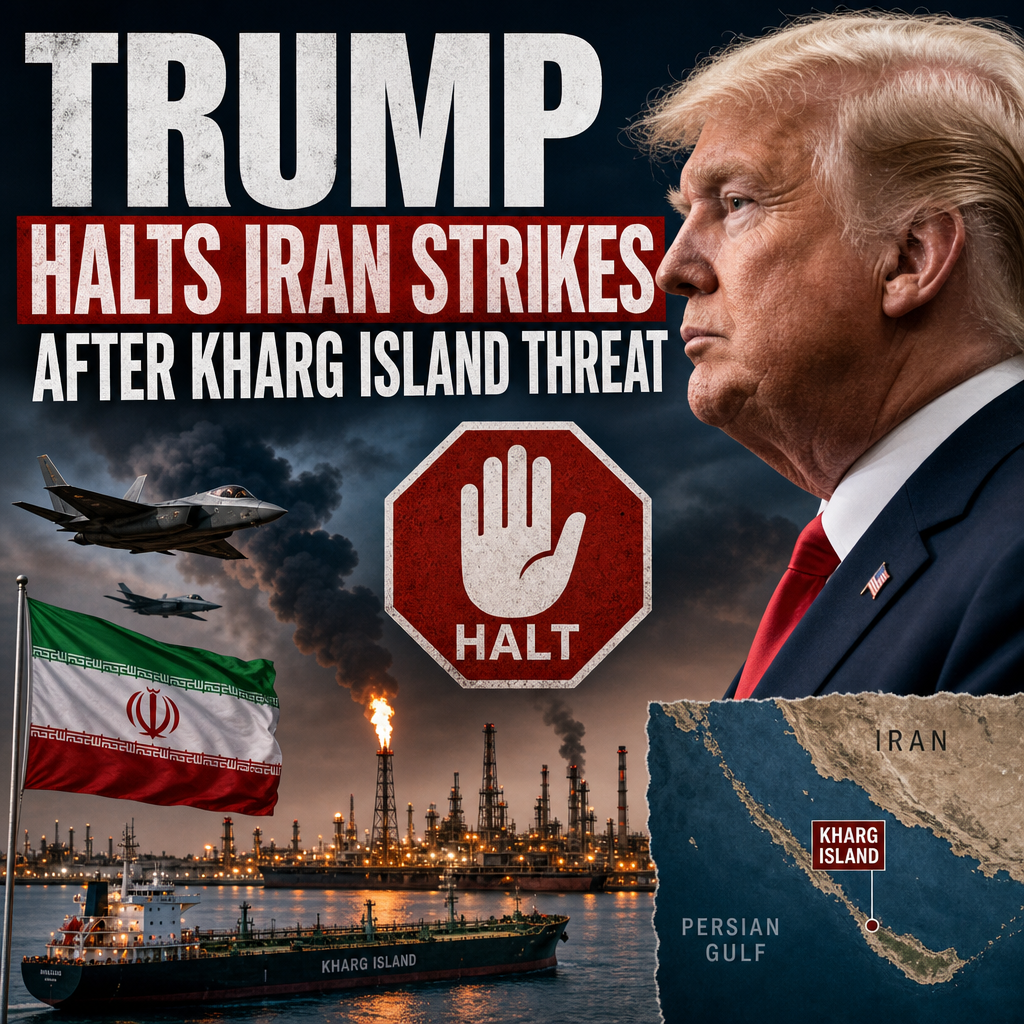
The immediate trigger was a reported threat tied to Kharg Island, Iran’s crucial oil-export hub in the Persian Gulf. In that context, President Donald Trump’s decision to stop short of authorizing strikes has been read in very different ways. Some see it as a sign of restraint after unusually aggressive rhetoric. Others view it as a tactical pause, not a genuine retreat, especially given how quickly the situation escalated in the first place.



Trump halts Iran strikes: what the pause really means
From the outside, a halt to military strikes can sound like de-escalation. But the available reporting suggests the situation is more complicated. Trump’s statement about “taking” Kharg Island sounded, to many observers, less like a settled policy and more like a warning designed to pressure Tehran. That matters because the line between deterrence and provocation can be thin when both sides are already on edge.
Al Jazeera’s coverage framed the moment as part of a broader pattern of escalating confrontation, with the Kharg Island threat becoming a symbolic flashpoint. The island is not just another target on a map; it is central to Iran’s oil exports and therefore to its economic leverage. Any threat around it carries real strategic weight, even if no strike occurs.




Meanwhile, Sky News’ broader world coverage has tended to emphasize the risk of spillover. That angle is important because even a limited U.S.-Iran exchange can affect shipping lanes, oil prices, regional military postures, and the calculations of allies and proxies across the Middle East. In other words, the danger is not only what happens on Kharg Island itself, but what the threat does to the wider security environment.
RT’s reporting often highlights the geopolitical framing and the optics of U.S. pressure, which is useful here because it reminds readers that military threats do not happen in a vacuum. Washington’s statements are heard not only in Tehran, but also in Moscow, Gulf capitals, and among global energy markets looking for clues about how far the standoff may go.
Why Kharg Island matters so much
Kharg Island is a small place with outsized importance. It handles a large share of Iran’s crude exports, making it a strategic pressure point in any conflict involving sanctions, maritime security, or military escalation.
That is why talk of striking or “taking” the island immediately raises alarm. Even if the language is intended as a bluff, the consequences of a misread signal could be severe.
Key reasons it matters:
– It is central to Iran’s oil export infrastructure
– It sits within a sensitive maritime and military zone
– Any threat to it can affect global energy markets
– It could trigger Iranian retaliation against regional targets or shipping routes
This is also why analysts often warn that the Persian Gulf is a classic escalation environment: limited actions can produce outsized reactions. A threat against infrastructure tied to national revenue is likely to be interpreted in Tehran as more than just rhetorical posturing.
A pause in strikes, but not necessarily in pressure
The most balanced reading of the reports is that Trump’s decision to halt strikes may reflect caution, not conciliation. That distinction is important. A leader may step back from immediate military action while still preserving the threat as leverage. In that sense, the halt may be a temporary brake rather than a change in direction.
There are at least three plausible interpretations of the move.
First, it could indicate that the White House recognizes the risk of a wider conflict and is trying to avoid crossing a threshold that would be hard to reverse. Second, it may be a negotiating tactic, designed to keep Iran guessing and to force concessions without firing a shot. Third, it could simply reflect internal disagreement or operational uncertainty about the consequences of a strike.
The reporting does not support a neat conclusion, and that uncertainty is itself significant. When military signaling becomes this volatile, the absence of action does not automatically mean the crisis has passed. Sometimes it means the parties are still trying to calculate how much pressure the other side can bear.
What the different newsrooms are signaling
Taken together, the three feeds point to a shared reality: this is a developing confrontation with no easy off-ramp.
– Al Jazeera highlights the regional and political stakes, especially the symbolic value of Kharg Island.
– Sky News emphasizes the possibility of broader instability and global knock-on effects.
– RT places the episode in the larger frame of U.S. power politics and international tension.
Those viewpoints do not all tell the same story, but they do converge on one point: the risk is less about a single strike and more about the chain reaction that could follow. That makes the situation more dangerous than a one-off headline might suggest.
The evidence so far suggests neither complete escalation nor true normalization. Instead, the relationship appears stuck in a familiar but hazardous pattern: threatening language, military signaling, defensive reactions, and high uncertainty. The problem with that pattern is that it can produce accidental conflict even when neither side fully intends one.
The bigger picture
Trump halts Iran strikes, but the underlying dispute remains unresolved. If anything, the Kharg Island episode shows how quickly energy infrastructure, military rhetoric, and domestic politics can fuse into one crisis. It also shows why observers should be careful about reading restraint too optimistically.
A pause in strikes can lower the immediate temperature. It cannot, by itself, resolve the strategic mistrust driving the confrontation. Unless there is some form of sustained diplomatic channel — even a narrow one — the same cycle of threats may return with another flashpoint attached.
For now, the most responsible conclusion is that the crisis has been interrupted, not ended. And in a region where miscalculation can move faster than diplomacy, that distinction is everything.