Iranian Drones Downed in Hormuz: Stunning US Move


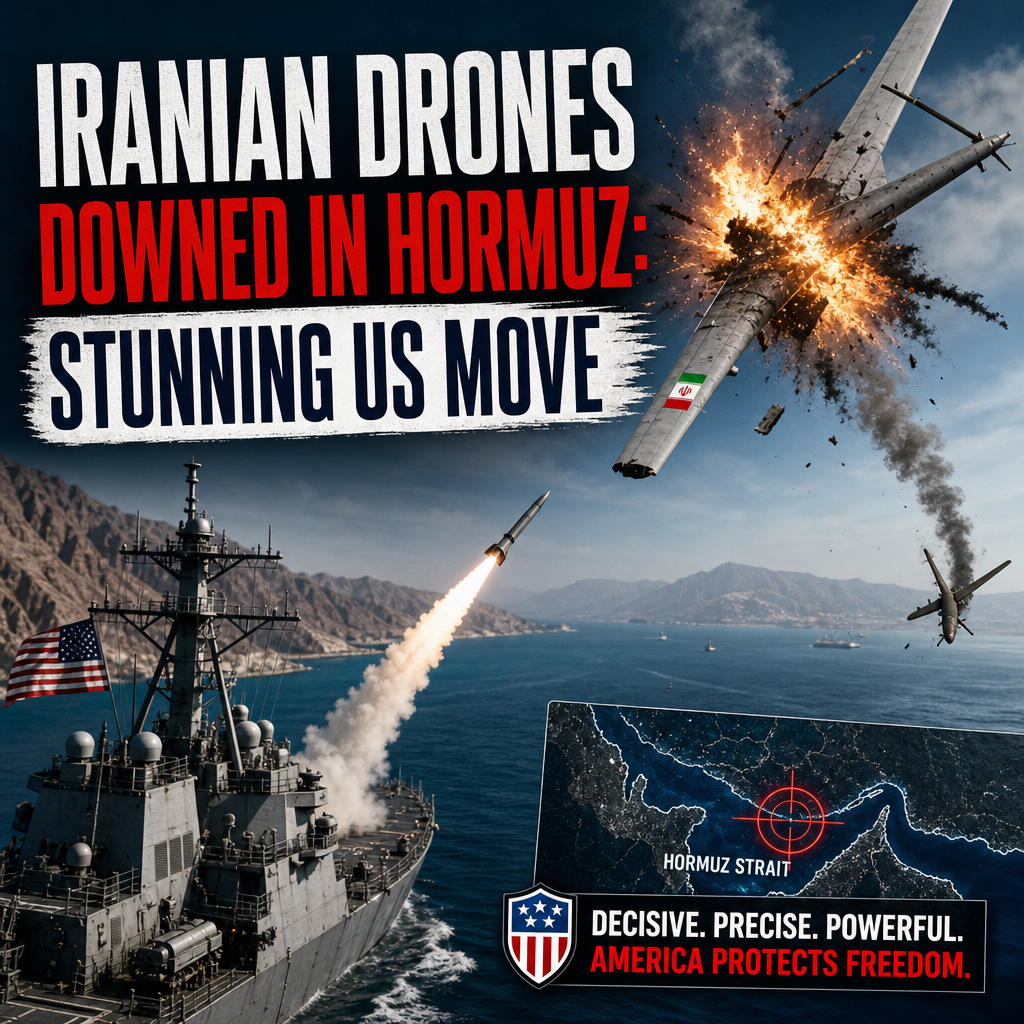
Iranian drones downed in Hormuz have once again put one of the world’s most strategically sensitive waterways at the center of a wider confrontation, underscoring how quickly maritime tension in the Gulf can spill into broader geopolitical risk.
The reported U.S. move to intercept or destroy drones linked to Iran near the Strait of Hormuz is being read very differently depending on the source and the political lens applied. Russian outlet RT frames the incident as evidence of aggressive U.S. behavior and a possible escalation step in a long-running regional standoff. Al Jazeera’s broader coverage of Gulf security and Iran-related tensions tends to emphasize the risk of miscalculation, the fragile balance among regional powers, and the civilian and commercial consequences if shipping lanes are disrupted. Sky News, meanwhile, typically places incidents like this within a wider international security context, highlighting military signaling, allied responses, and the possibility that such events could trigger a cycle of retaliation.



What emerges from these different angles is not a simple story of one side acting and another reacting, but a familiar pattern in the Gulf: each move is interpreted through the prism of deterrence, domestic politics, and strategic messaging.
Why the Strait of Hormuz still matters
The Strait of Hormuz is one of the world’s most important chokepoints, because so much global energy supply passes through or near it. Even a short-lived disturbance can affect shipping insurance costs, market sentiment, and naval posture. That is why incidents involving drones, fast boats, missiles, or seizures of commercial vessels tend to draw immediate attention far beyond the region.




In this case, the core issue is not only whether the drones were “downed,” but why they were there, how close they came to shipping routes or military assets, and what each side wants the world to believe about the encounter. If the drones were conducting surveillance, then the U.S. action can be presented as a defensive measure. If they were part of a show of force, Iran and its supporters may argue the interception proves Washington is the more escalatory actor. In practice, both claims can coexist, because military incidents in this region are rarely interpreted by all sides in the same way.
There is also the commercial dimension. Even when there is no direct damage to tankers or cargo ships, the perception of danger matters. Shipping firms, insurers, and energy traders react to uncertainty. That means a drone incident can have consequences even if it never becomes a full-blown military exchange.
Iranian drones downed in Hormuz: competing narratives
The most important thing to understand about incidents like this is that the facts and the framing often arrive together, and not always cleanly. RT’s coverage generally emphasizes Washington’s responsibility for tension, often suggesting that U.S. military actions are provocative or disproportionate. From that standpoint, the downing of drones is likely portrayed as another example of American pressure in a region already shaped by sanctions, proxy conflict, and naval rivalry.
Al Jazeera’s reporting tradition on Gulf security usually keeps more space for uncertainty and consequence. Rather than treating the event as a clean win or loss for either side, it often highlights the risks of escalation, the wider diplomatic deadlock surrounding Iran, and the possibility that both Tehran and Washington are using such incidents to signal resolve to domestic and international audiences.
Sky News typically situates these developments in a more conventional security framework: who controlled the airspace or waters, what military rules of engagement may have been applied, and how allies such as Gulf states or European governments might respond. That approach tends to be less focused on blame and more on the practical question of whether tensions are trending toward containment or confrontation.
Taken together, those viewpoints suggest a few likely truths:
– Neither side wants to appear weak.
– Both sides benefit from shaping the narrative first.
– The risk of misunderstanding is high in a crowded military environment.
– Civilian shipping and regional stability remain the biggest losers if incidents multiply.
What is clear, and what is not
What appears clear is that the Strait of Hormuz remains a flashpoint where surveillance, deterrence, and political theater overlap. Drones are especially sensitive tools in this environment because they can be used for intelligence gathering, signaling, or probing defenses without immediately committing to a larger attack. That makes them useful precisely because they are ambiguous.
What is less clear is whether this incident marks a meaningful change in behavior or simply another turn in an established pattern. The region has seen repeated cycles of confrontation in which an interception, seizure, strike, or accusation briefly raises tensions before diplomacy or quiet back-channel communication cools them again. A single event does not necessarily imply a wider war is coming, but it can still push the system closer to the edge.
The broader uncertainty is political. U.S.-Iran relations remain deeply constrained by sanctions, distrust, and unresolved security disputes. Regional allies are watching closely, not just for what happened this time, but for whether Washington will respond through sanctions, force posture changes, or diplomatic pressure. Iran, for its part, may seek to demonstrate that it cannot be boxed in, especially if it believes it can operate below the threshold that would trigger a major U.S. response.
A measured reading of the incident
A fair reading of the reported drone downing is that it reflects a familiar but dangerous logic: both sides are trying to deter the other without crossing a line they do not fully control. That is exactly what makes incidents in Hormuz so unnerving. They are rarely isolated. They are signals, countersignals, and warnings compressed into a few tense minutes over a narrow stretch of water.
The danger is that this kind of signaling can be misread. One side sees restraint; the other sees hesitation. One side claims defense; the other calls it provocation. That gap in perception is where crises grow.
For now, the best conclusion is cautious rather than dramatic. The downing of the drones is significant because of where it happened and who was involved, not necessarily because it proves a new conflict is underway. But it does reinforce a larger reality: in the Strait of Hormuz, even a relatively limited military incident can carry outsized strategic weight, and the margin for error remains uncomfortably small.