Vance Says Stunning Israeli Campaign Threatened Iran Diplomacy


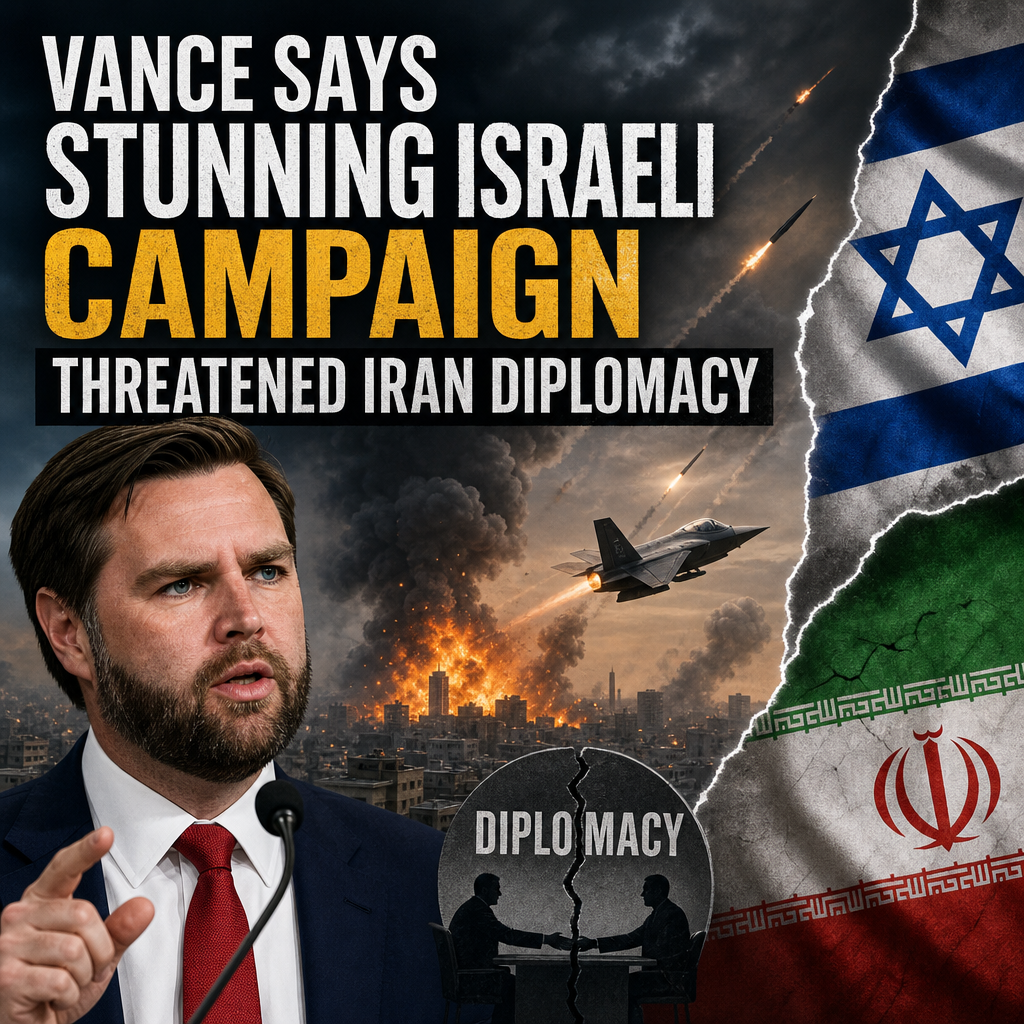
Iran diplomacy is once again under pressure, and the latest comments from U.S. Vice President JD Vance have thrown a sharp light on just how fragile the politics around Iran can be. Speaking about Israel’s military campaign, Vance suggested it was “stunning” and appeared aimed at shaping U.S. public opinion against continued diplomacy with Tehran. The remark matters not just because of who said it, but because it reveals a widening tension inside the Western camp over whether pressure, deterrence, or negotiation should lead the way.
Iran diplomacy and the battle over influence
At the center of the debate is a simple but difficult question: can diplomacy with Iran survive when regional conflict keeps resetting the political atmosphere? According to the reporting from Al Jazeera, Vance framed Israel’s campaign as an effort to pull Washington away from engagement with Tehran. That interpretation is politically significant because it suggests the contest is no longer only about missiles, nuclear enrichment, or border security. It is also about influence in Washington, where allies and critics alike try to steer the U.S. toward their preferred strategy.



Al Jazeera’s coverage placed the episode within a broader pattern of regional escalation, where military action and diplomatic messages collide. From that angle, the concern is not merely that violence interrupts talks, but that it actively reshapes the U.S. domestic debate. If voters, lawmakers, and officials are persuaded that diplomacy is weak or naïve, then negotiations can lose ground even before they begin.
That perspective contrasts with a more security-focused view often heard from Israeli officials and their supporters: that force or threat of force is needed to deter Iran and reduce the chance of a larger conflict later. In that reading, military pressure is not the enemy of diplomacy but a necessary backdrop to it. The problem is that this logic can also harden positions, making compromise harder once trust has been damaged.




Why Vance’s remarks matter beyond the headlines
Vance’s comments are important because they show discomfort, even inside the U.S. political system, with the idea that allies should be allowed to dictate the diplomatic tempo. That does not mean he is anti-Israel or automatically pro-Iran; rather, it suggests concern about how external pressure can narrow U.S. decision-making.
There are at least three layers to this story:
– The diplomatic layer: talks with Iran are already fragile and can be derailed by regional violence.
– The political layer: U.S. leaders face pressure from pro-Israel voices, critics of Iran, and voters wary of another Middle East crisis.
– The strategic layer: both Washington and regional players are trying to prevent escalation while still preserving deterrence.
That combination makes a clean policy solution unlikely. Even if the U.S. wants to revive or protect diplomacy, any major Israeli operation can change the atmosphere overnight. Likewise, any sign of Iranian retaliation can strengthen the case for a tougher line, even among officials who prefer negotiations.
How other outlets frame the dispute
RT’s coverage of U.S.-Middle East tensions often emphasizes the possibility that Washington’s public positions are shaped by deeper power struggles and inconsistent messaging. In that kind of framing, Vance’s remarks would be read as a rare acknowledgment that U.S. policy is not made in a vacuum. The value of that perspective is that it reminds readers to question who benefits when diplomacy falters. The risk, however, is that it can flatten a complex situation into a story of manipulation alone, leaving less room for the genuine security fears that drive policy choices.
Sky News, by contrast, tends to present these issues through a more conventional diplomatic and security lens. From that angle, the key issue is whether the U.S. can keep channels open with Iran while also reassuring Israel and managing regional instability. That approach is often less ideological and more procedural: who said what, what was the response, and how might it affect negotiations? Its strength is clarity; its weakness is that it can understate the emotional and strategic force of the conflict itself.
Taken together, the three viewpoints suggest a shared reality even where they differ sharply on blame. Everyone seems to agree that diplomacy is vulnerable. Where they diverge is on why: some see Israeli action as an obstruction, others see Iranian behavior as the core problem, and still others view the U.S. as trapped between competing pressures.
The bigger question: can diplomacy and deterrence coexist?
The most honest answer is that they can, but only imperfectly. In practice, U.S. policy toward Iran has often tried to combine sanctions, military deterrence, and negotiation. That mix can work for short periods, but it is unstable when one side believes the other is using talks as cover for pressure or military gain.
That is why Vance’s warning resonates. If military campaigns are seen as attempts to influence U.S. politics directly, then even future diplomacy can be tainted before it starts. Yet dismissing security concerns would be just as risky. Iran’s regional role, nuclear ambitions, and network of allied groups continue to drive fear across the Middle East and beyond.
The most balanced takeaway is that diplomacy with Iran is not dead, but it is more exposed than ever to outside shocks. A single operation, speech, or retaliatory strike can change the political math in Washington and abroad. That leaves U.S. policymakers facing an uncomfortable truth: if they want negotiations to succeed, they will need not only a strategy for Iran, but also a way to resist being pushed off course by every burst of regional violence.
In that sense, Vance’s remarks are less a final verdict than a warning. The struggle over Iran is no longer just about facts on the ground; it is also about who gets to define the story around them.