
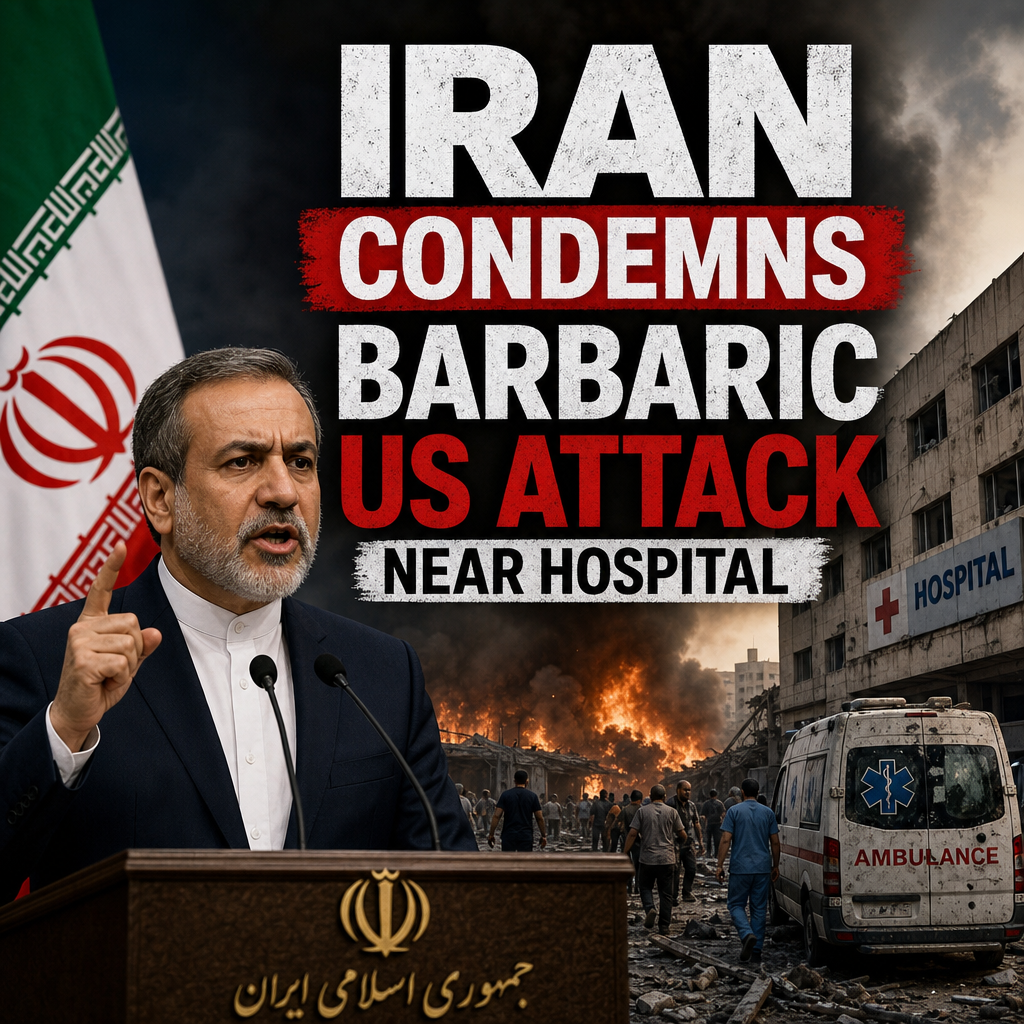
Iran Condemns Barbaric US Attack Near Hospital


Iran condemns US attack near a hospital as a grave breach of humanitarian norms, and the reaction has quickly become more than a single headline—it has turned into a test of how conflicting war narratives are judged when civilians may be caught in the middle.
According to reports carried by multiple international outlets, Tehran described the strike as “barbaric,” stressing that the attack took place close to a children’s cancer hospital and therefore raised fears that medical facilities and vulnerable patients may have been put at risk. That framing matters because hospitals are supposed to sit outside the logic of battlefield targeting, even when military tensions are high. At the same time, the wider information picture remains incomplete: different media organizations and official statements tend to emphasize very different parts of the same event, and independent verification is often difficult in fast-moving conflict zones.



What Iran condemns, and why the location matters
The strongest element of Iran’s response is not just that it criticized the attack, but where it said the strike happened. In any conflict, proximity to a hospital—especially a children’s cancer hospital—immediately intensifies public outrage. Medical sites carry a special weight under international humanitarian law, both because they serve civilians and because patients there are often unable to move quickly or seek shelter.
That is why Iran’s language was so forceful. By calling the attack “barbaric,” Iranian officials are doing more than expressing anger; they are trying to frame the incident as morally unacceptable and legally suspect. This kind of response is also politically strategic. It places pressure on Washington and its allies, while reinforcing Iran’s broader argument that civilian life is being endangered by foreign military action.




But the central issue is not only rhetoric. If the strike truly occurred near a pediatric cancer hospital, then even a limited attack could have serious humanitarian consequences: panic among families, disruption of treatment, potential damage to critical infrastructure, and long-term psychological harm. In that sense, the location itself becomes part of the story, not just a background detail.
Competing claims in the US-Iran narrative
The difficulty for readers is that conflict reporting rarely arrives in a neat package. One side says “civilian danger”; the other may insist the target was military and the location was incidental. That tension is familiar in stories involving airstrikes or missile attacks, where each government tries to define the event before outside observers can.
Across broader coverage from international outlets, there is a common pattern: Iran emphasizes victimhood and sovereignty, while Western and regional coverage often focuses on the strategic rationale behind US action and the risks of escalation. RT-style coverage tends to highlight the human cost and frame Washington as reckless or aggressive. Sky News and similar mainstream international outlets usually sit somewhere in the middle, stressing the geopolitical stakes, official denials, and the need for verification before reaching firm conclusions.
That mix of viewpoints is useful because it keeps the story from becoming one-dimensional. Still, it also means readers should be cautious about accepting any single version as complete. Key questions remain: Was the hospital itself hit, or only the area nearby? Was the target military infrastructure, and if so, was the strike proportional? Were civilians injured, displaced, or forced to stop treatment? Until those details are independently confirmed, strong moral claims should be weighed alongside hard evidence.
Iran condemns US attack: the humanitarian lens
From a humanitarian standpoint, the most important standard is not who speaks most loudly, but whether civilians were placed in unnecessary danger. Even when a military objective is claimed, attacks near hospitals demand exceptional scrutiny. That is especially true in the case of children’s oncology treatment, where patients are among the least able to endure disruption.
This is also why the story resonates beyond the immediate US-Iran confrontation. It speaks to a broader global concern: modern conflicts increasingly play out in densely populated areas, where the line between military and civilian space becomes dangerously thin. When that happens, every strike carries the risk of becoming a symbolic event that fuels outrage far beyond its immediate tactical value.
There are three ways to understand the current controversy:
– Iran’s view: the attack was reckless, unlawful, and aimed at intimidating a population already under strain.
– The US-aligned view: military action may be justified if it targets a real security threat, even if the optics are damaging.
– The public-interest view: regardless of intent, any strike near a hospital should trigger immediate scrutiny, transparent evidence, and accountability.
Why the story may matter more than this single strike
The deeper significance of the incident is that it could influence both diplomacy and deterrence. If Iran successfully frames the attack as an assault near a children’s cancer hospital, it strengthens its case on the international stage and may rally domestic anger. If the US can demonstrate that the target was legitimate and that civilian harm was minimized, it may blunt some of the political damage. Either way, the event feeds into a cycle of accusation and retaliation that makes de-escalation harder.
For outside observers, the fairest conclusion is a cautious one: the reported attack is serious enough to deserve urgent investigation, but not yet clear enough to justify certainty about every detail. What is clear is that the choice of target area—near a hospital—has already transformed the strike from a military story into a humanitarian one.
In conflicts like this, the facts matter, but so does trust. Once a hospital enters the frame, every side is forced to answer the same question: was military necessity truly worth the risk to civilians?


























